Lobbyists erode politics in the US









 As a Washington D.C.-based journalist, I have been asked by friends from China about how real is the political TV drama series, House of Cards. Drama is drama. Certain plots do exist somewhere at certain times, but it would be wrong to generalize it as daily life on Capitol Hill and in the White House.
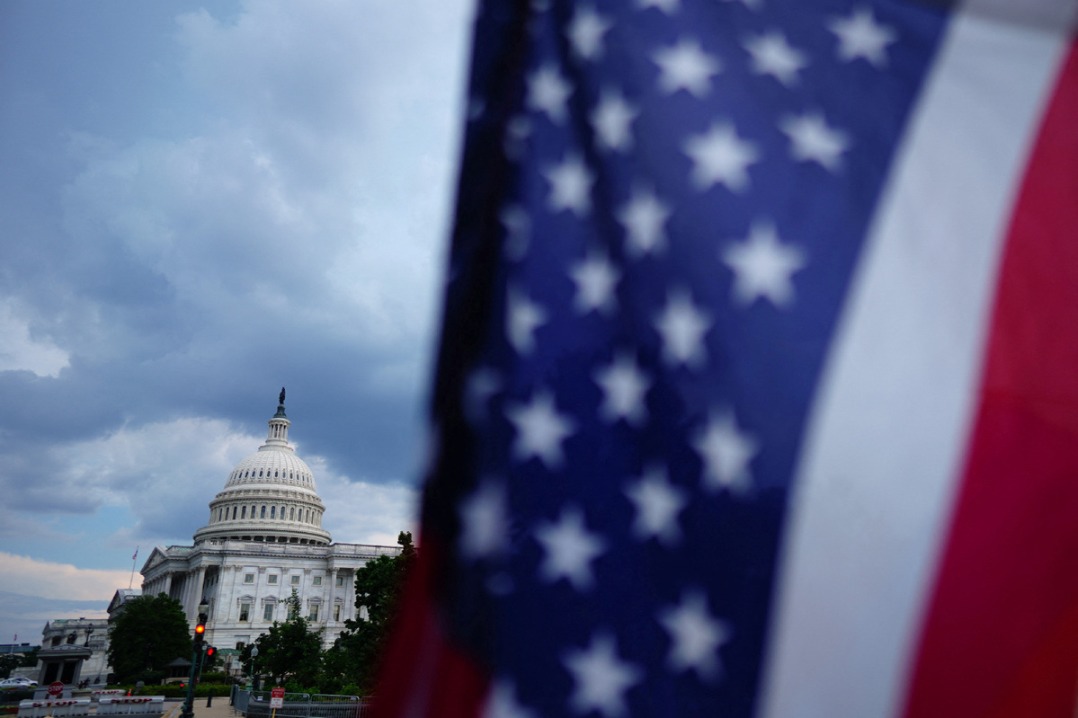
However, most Chinese don't get a sense of that unique creature in US politics, especially in Washington D.C., namely the huge army of lobbyists.
In China, these people trying to buy influence would be immediately associated with bribery and corruption, as the Chinese words guanxi (connections) and houmen (back door) suggest. But in Washington, lobbying is a legal profession, consisting mostly of lawyers.
A February story in the weekly magazine The Nation shows that the number of registered lobbyists in the US was 12,281 in 2013. Although it was the lowest number since 2002, the true number is believed to be closer to 100,000.
At the same time, while official figures show that the total spending on lobbying stayed at $3.2 billion in 2013, the real figure is estimated to be closer to $9 billion.
Many retired government officials, Congressmen and Congressional staffers have become extremely active and influential in Washington, except they are now working for consulting firms, public relations agencies, think tanks and interest groups. Each of them makes multi-million dollars a year.
K Street, now synonymous with the lobby industry, is filled with firms headed by former senior officials from US government entities, such as the State Department, Pentagon and Treasury Department.
The transition through the revolving door is often surprisingly smooth and seamless. For example, the official that journalists interviewed just weeks earlier, retires and quickly becomes the head of a consulting firm. And his board members are all former senior government officials.
US President Barack Obama has vented his frustration about lobbyists over the years and tried to ban registered lobbyists serving on government advisory panels. Nevertheless, lobbyists have fought back at Obama by arguing such a ban violates the freedom of speech enshrined in the US Constitution. They have the right to petition the government, they argue.
Data also shows that Obama himself is not immune from the lobbyist influence either. Many visitors to the White House in the past years were lobbyists peddling their influence.
Many lobbyists have tried to wield influence over lawmakers by helping with the fundraising during elections, a phenomenon that is believed to contribute to the dysfunctional politics in Washington. Even Jon Huntsman, former US ambassador to China and now chairman of the think tank Atlantic Council, recently suggested there should be a term limit for lawmakers.
The public resentment of the lobbyists is obvious. Readers of the recent article in The Nation talked about how disgusted they feel about those lobbyists.
"It's become increasingly clear our government is rotten to its core," said one reader. "Sickening and disheartening," said the other, after reading the article, "Where Have All the Lobbyists Gone?".
Watching the hearings in Congress from time to time, you can almost feel that some lawmakers are surrounded by the invisible presence of lobbyists.
In the past decades, many US lobbying firms have not only branched out into China, but also flourished by cashing in on the increasing intertwined relationship between the two countries.
So when the Department of Commerce decides to initiate countervailing duties on Chinese products, as it has done many times in the past, it is almost certain that some powerful lobbyists have been working hard.
Or when a senior Pentagon official exaggerates the threat of China, it may well be that certain defense industry firms would benefit from hundreds of billions of dollars of arms contracts in order to counter China's influence.
Some Chinese companies, such as Huawei, have been victims of US lobbyists when labeled as a possible national security threat.
In this sense, House of Cards is a Hollywood representation of Washington's ugly world of guanxi and influence buying.
The author, based in Washington, is deputy editor of China Daily USA. Email: chenweihua@chinadailyusa.com