The art of mending









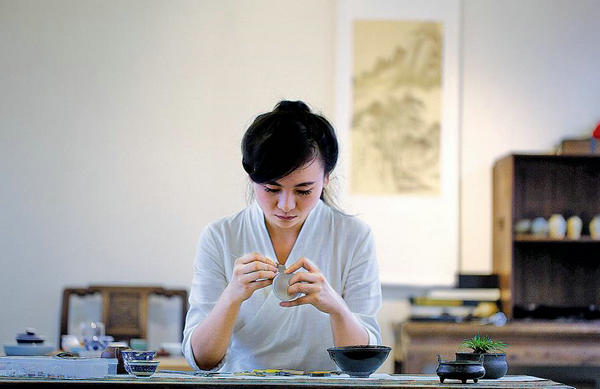 |
| Gu Yu is among one of the few Ju Ci experts in Shanghai. She currently operates a pottery repair studio at Hongqiao Antique Mall. [Photo provided to China Daily] |
Itinerant craftsmen used to travel through villages in China, alerting residents of their repair services simply by shouting.
These craftsmen were often hired to fix broken household wares and the skilled ones were renowned for their ability to mend something as small as a cup without using any glue. They would first drill tiny holes on either side of the crack before bending metal staples to hold the pieces together. Though the technique, called Ju Ci, might sound rudimentary, it was undoubtedly effective.
With the onset of industrialization, Ju Ci was gradually replaced by modern techniques. The craft, however, looks to be making a comeback today, and people are willing to spend more than what they paid for the original item just to have it repaired in this manner.
The cost of each repair job depends on the complexity of the task. Each staple used costs 100 yuan ($14.5) while a circular bonding agent with a diameter of no more than 10 centimeters costs 600 yuan. When clients request for gold to be used in the repairs, the total fee could amount up to thousands of dollars.
"It is an art of understanding. You feel a broken piece, re-design it, and give it a new life," was how Hou Yu, a photographer who documents the craft, described Ju Ci.
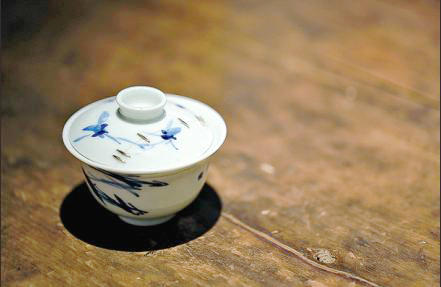 |
| Broken pieces are joined together using staples. [Photo provided to China Daily] |
Captivation
According to industry experts, public interest in Ju Ci had suddenly spiked since the airing of a CCTV documentary on the craft in 2012. The program also featured a master craftsman named Wang Zhenhai who hails from the fifth generation of a family of craftsmen who had served in the Palace Museum.
Wang, 60, also started to teach Ju Ci that same year. He currently lives in Beijing and is still active in the promotion and education of the craft.
"This handicraft has only been strictly passed down in our family. However, I have taught the craft to many people because I don't want it to disappear," said Wang.
Gu Yu, one of the few people in Shanghai who is well-versed in Ju Ci, was among those who were captivated by the documentary. In fact, she was so intrigued with the craft that she and a few other friends contacted Wang and invited him to Shanghai to conduct classes.
Gu now runs a pottery repair studio with two apprentices at Hongqiao Antique Mall and though she has only been in the profession for two years, her workmanship has already earned praise and recognition from her clients. Business has been so brisk that customers often have to wait for months before they can retrieve their repaired ceramic ware.
One of Gu's largest assignments was having to repair more than 100 "jian zhan" teacups from the Shanghai Jian Zhan Collectors Club. Made in Jianyang, Fujian province, about 1,000 years ago, these funnel-shaped cups are highly sought after in the antique market and often command huge prices at auctions.
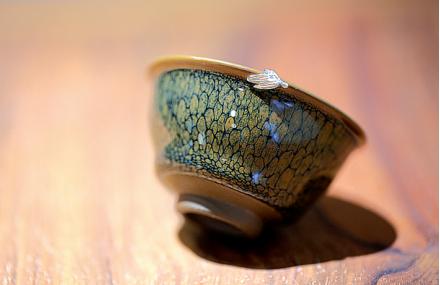 |
| The cracks or chipped off areas in such items are patched with decorative elements. [Photo provided to China Daily] |
This was when collectors started turning to Gu, who uses traditional techniques and materials such as lacquer and pure gold. After mending the cups, Gu would place them in a humidifier for several weeks to let them dry. This also ensures that the cups are safe for everyday use.
"A teacup is not just an object of everyday use. People can become attached to it after using it for years because it embodies their memories. It is like a piece of themselves," said Gu.
There are only a few studios in Shanghai that offer Ju Ci services. Gu said that she only knows of about 10 other craftsmen in the city who are trained in Ju Ci.
Antique dealers in the mall often engage her to restore their vintage pottery as well. The prices of antique pieces in perfect condition are often too prohibitive. However, an antique that has been repaired is much friendlier on the wallet.
Besides pottery and ceramics, Gu has also handled other items such as jade bracelets and even a vintage bamboo flute a client had bought from Japan. She said that working with bamboo is especially tricky, because drilling into it at the wrong angle will instantly cause cracks to appear.
Gu also occasionally conducts Ju Ci workshops for members of the public to learn more about its history and techniques. Among these workshop participants are dentists, surgeons, art museum directors and university professors.
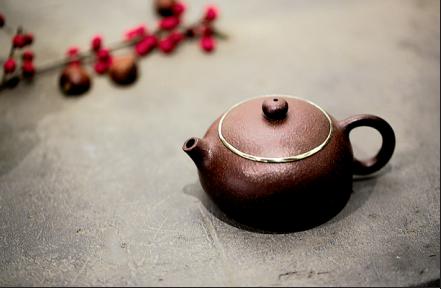 |
| Some customers may also choose to use gold in the repairs. [Photo provided to China Daily] |
Indication of history
The technique of Ju Ci is more than 1,000 years old in China. Illustrations of craftsmen mending pots can be found in Chinese paintings dating back to as early as the 13th century. Gu estimates that there are only about 1,000 craftsmen in China who are skilled in Ju Ci. In some regions of China, the craft has been recognized as an intangible cultural heritage.
Expert craftsmen in the past who were dealing with porcelain wares would drill through the glazed surface using hand-operated drilling wheels equipped with a diamond tip. The process requires great precision and control given the fragility of the porcelain.
In this modern era, Gu uses a fine machinery drill that revolves up to 50,000 times every minute to accurately create fine holes at the required angles.
"Dentists use the same machine to work on people's teeth. You need to operate the drill in such a way that it pierces the porcelain or pottery surface without penetrating it," explained Gu.
Apart from using staples made from iron or gold, Ju Ci craftsmen also use metal to seal the cracks or patch chipped areas. Craftsmen may at times also carve patterns on the metal to make the patchwork more aesthetic.
The Japanese method of kintsugi is sometimes also used to seal cracks. This technique involves filling the gap with lacquer and finishing off with a lining of fine gold.
The technique of Ju Ci differs from typical repair methods in that it is not aimed at restoring the perfect look, and this is where its beauty lies, said Gu.
"Repair marks are an indication of the item's history," she said.
"People don't regard them as imperfections-they see them as meaningful statements."