Border row with India put in perspective









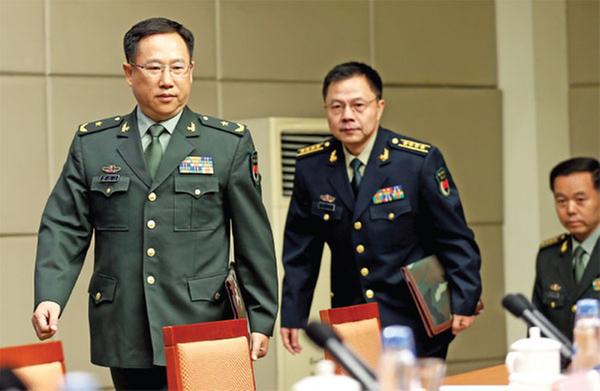 |
| Major General Zhou Shangping (left), Senior Colonel Lu Yu and Senior Colonel Zhang Chengwen of the PLA Ground Force to brief reporters on July 24. Zou Hong / China Daily |
Thanks to its longstanding arms race with Pakistan, India is very confident about its military capability. That Indian soldiers dared to cross the border and enter Chinese territory spurring a standoff with Chinese troops shows this.
Chinese and Indian territories are separated by the Himalayas, with obvious geographical landmarks in different sections of their boundaries. The special condition has determined that neither side makes a major fuss over border transgression or resorts to using military means as long as the transgression is considered isolated and has limited intention, not a surprise military offense.
That almost a month after Indian troops entered Chinese territory in Donglang north of Bhutan, Beijing continues to exercise restraint fully demonstrates that it is sincere about maintaining Chinese-Indian friendship. But the Indian transgression this time is not normal. Since Indian troops are stationed on Chinese territory, and perhaps preparing for a short, high-intensity war, we should approach the matter from a strategic perspective, and handle it properly.
First, we should seek to resolve disputes through diplomatic negotiations, and emphasize common interests. Compared with the huge common interests China and India share, their border dispute is trivial and secondary.
Second, China must ask India to candidly explain its real purpose and motivation. The key to the present problem is making clear what caused the conflict in the first place. If, as some foreign media have observed, the transgression was driven by New Delhi's US policy, and a suggestive move before Indian Prime Minister Narendra Modi's visit to the United States, or out of consideration for domestic politics and a move related to the July 17 presidential election, it should be understandable to Beijing. Nor will it be a major problem if it is meant to disrupt the China-Bhutan negotiations on border demarcation. If India is just worried about China building roads in the Donglang area, China could take steps to eliminate its hostility.
Third, there is a need to reach strategic consensuses with India on "one belt, one road". Indian troops' transgression may represent a higher strategic intention, including attempts to interrupt the Belt and Road Initiative, because India is the only major country resisting it, and some political elites in India have displayed conspicuous antagonism against China's development. India has also expressed dissatisfaction with the China-Pakistan Economic Corridor, saying it passes through disputed "territory" (between India and Pakistan). But such an excuse is untenable. Beijing should try to persuade New Delhi that the Belt and Road Initiative is hardly different from its own "South-North Transport Corridor" in nature, and the two initiatives can be complementary in practice. If India narrow-mindedly attempts to disrupt the Belt and Road Initiative, it would not only be making a strategically myopic move, but also a politically reactionary step and end up losing in the end.
And fourth, we should adhere to our bottom line and prepare for the worst. Diplomatic negotiations do not mean giving in easily, and meeting the other side's insatiable demands. It is important to remind India that if it forces China to fight a limited war, China is determined to win. As long as China stays reasonable, restrained and proceeds with the best interests and concerns about friendly bilateral ties in mind, it is possible to narrow the differences and resolve the disputes.
The author is a fellow with the China Institutes for Contemporary International Relations.
Courtesy: chinausfocus.com