Experts call for better education and awareness









Scientists need to make greater efforts to educate the public about genetically modified organisms and promote rational perception of the technology, experts said.
In 2013, Cui Yongyuan, a well-known television anchor, traveled to the United States to interview scientists, doctors and members of the public for an anti-GMO documentary he later posted on the internet.
The documentary - Cui Yongyuan's Investigation into US GMOs - was criticized for factual errors and mistranslations by China's scientific community and by Martina Newell McGloughlin, a professor at UC Davis in California who was one of Cui's interviewees.
A 2014 survey of 958 people by Zhejiang University showed that 60 percent of respondents had university degrees, but none could distinguish between GM and non-GM food by appearance, and 90 percent demanded clearer labeling.
Moreover, 70 percent said they would choose non-GM food over GM food if given the choice, and only 18 percent accepted GM foods.
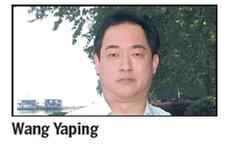
According to Wang Yaping, a researcher at the Chinese Academy of Sciences' Institute of Hydrobiology, the issue presents a difficult dilemma for scientists and policymakers because the government and research institutions have devoted so many resources to making GM foods safe.
He added that both groups must respect the consumer's right to know, but labeling a product as genetically modified can damage sales: "It will take time for people to learn the truth about GMOs and accept them, so we scientists have to be patient and meticulous when promoting them."
In 2012, Zhang Chenyu, a biologist at Nanjing University in Jiangsu province, said his team had discovered that humans can absorb the microRNA - an unstable, single strand of genetic molecules that cannot create protein but can still repress or regulate genes - in rice.
MicroRNA dysfunctions play a role in many diseases and illnesses, including cancer, diabetes and mental illness. As a result, anti-GMO groups have often cited Zhang's research to support their claims that transgenic crops, which sometimes contain traits resulting from alterations to microRNA, can cause diseases and are therefore harmful to human health.
In a September interview with The Intellectual, a web-site that promotes science, Zhang said that despite his research having no connection with GMOs, he has been branded an anti-GMO scientist and has received many complaints and opposing views from colleagues.
"Most people who are against GMOs do not know much biology," he said. "If microRNA can affect human health, then scientists should just look into it, but to claim that I am anti-GMOs is completely untrue."
Lam Hon-ming, a professor at the School of Life Sciences at the Chinese University of Hong Kong, said, "Genetically modified fish engineered with extra genes may pose environment risks if they break away from aquatic farms and inter-breed with wild fish."
In most cases, GM fish are modified so they will grow bigger and faster relative to natural species, Lam said.
Once they mate with existing varieties, there's a possibility that their offspring, which will carry some of the genetic structure of GM fish, could upset the ecological balance.
Lam urged breeders to heed the possible threat and keep GM fish in close confinement. He said GM fish, if managed under stringent regulation, is safe to consume.
"Despite the long-standing debate regarding GM food, genetic modification is a well-intentioned biotechnology that may provide solutions to rising food demand world-wide," he added.
"At this point, scientists have to be cautious and gingerly develop GM technology at a moderate pace to prevent unpleasant incidents from occurring."




- 10 dead and 84 injured in explosion at steel plant
- China unveils flexible urban planning rules to improve lives, foster new industries
- Ex–China Construction Bank executive gets 18 years for bribery, loan violations
- First batch of eco-friendly pioneer zones for construction of beautiful countryside unveiled
- Woodpeckers, finches captured in Jilin winter scenes
- Mainland reiterates 1992 Consensus as foundation for resuming cross-Strait dialogue