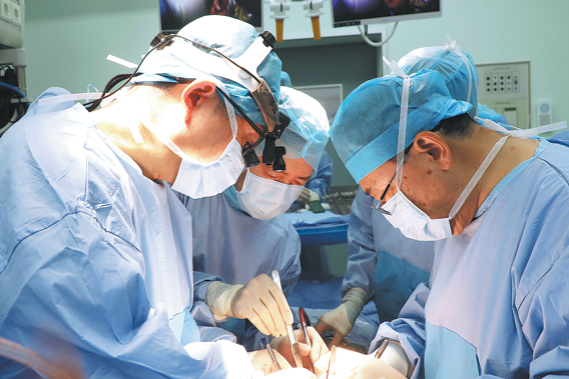
Breathing life into relics









A new TV show will feature three cultural artifacts from each of the nine most important museums in China. Wang Kaihao reports
An upcoming variety show on China Central Television will bring together 27 Chinese "stars". But they are not people. The national TV station said it will release National Treasure toward the end of this year.
The show will feature three cultural relics from each of the nine most important museums in the country and reveal behind-the-scenes stories about them.
Film stars and other celebrities will talk about the legends surrounding the artifacts and more such techniques from variety shows will be used in the program, says Yu Lei, chief producer of National Treasure.
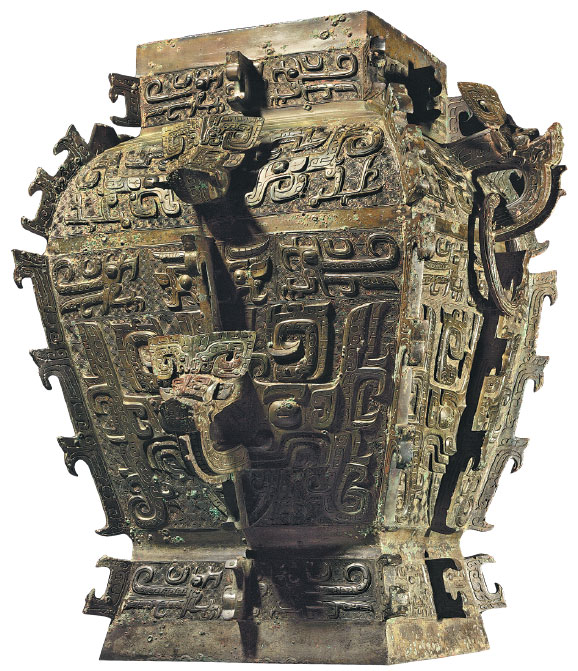
| The wine vessel Minfanglei was obtained by the Hunan Provincial Museum in 2014 after being lost overseas for nearly a century. Photos Provided to China Daily |
But Yu says there are other surprises in store.
"We want to make the cultural relics look like people who have gone through the vicissitudes of life," she says.
"They have life and character. And they represent the Chinese spirit and values."
Yu says that viewers will feel an emotional connection with the relics.
The Palace Museum in Beijing, also known as the Forbidden City, is the country's flagship museum. As China's imperial palace from 1420 to 1911, the institution houses more than 1.86 million cultural relics, and Shan Jixiang, director of the museum, says that it will be a challenge to choose just three items from its collection.
"It will be a tough decision," Shan says.
"The choices have to have historical, artistic and scientific significance," Shan says.
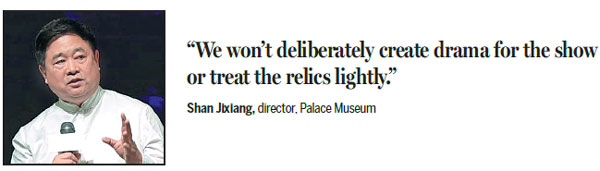
"But we won't deliberately create drama for the show or treat the relics lightly," he says. "The show is not going to mislead viewers."
The other eight institutions are all key provincial-level museums: Shanghai Museum, Nanjing Museum, Shaanxi History Museum, Henan Museum, and the Zhejiang, Hubei, Hunan and Liaoning provincial museums.
All the museums have their own specialities.
For instance, Nanjing Museum, which has been China's first national-level comprehensive museum from the time of Kuomintang rule, has an extensive collection.
The Shaanxi History Museum, which is located in Xi'an, known as the global metropolis Chang'an in ancient times, has relics from the Han (202 BC-AD220) and Tang (618-907) dynasties, two peaks in the country's imperial history.
Hubei Provincial Museum is known for its collection from crucial archaeological discoveries. It houses bronze musical instruments like the bianzhong, or chime bells, found in the tomb of high official Marquis Yi of Zeng, dating back 2,500 years.
Shan says the nine museums have also worked to bring diversity to the national treasures chosen.
Though the list of the 27 treasures remains confidential, there are some clues about the choices.
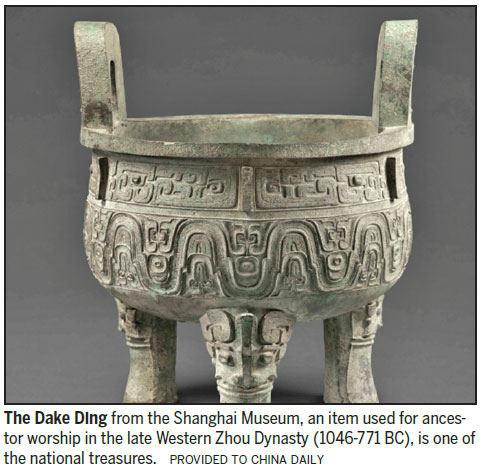
For instance, there are at least two bronze pieces: the Minfanglei, a wine holder from the Hunan Provincial Museum dating to the late Shang Dynasty (c. 16th century to 11th centruy BC), whose body was once lost and then found in the United States; and the Dake Ding from the Shanghai Museum, an item used for ancestor worship in the late Western Zhou Dynasty (1046 to 771 BC).
"If the viewers' response is good we will consider organizing an exhibition at the nine museums to exhibit the 27 items," Shan says.
According to producer Yu, National Treasure will run for more than one season.
She also plans to include Chinese artifacts housed in overseas museums in future seasons.
Liu Wentao, deputy director of Nanjing Museum, says: "Museums are now a part of the lifestyle of the young," adding that nearly 70 percent of visitors to the museum are under 40.
Nanjing Museum is also known for its early adaption of digital technology to attract the younger generation.
"It is an inevitable trend for museums to become fashionable," she says, adding that she has great expectations for the upcoming show.
Last year, Masters in the Forbidden City, a three-episode documentary on cultural relic restorers in the Palace Museum, went viral. It was then edited into a feature-length film to be released in cinemas.
Shan also says that as many as 15,000 people applied for cultural restorer positions at the museum in 2016 following the screening of the documentary.
"There's a stereotype that young people only like shows on romance or entertainment. But the documentary proves the vitality of programs with cultural depth," Shan says.
Zhu Tong, deputy editor-in-chief of CCTV, says it is not surprising that TV variety shows in China now also reflect traditional culture.
Earlier this year, Reader, a CCTV variety show that became a buzzword, invited celebrities, entrepreneurs and even ordinary people to read chapters from classics that reflected their values or views.
"Its success strengthened our confidence to give more voice to our culture," Zhu says.
"Cultural programs on TV need a new direction. And museums can take them in a new direction."
Contact the writer at wangkaihao@chinadaily.com.cn
(China Daily European Weekly 09/15/2017 page21)




Today's Top News
- China to expand fiscal spending in 2026: finance minister
- CPC leadership meeting urges steadfast implementation of eight-point decision on improving conduct
- Autumn grain purchases exceed 200m tons in China
- Wang to meet foreign ministers of Cambodia, Thailand in Yunnan
- China's top legislature concludes standing committee session
- Thailand and Cambodia agree to temporary ceasefire