Changes needed for post-colonial education system









Andrew Mitchell praises HK's school system but says it still needs to reduce the pressure placed on students by standardized testing
As the new academic year gets under way, schools in Hong Kong are already beginning to feel the benefits of Chief Executive Carrie Lam Cheng Yuet-ngor's commitment to quality education. Thanks to the prioritization of HK$3.6 billion in additional funding for the education sector this summer, local primary and secondary schools are now enjoying an improved teacher-to-class ratio, as well as additional support in the form of more information technology professionals and extra staff to coordinate work for pupils with special education needs.
The additional funding, the first part of an extra HK$5 billion a year pledged to recurrent education spending in the CE's election manifesto, is a welcome boost for the local education sector. According to the latest figures from the UNESCO Institute for Statistics, expenditure on education here amounts to only 3.8 percent of GDP, significantly below the world average of 4.7 percent. It is therefore reasonable for the public, particularly parents, to have high hope for the chief executive to unveil in her maiden Policy Address further measures to enhance education. Nevertheless it is difficult to see how the local education system can improve significantly without the government adopting a more wholesale approach to change.
The education system in Hong Kong, like that of the United Kingdom before it, was designed to meet the needs of the industrial revolution. The result, as the world-renowned educationalist Sir Ken Robinson pointed out in a talk at the RSA in London in 2010, is a system characterized by a production-line mentality that promotes conformity and standardization.
The system in Hong Kong performs extremely well on its own terms. In the most recent Programme for International Student Assessment (PISA) test, in 2015, the SAR was at the top of the scale in both performance (science, math and reading) and equity (boys versus girls, social background and immigrant students). However its results for student well-being were extremely poor, with local 15-year-olds reporting very low levels for life satisfaction and sense of belonging at school, and a high level of schoolwork-related anxiety. This is a major concern as, in the words of the PISA authorities, "teenagers who feel part of a school community are more likely to perform better academically and be happier with their lives".

So what can we do to help our students feel part of their school community? Well, a good starting point would be to reduce the amount of pressure placed on them by standardized testing, so that they can start to view school not as a source of competition and stress, but rather as a place where they can collaborate with their peers in a supportive environment. In this regard it is encouraging to note the CE's manifesto promise to suspend the Primary 3 Territory-wide System Assessment pending a review of the entire education system (although, as I wrote in an earlier article, TSA is not the problem here; it's the schools that insist on "drilling" their charges for what is meant to be a low-stakes assessment).
Two other initiatives mentioned in the CE's election manifesto also seem relevant here: firstly the idea of providing more room in the school curriculum for students to participate in arts, culture and sports activities; and secondly the promotion of school-based life education. Both these measures would undoubtedly help to enhance student well-being. However it is doubtful whether they would be enough on their own to make students feel part of the wider school community.
For this to happen, systemic change is required. For as long as the education sector is built on a patchwork of fiercely independent schools (government and subsidized, as well as private), competition will remain at the heart of local education. And in a competitive educational environment it is extremely difficult for schools to focus on relatively intangible notions like the school community, locked as they are into a system that judges them on purely academic outcomes.
This focus on academic outcomes is one of the major characteristics of the production-line approach to education, an approach which is completely out of step with the needs of a post-industrial society. In such a society citizens are faced with a multitude of complex problems in their daily lives, and in order to solve these problems, they need to be able to practice the art of divergent thinking. This mode of thinking requires both individuality and creativity, neither of which is encouraged in the traditional education system.
As we celebrate the 20th anniversary of the founding of the Hong Kong SAR, therefore, it is surely the right moment to be considering a complete overhaul of an education system bequeathed to us by our former colonial government. Seen in this light, the CE's proposal to conduct a comprehensive review of the local education system could not be timelier.
(HK Edition 10/03/2017 page5)


Today's Top News
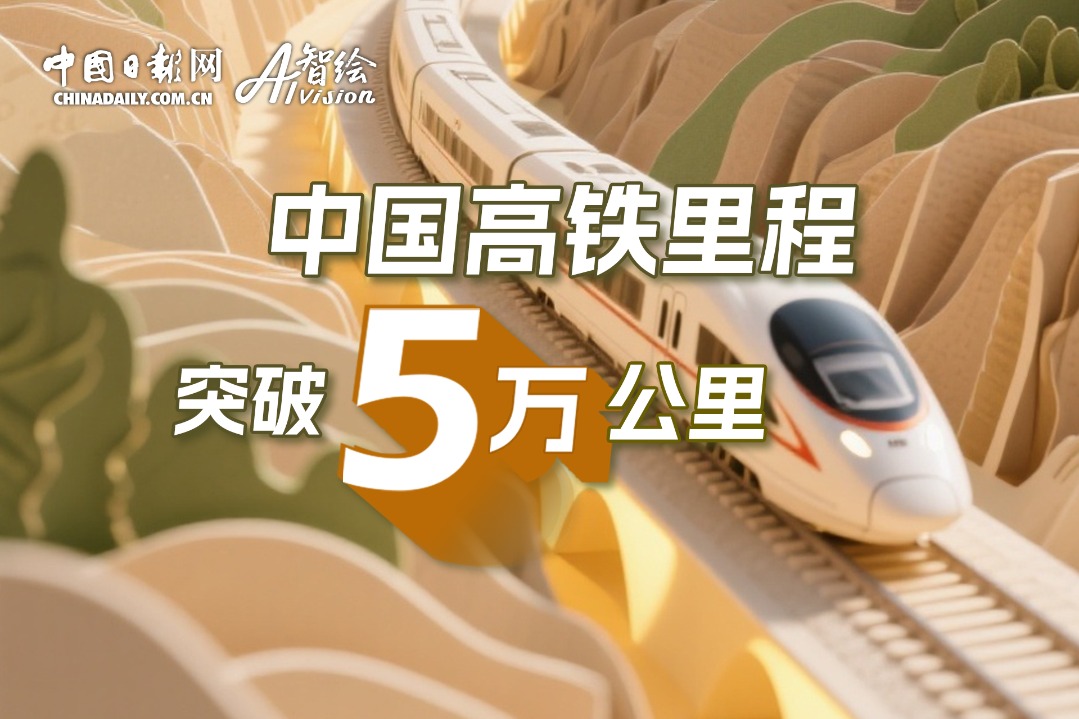
- High-speed rail reaches 50,000 km milestone
- China puts sanctions on US defense firms, execs
- Iconic hall reopens after decade-long renovation
- Sanctions show China's resolve to safeguard its sovereignty and territorial integrity
- China OKs three action plans to build pilot zones for a Beautiful China
- CPC leadership meeting stresses steadfast implementation of eight-point decision on improving conduct