Fijian dialogue process makes Bonn climate talks a 'success'









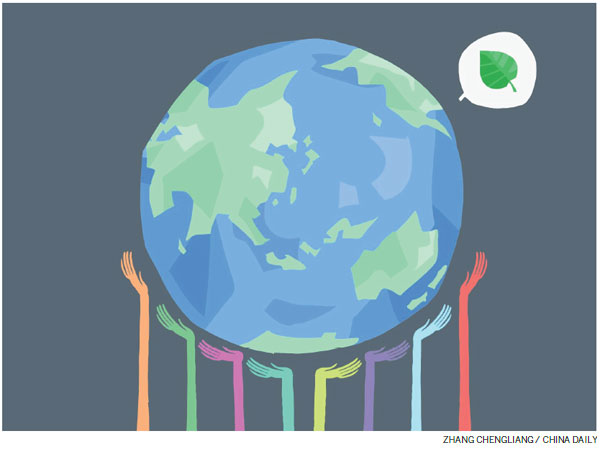
The United Nations Climate Change Conference in Bonn, Germany, which concluded over the weekend was no different from the other annual gatherings since 1995, when the world leaders decided to sit together to find ways to cope with climate change.
The negotiators in Bonn burned the midnight oil on the last day of the conference to come up with the final document. But once again the rich countries didn't commit to paying the $100 billion they had promised to developing economies by 2020 to help the latter cope with and adapt to climate change. And, as they have done earlier, some Western outlets said the Bonn talks made "little progress".
However, the Bonn talks can be seen as a "success" if we consider it a critical step toward completing the "rule-book" for the 2015 Paris Agreement.
This conference was organized at a time when the international community seems "increasingly divided", mainly because some of the Western powers have not fulfilled the commitments they made at some previous climate talks. For example, US President Donald Trump has withdrawn from the Paris climate accord, although the European Union was an active player at the Bonn talks. The international community, it seems, needs some positive energy to work together to deal with the common threat to humanity.
Some of that energy was evident in Bonn, though.
Although Fiji, which has already seen the consequences of global warming, held the presidency for this year's climate talks, the event was hosted by Germany, because the funds needed for and the logistics of hosting such an event were too much for the Pacific island country. This explicit and fruitful understanding between the Fijian and German governments showed that an industrialized country and a less-developed one can join hands to deal with common threats.
Moreover, the international community accepted the Pacific island's wisdom by including the "Talanoa Dialogue", a Fijian concept that encourages people to listen to each other, respect each other's views, and seek solutions that benefit everybody-in other words, a process of inclusion and transparent dialogue that will lead to the "rule book" to be adopted at next year's conference in Katowice, Poland.
This encouraging cooperation-oriented approach is likely to enrich global climate politics, which have long been dominated by the pressure, finger-pointing and dilly-dallying tactics of some Western countries and media outlets.
Certain factors are essential to climate talks. First, which country, or countries, has contributed most to global warming? Second, joint efforts are needed to fight climate change but the process of seeking solutions should be inclusive and democratic. And, most importantly, promises made on paper should be honored and fulfilled. In this regard, the Talanoa Dialogue can help build mutual trust and understanding, which the international community badly needs.
The Paris Agreement, ratified by 170 economies, is part of an ambitious global effort to deal with global warming in the period after 2020. To realize this agreement, the UN had asked every country to submit its plan for voluntary contribution to reducing global greenhouse gas emission. This approach gave enough room to each country to raise its targets while implementing the Paris Agreement.
Now, the Talanoa Dialogue process is expected to help each participant to share its knowledge of low-carbon development model with the others, and vice-versa. Such dialogue could inspire countries to embark on a green path of development, which the negotiators in Bonn described as a post-2020 ambitious plan, which will also need the transfer of low-carbon technology and funds from the rich countries to the poorer ones to succeed.
Also, as agreed in the Kyoto Protocol and the second phase of this landmark global deal, the rich countries have to honor their promises both in letter and spirit.
And if that happens, the transition from Kyoto Protocol to the Paris Agreement will be smooth even if the US, the world's largest economy, remains a non-party to the two historic climate pacts.
The author is deputy chief of China Daily European Bureau.
fujing@chinadaily.com.cn