Commercial breakdown









Over the years, Chinese ads have gone from being childhood memories to memes and pop culture
Stuck in an elevator, forced to watch a maddening commercial for some second-hand car app for the 100th time, you'd be easily forgiven for cursing the day the ad man came to China.
It certainly wasn't always like this.

From the rosy-cheeked qipao girls promoting cigarettes in 1930s Shanghai to the less-glamorous era of the late '40s and '50s, Chinese ads have evolved with the times. In chaotic wartime and the early years of New China, there weren't many products to promote or consumer markets to attract. Ads consisted of plain-speaking statements that a product was available - industrial machinery, health aids, daily essentials - usually placed in a newspaper, with terse explanations of its function and little promotional fanfare. It was a much simpler time, when advertisers in China had yet to learn the powers of persuasion.
At the end of the People's Republic of China's first Five-Year Plan in 1957, commercial advertising became obsolete, since the socialist reforms put everything under State ownership; there was no need for promotions in a planned economy where the State was in charge of distributing all goods. Denounced as a product of capitalism, commercial ads disappeared entirely during the "cultural revolution" (1966-76) and it was not until the reform and opening-up era that they returned.
Shanghai TV became the first Chinese station to broadcast a commercial in more than a decade on Jan 28, 1979, the first day of the Lunar New Year. It featured a nourishing ginseng wine and a short message announcing the station was back in the business of advertising. Since then, ads have evolved to form part of the country's collective memory, with their jingles and slogans entering popular culture.
Perhaps the first iconic ad was for the "Yanwu Radio Recorder" in 1984, which featured possibly China's earliest earworm:
Yanwu, Yanwu, love comes with a song
Yàn wǔ, yàn wǔ, yī qū gē lái yīpiàn qíng
燕舞, 燕舞, 一曲歌來一片情
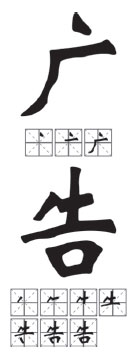
At 500 yuan ($75; 64 euros; £57) apiece, a serious price tag at the time, a Yanwu recorder was the Walkman of its era, a must-have product for any 1980s youth who wished to prove they were cool. As access to television in the home gradually became more widespread in the 1990s, commercials began appealing directly to consumers' emotions, such as a Nanfang Black Sesame Paste ad that showed a child enjoying a bowl outside a welcoming stall at dusk, as the narrator tells about "warm childhood memories". For the post-'80s generation, the ad itself has become a childhood memory, as well as its slogan:
A whiff of fragrance, a touch of warmth
Yī gǔ nóng xiāng, yī lǚ wēnnuǎn
一股濃香, 一縷溫暖
As the importance of branding began to assert itself on Chinese advertisers, manufacturers began to develop more sophisticated approaches, sometimes even adapting to different markets. Though electronics and home appliances company Haier's current English slogan is "Made for Modern Living," the Chinese version takes an alternative approach by emphasizing integrity:
Haier, sincere forever
Hǎi'ěr, zhēnchéng dào yǒngyuǎn
海爾, 真誠到永遠
Similarly, refrigerator brand Aucma promises to constantly improve itself:
There's no best, only better
Méiyǒu zuì hǎo, zhǐyǒu gèng hǎo
沒有最好, 只有更好
Cosmetic brand Haodi, meanwhile, defines what counts as "good":
If it's good for all, then it's really good
Dàjiā hǎo cái shì zhēn de hǎo
大家好才是真的好
As a new generation of consumers has come of age, pop culture and advertising have become increasingly intertwined. From the late 1990s to the early 2000s, Wahaha, the largest beverage company in China, ran a series of campaigns in which popular male singers proclaimed their love of Wahaha bottled water through their music. These song titles became Wahaha's slogan each year:
Wahaha, all I see is you
Wáhāhā, wǒ de yǎn lǐ zhǐyǒu nǐ
娃哈哈, 我的眼里只有你
Loving you equals loving oneself
ài nǐ děngyú ài zìjǐ
愛你等于愛自己
You're the one I love
ài de jiùshì nǐ
愛的就是你
The age of celebrity endorsement had arrived, and quickly came to include star athletes who symbolized not only physical prowess but national pride. One of the most memorable commercials of the early 2000s was a Sprite ad featuring Sydney Olympics diving champions Tian Liang and Guo Jingjing, rumored to be dating at the time. The slogan played on the combination of their names:
Sparking and chilling the heart
Jīng jīng liàng, tòu xīn liáng
晶晶亮, 透心涼
When the two allegedly broke up, fans joked that "chilling the heart" was probably an early sign that the relationship was doomed. But while some brands turned to sentimentality or star power to sell their products, others relied on their own consistency to be a selling point in an ever-changing era. Nongfu Spring Water, for example, still uses the same slogan it always has:
Nongfu Spring is a little sweet
Nóngfū shānquán yǒudiǎn tián
農夫山泉有點甜
Indeed, most food and beverage commercials depend on being simple and down to earth, so their ad campaigns hope consumers associate their respective brands with the appropriate slogan:
Nescafe, tastes great
Quècháo kāfēi, wèidào hào jíle
雀巢咖啡, 味道好極了
Master Kong's Instant Noodles, deliciousness you can see
Kāngshīfù fāngbiànmiàn, hào chī kàn dé jiàn
康師傅方便面, 好吃看得見
Yummy Snack, eat more if you think it's so tasty
Hào chī diǎn, hào chī nǐ jiù duō chī diǎn
好吃點, 好吃你就多吃點
In the 2000s, as electronic products began to become more mainstream, "science and technology" became the buzzwords of the decade. Former tech giant Nokia's famous slogan "Connecting people" took on its own Chinese characteristics:
Human-based technology
Kējì yǐrénwéiběn
科技以人為本
Lenovo, on the other hand, went with something a little more aspirational:
Technology creates freedom
Kējì chuàngzào zìyóu
科技創造自由
Hi-Tech Wealth's Personal Digital Assistant was one of the most soughtafter products for business professionals in the early 2000s, with its slogan:
Technology lightens your burden
Kējì ràng nǐ gèng qīngsōng
科技讓你更輕松
Commercials also started to appeal to consumers with diverse values, putting an emphasis on individualism to cater to a younger audience. Echoing L'Oreal's "Because I'm worth it" campaign, Rejoice Shampoo told its customers:
Just so confident
Jiùshì zhème zìxìn
就是這么自信
Adidas has long used the somewhat nonsensical phrase "Impossible is nothing," while Chinese shoemaker Li-Ning arguably improved upon that:
Anything is possible
Yīqiè jiē yǒu kěnéng
一切皆有可能
M-zone, China Mobile's brand for young customers, cast pop icon Jay Chou in its commercial with the words:
My zone, I call the shots
Wǒ dì dìpán, tīng wǒ de
我的地盤, 聽我的
As younger people embrace irony, some are using slogans in their daily phrases for comedic effect. For instance, one could save an embarrassing situation by joking, "I was overconfident because I used Rejoice Shampoo." Other ads became memes and were adapted for wider use. Shangdong Lanxiang Senior Technical School, for example, may be the most famous school on the Chinese internet, due to its TV commercial starring Tang Guoqiang, famous for playing Mao Zedong in various TV shows and movies. Many saw humor in the contrast between the actor's established persona and the unglamorous course he promoted.
Which school has the best excavator training? Look for Lanxiang in Shandong, China.
Wājué jī jìshù nǎ jiā qiáng? Zhōngguó shāndōng zhǎo lán xiáng.
挖掘機技術哪家強? 中國山東找藍翔.
The slogan went viral online in 2014, catapulting the school into an unexpected level of stardom. Netizens soon began using the slogan as a punchline, for example by telling a seemingly meaningful story that concludes:
So, here's a question for you. Which school has the best excavator training?
Nàme, wèntí láile: Wājué jī jìshù nǎ jiā qiáng?
那么, 問題來了: 挖掘機技術哪家強?
Affectionately mocking certain commercials produced by (or aimed at) older generations has become an online hobby for many. One commercial for a girl learning English using a Bubugao audio book featured a slogan that was considered ripe for satire:
Mom will never have to worry about my study.
Māmā zài yě bùyòng dānxīn wǒ de xuéxíle.
媽媽再也不用擔心我的學習了.
It can be adapted to many occasions.
With these emoji packs, mom will never have to worry about me losing a GIF war.
Yǒule zhèxiē biǎoqíng bāo, māmā zài yě bù huì dānxīn wǒ dòu tú huì shūle.
有了這些表情包, 媽媽再也不會擔心我斗圖會輸了.
From novelty to nostalgia to netizens' memes, if nothing else, Chinese ads are undoubtedly themselves products of their times.
Courtesy of The World of Chinese; www.theworldofchinese.com.cn
The World of Chinese
(China Daily Africa Weekly 11/24/2017 page23)





Today's Top News
- Ukraine says latest peace talks with US, Europe 'productive'
- Economic stability a pillar of China's national security
- Xi taps China's deep wisdom for global good
- New rules aim for platforms' healthy growth
- Chinese web literature grows overseas
- Postgrad exam trend points to thoughtful approach