Australia takes a diplomatic misstep









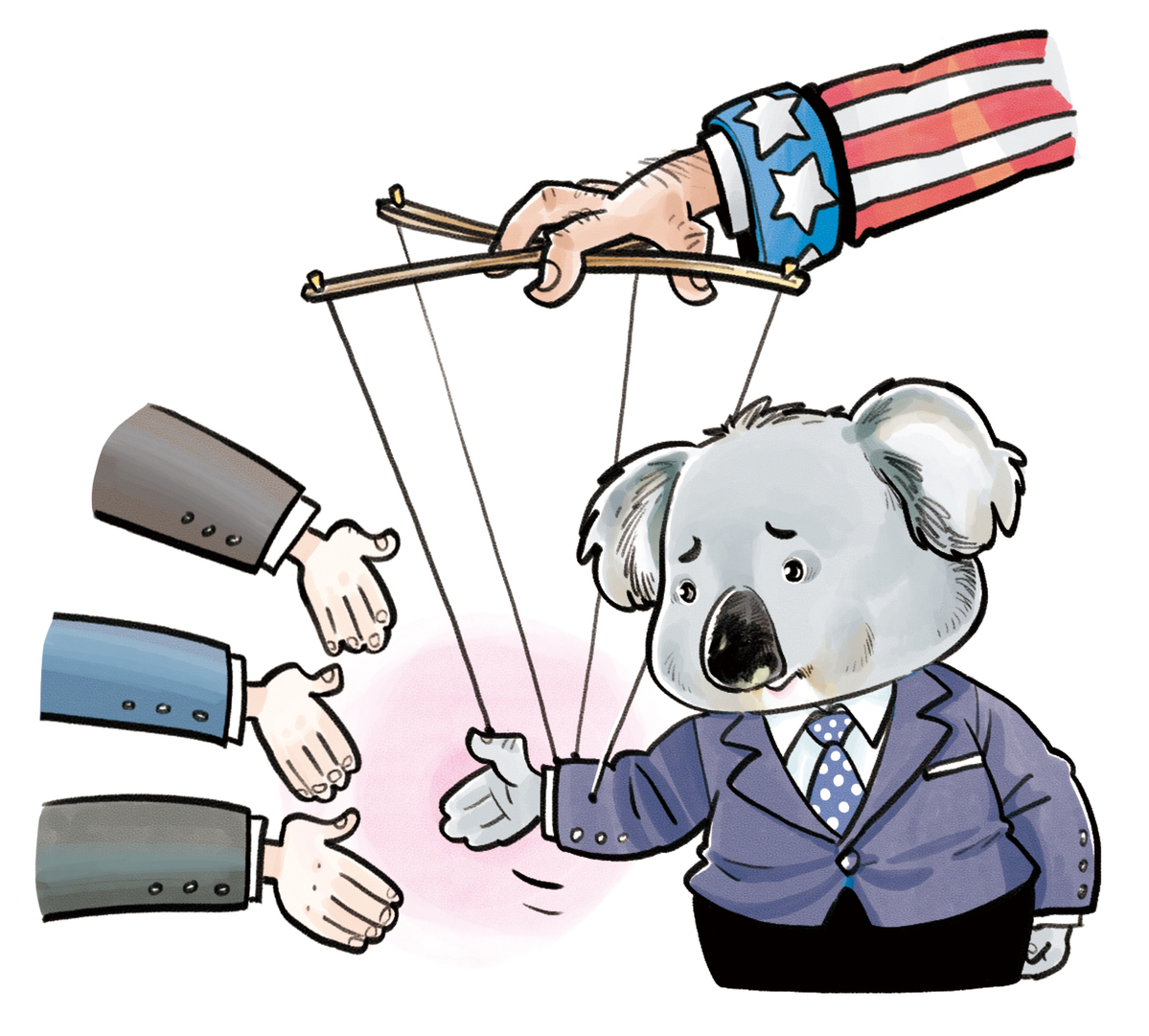
It is a pity that Australia's diplomacy is still based on ideology and focused on the US even after decades of cooperation and commercial exchanges with China. That Canberra is biased against Beijing was evident when reports by Fairfax Media and the Australian Broadcasting Corporation were used to whip up anti-China backlash in June, which, in a way, culminated on Tuesday with Australian Prime Minister Malcolm Turnbull explaining the need to ban foreign interference in domestic politics on "disturbing reports about Chinese influence".
The media organizations have used unsupported claims as facts in their reports to accuse China of prompting Australian businesspeople of Chinese origin to donate funds to Australian political parties in order to influence the country's political system.
Before that, the Australian government issued the 2017 Foreign Policy White Paper on Nov 23, emphasizing the importance of consolidating its alliance with the United States, and embracing the "Indo-Pacific" project and West-led world order.
Given the mutual interests of Australia and the US in areas such as politics, economy, military and culture, and the fact that the Canberra-Washington alliance remains the bedrock of Australia's national security, it is understandable that Canberra wants to strengthen the US-Australia alliance. But does Australia have to use China as a scapegoat in an attempt to consolidate its alliance with the US?
Besides, at a time when Washington is losing its clout in regions across the world, and US President Donald Trump is bent on shirking his global responsibilities - thanks to his "America First" strategy — it is uncertain what Australia stands to gain by sticking to its US-centric foreign policy.
One of the first acts of Trump as US president was to pull out of the Trans-Pacific Partnership agreement, which his predecessor Barack Obama had worked tirelessly to push implementation, so that the US could call the shots in regional trade and TPP members, including Australia but excluding China, would benefit from it. Despite such moves by Trump hurting its allies, does Canberra still expect to benefit from its trade ties with US?
As Australia's is an open economy, it can better protect its interests from the changing winds of international relations and trade by building more multilateral relations. Australia and China established diplomatic relations in 1972, and their diplomatic and economic ties have advanced with the times since then. For instance, the two countries formed a comprehensive strategic partnership in 2014.
Moreover, China has been Australia's largest trade partner since 2009. Also, China is one of the biggest foreign investors in Australia and a leading contributor to the country's education and tourism sectors. And after the China-Australia Free Trade Agreement coming into effect in 2015, China has been playing a vital role in Australia's economic transformation.
Australia realizes the importance of Beijing-Canberra relations. But because of China's ideological difference with Australia and its ally the US, which also regards Beijing as a rival and has been using different ploys to contain China's peaceful rise, Australia still views China with an element of suspicion.
This suspicious attitude of Australia is hurting bilateral ties. It's time Australia acknowledged that China has been promoting communication and cooperation with the rest of the world not only to benefit from the resulting economic exchanges, but also to fulfill its responsibility as a member of the international community. Australia stands to gain by widening its outlook and striking the right balance between its relations with the US and China.
The author is researcher at the National Institute of International Strategy, Chinese Academy of Social Sciences.