



Target sectors to curb corporate debt









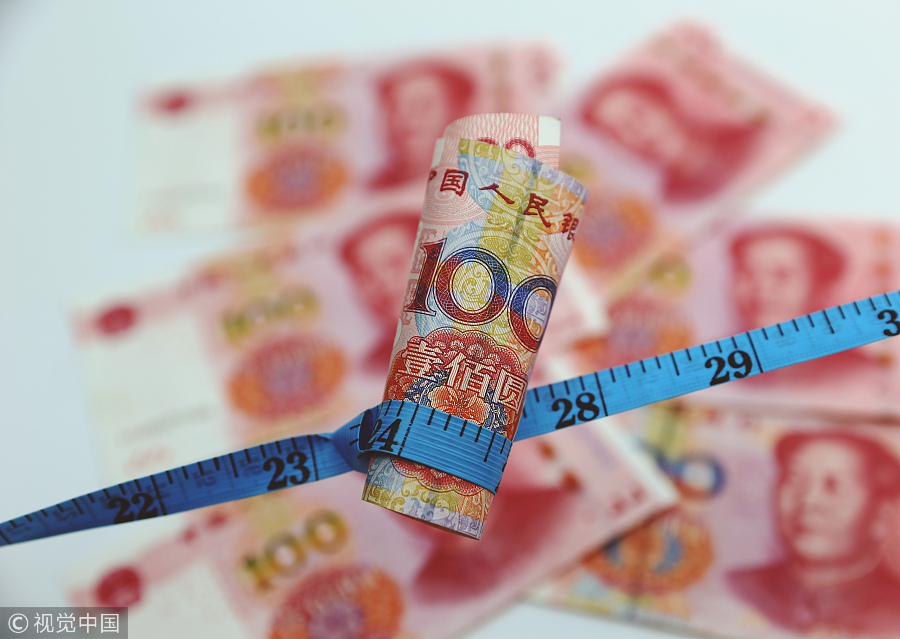
China's non-financial corporate debt has reached record high. While this is unlikely to lead to a systemic crisis in the short term, it is still a worrying sign for the economy.
The ratio of corporate debt-to-GDP was as high as 155 percent last year, according to an estimate by the ASEAN+3 Macroeconomic Research Office (AMRO). Since the beginning of this year, this has started to flatten and the growth in the corporate debt began to slow due to stepped-up regulation and supervision by the authorities and declining leverage in the financial sector. However, challenges remain as the improvement has resulted from higher nominal GDP growth rather than a decline in corporate debt.
Based on solvency and liquidity indicators as well as non-performing loan ratios, the bulk of corporate debt is not risky. Nonetheless, the problem is concentrated and more severe in some sectors where credits have built up while profitability and repayment capacities have declined, as noted by AMRO in its recent study titled "High Corporate Debt in China: Macro and Sectoral Risk Assessments". Those are prioritized sectors under the investment-led growth model. Manufacturing accounts for the most significant shares of total corporate debt at 20 percent, followed by real estate (15 percent), utilities (14 percent), construction (12 percent) and transport (12 percent).
Despite the declining efficiency and repayment capacities of borrowing enterprises, some financial institutions might still think "high risk, high return".
Bank loans are the main source of financing for corporations, but their share of total financing has declined, while the shares of bonds and shadow banking loans have increased sharply to 20 percent and 16 percent, respectively, especially in the vulnerable sectors such as mining, real estate and construction.
Compared with large banks, smaller banks have a higher concentration of loans in the riskier sectors. They have been more aggressive, not only in issuing bank loans, but also in lending through shadow banking.
The focus of debt deleveraging of corporations should be on the reduction of debt in State-owned enterprises and the vulnerable sectors.
The authorities need to further push ahead with comprehensive structural reforms that help increase investment efficiency. SOEs' reform should be geared toward market-based mechanism and strengthened governance. Successfully cracking down on "zombie" companies and further reducing overcapacity will help improve profitability and market-driven investments, and hence bring down bad debt. And the capital markets should be further developed to provide more sources of corporate equity financing and to reduce the reliance on debt financing.
As for sectoral policy, macro-prudential measures in the real estate sector should be maintained to rein in growing debt. In the utilities, transport and construction sectors, public-private partnership can be an alternative source of financing. To boost private enterprises’ confidence, there should be greater transparency in local government financing vehicles as well as increased financial disclosure and fiscal resources to support vulnerable workers during the deleveraging process.
Stress tests on assets and liabilities can help pinpoint potential losses. Regulators should then require banks with significant risks to raise capital and improve their liquidity profiles. Strengthening the buffers of financial institutions with high exposures to the vulnerable sectors can help mitigate risks to financial stability. At the same time, tight regulation and the implementation of the macro-prudential assessment should be maintained.
Debt sustainability can be seen as an important indicator of the health of the economy. The world’s second-largest economy should take bold actions to curb surging corporate debt and show the market and investors that its growth does not come at high prices.
Chaipat Poonpatpibul is lead economist, Li Wenlong, senior economist, and Simon Liu, economist at the ASEAN+3 Macroeconomic Research Office.


Today's Top News
- Over 140m train tickets sold for Spring Festival travel rush
- Xi extends Spring Festival greetings to military veterans
- Xi congratulates Fernandez on election as Costa Rican president
- Legacy of Beijing 2022 lives on as Milan welcomes Games
- Rising trade uplifts regional economic ties
- Dow tops 50,000 in snapback of US stock markets







