



Is Japan out to renege on its no-nuclear weapon policy?









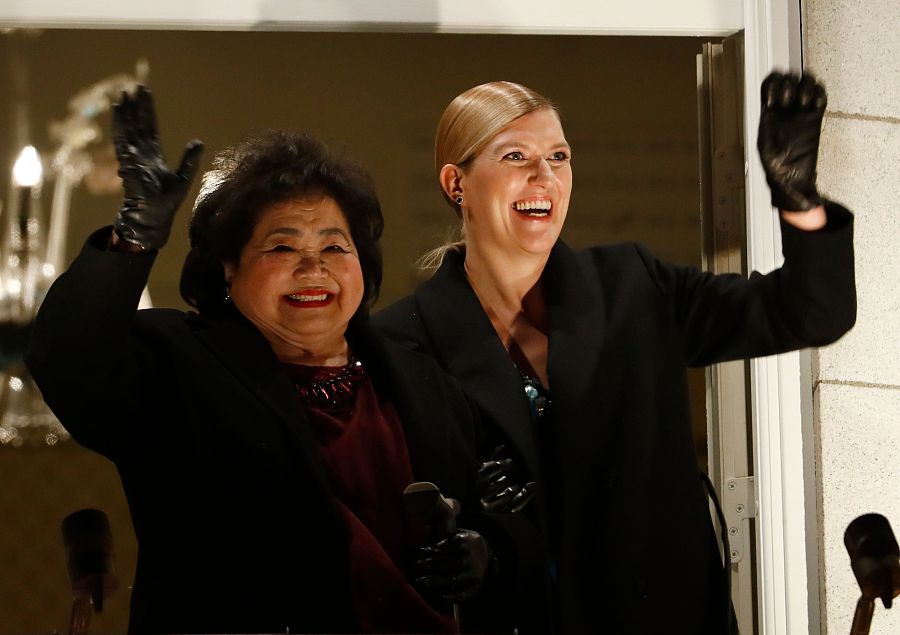
Beatrice Fihn, executive director of the 2017 Nobel Peace Prize-winning International Campaign to Abolish Nuclear Weapons, was denied a meeting with Japanese Prime Minister Shinzo Abe during her recent visit to Japan. Visiting Hiroshima and Nagasaki, Fihn urged Japan, the only country to have suffered nuclear attacks, to play a leading role in the campaign aimed at abolishing nuclear weapons.
It is not difficult to understand why Abe shunned Fihn. She has appealed to the Japanese government to join the nuclear weapons ban treaty. But on Jan 17, Japan and the United States allowed their agreement on nuclear cooperation to automatically renew in July, when it is supposed to expire. The agreement, signed in 1988, gives Japan blanket approval to reprocess spent nuclear fuel for weapons-grade plutonium.
Japan adopted nuclear power in the 1950s (one of the first countries to do so) at the urging of the US. In fact, the US began engaging with Japan on nuclear energy soon after the end of World War II, as it was eager to promote and sell its nuclear reactor technology around the world.
Japan had to return some 300 kilograms of plutonium, provided by the US, Britain and France decades ago for what was described as research purposes, to the US in 2016. Thanks to the US-Japan cooperation agreement on peaceful uses of nuclear energy, Japan now owns 48 tons of separated plutonium, most of which is in Europe, where it was reprocessed. And Japan has no clearly defined use for this huge amount of nuclear material.
Japan once hoped fast reactors would help meet its energy security needs, take care of its surplus plutonium and solve its spent fuel problem. But that hope has faded. Commercializing of fast reactors is still decades away. Surplus weapons-grade material have always worried arms control experts. In 1977, believing that nuclear weapons could be made from plutonium extracted from spent nuclear fuel in Japan's light water reactors, the US conveyed its view to Tokyo, according to Japanese diplomatic documents declassified in 2013.
Now, despite having surplus plutonium, Japan is planning to open a massive spent reactor fuel reprocessing plant at Rokkasho, the country's large commercial reprocessing facility, in the fall of 2018. It is designed to produce 8,000 kg of weapons-usable plutonium-enough to make 1,000 nuclear weapons a year, according to International Atomic Energy Agency standards. The ostensible reason for operating the plant is recycling spent fuel to supply power reactors and a fast reactor.
In their Foreign Policy article on Aug 17, 2017, Henry Sokolski, executive director of the Nonproliferation Policy Education Center, and William Tobey, a senior fellow at Harvard Kennedy School, said Japan has five reactors on line and terminated its only fast reactor project. So Japan cannot operate Rokkasho in the northern part of the country without piling up tons of plutonium for years on end.
The Rokkasho plant would significantly increase Japan's existing plutonium surplus. A potential linkage between Rokkasho's product and nuclear weapons has been hanging over the project from the start. Japan will only be able to burn a fraction of the huge amount of nuclear material extracted there. Japanese reprocessing plants will produce reactor-grade plutonium, but they will have high weapons' potential.
Japan has a "three Nos" national policy on nuclear weapons: no possession, no manufacture and no allowing nuclear weapons on Japanese territory. But there is no lack of Japanese politicians talking about nuclear weapons. Former Japanese defense minister Shigeru Ishiba, seen as a possible successor to Abe, said in September that Japan should have the technology to build a nuclear weapon if it wants to do so. He added, though, that he is not taking the position that Japan should have nuclear weapons.
Japan's plutonium surplus goes against its principle of not possessing the material without a specified purpose.
The author is China Daily Tokyo bureau chief. caihong@chinadaily.com.cn





