Rebalancing geopolitics, geoeconomics









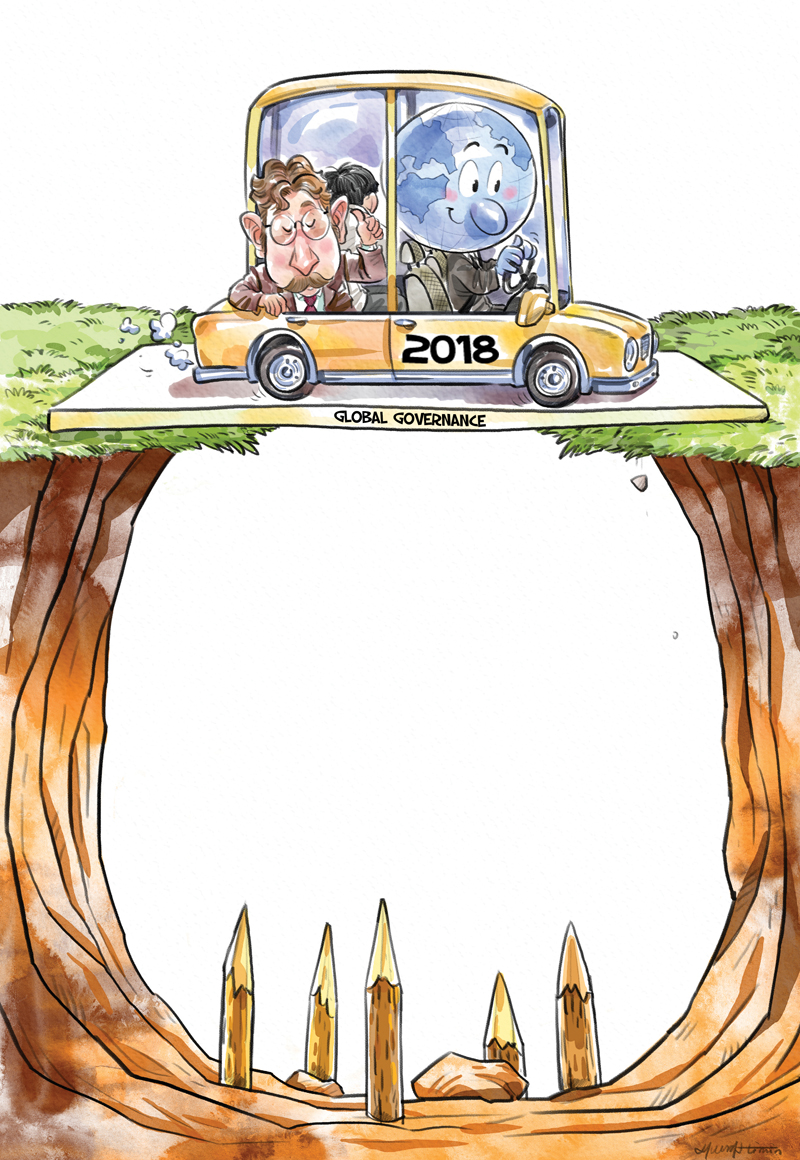
In the discussion on global disorder and the fate of the West, many political and economic experts and pundits are focusing on how to rebalance geopolitics and geoeconomics in 2018. Why is that?
The turbulence and upheavals in 2017 saw the rise of anti-globalization and political radicalization against globalization and political moderation. This expanded and deepened global disorder and uncertainty about the future of the West, as well as that of the rest of the world.
The geopolitical and geoeconomic imbalance seems to have manifested at the national, regional and global levels, clearly indicating, as economics commentator Martin Wolf recently said, "an unraveling of the US-created, post-second world war liberal order into deglobalization and conflict".
US behavior both domestically and internationally since Donald Trump became United States president a year ago provides an example of a major power's internal struggle-between liberals and anti-liberals, and between "globalists" and "anti-globalists". The distrust and anger toward liberal democracy has accumulated in the last few decades when economic changes in rich economies pitted from the winners of globalization against their fellow citizens who were left behind by it.
The unfair distribution of wealth that created ever deeper divisions between the rich and the poor is so commonplace today that it tends to be either ignored or papered over with superficial words and half-hearted actions. Therefore, the core rivalry between capital and labor in many capitalist societies is much more pronounced than ever before.
This has been called "the imbalance between market efficiency and social justice" with the latter often sacrificed in favor of market fundamentalism. Capital is the master of the world! When the market tilts too much in one direction, some kind of revolution is not far away. What happened in the 1930s was a painful lesson that must not be forgotten. History may not necessarily repeat itself, but similar things do happen if its lessons are not learned.
Of course, the US is not alone in its slide into this quagmire. The United Kingdom, Germany, Poland, Hungary, and many other European countries are sliding too. Trump and French President Emmanuel Macron stand on opposite sides on globalization in the West.
What has been going on in these countries reflects the ongoing battles of ideology of our times, leading them into the political and economic institutional crises periodically seen in the history of capitalism.
It is worth noting that what has taken place in these countries has been elevated to regional and global levels, causing a paradigm shift in the world order.
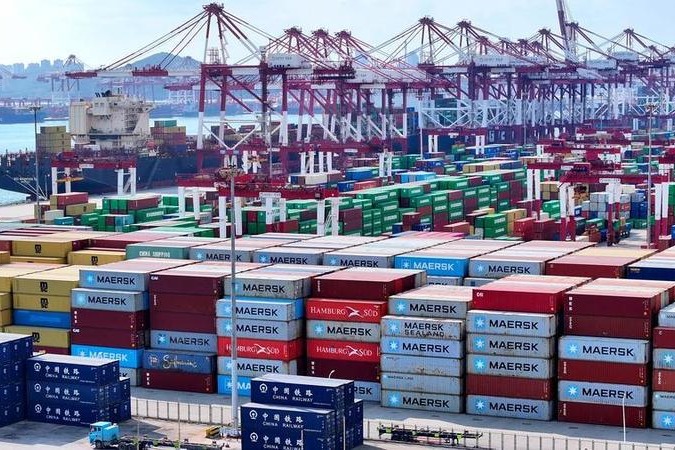
First, it is having a serious impact on international institutions, especially in global economic governance. On the one hand, Washington has abandoned the Trans-Pacific Partnership agreement and continues to undermine the World Trade Organization while opting for better bilateral and multilateral trade and investment deals for the US itself through "America First"-style renegotiation or coercion. On the other hand, the European Union, Japan, and Canada and a few other Western countries are closing their ranks to form a united front partly against the US position, but mostly against China's "abusive trade policies". As a result, global economic governance institutions such as the WTO, the International Monetary Fund, the World Bank, and the North American Free Trade Agreement are under various degrees of stress due to this tug of war.
The real worry from the West's point of view, as aptly enunciated by former US Treasury secretary Larry Summers, are China's actions in regional and global institution building as exemplified by the Belt and Road Initiative and the establishment of the Asian Infrastructure Investment Bank as an alternative source to the World Bank and the Asia Development Bank for infrastructure investments. This warped Western view of China's contribution to global economic governance is harmful to the system and will mislead other countries into a zero-sum game.
This view is also casting shadows over regional and global security arrangements. The crux of the issue is whether regional and global security will continue to be based on US-led and US-centered military alliances or collective security arrangements founded on regional and global partnerships of mutual benefit as proposed and practiced by China in recent years.
Security and the economy are the two key areas of global governance. Zero-sum thinking on these issues should be avoided at all costs. Instead, there should be collective and cooperative institutional arrangements that treat participants as equal members of the international community with shared interests and shared destiny. The recently published US National Security Strategy report that labeled Russia and China America's "strategic competitors" is a reflection of the zero-sum thinking. If global economic governance were to be implemented in such a fashion, there would have to be "winners" and "losers" and no possibility of win-win outcomes.
In other words, a rebalance in geopolitics and geoeconomics in 2018 and beyond may take different forms. One is the Thucydides Trap the US and China would fall into if the two countries do not handle their bilateral relationship and global governance carefully. The Thucydides Trap refers to a situation when a rising power causes fear in an established power that could escalate into war. Harvard Professor Graham Allison's new book Destined For War-Can America and China Escape the Thucydides Trap? should be read in this context.
Countries must avoid such a disastrous path of confrontation and take cooperation as the only viable option both bilaterally and globally to decrease the uncertainties and instability now permeating international relations. Major powers have a special responsibility to join hands and contribute to institution building.
The other form is improving global governance. Part of the structure of global governance under "Pax Americana" may endure, but there is a need for reform and change to suit the changing political and economic landscape. A governance system must be created to suit the US and China, as well as the rest of the world. It is quite strange that after the 15 years' "grace period" since China joined the WTO, the US and the EU still refuse to recognize it as a "market economy" as originally promised.
The Belt and Road Initiative proposed by President Xi Jinping in 2013 and welcomed now by nearly 100 countries and regional organizations is an innovative and cooperative blueprint for better global governance through greater connectivity in policy, infrastructure, trade, finance and people-to-people exchanges. There is no reason to obstruct and oppose such an idea-an idea that promotes common development and common prosperity.
In sum, global disorder is not normal and should be addressed quickly and collectively. The world is certainly not doomed to confrontation. It is in the hands of the international community to come up with viable solutions.
The author is a former vice-minister of the Ministry of Foreign Affairs.
Source: chinausfocus.com