Govts should act now to narrow wealth inequality and save the world









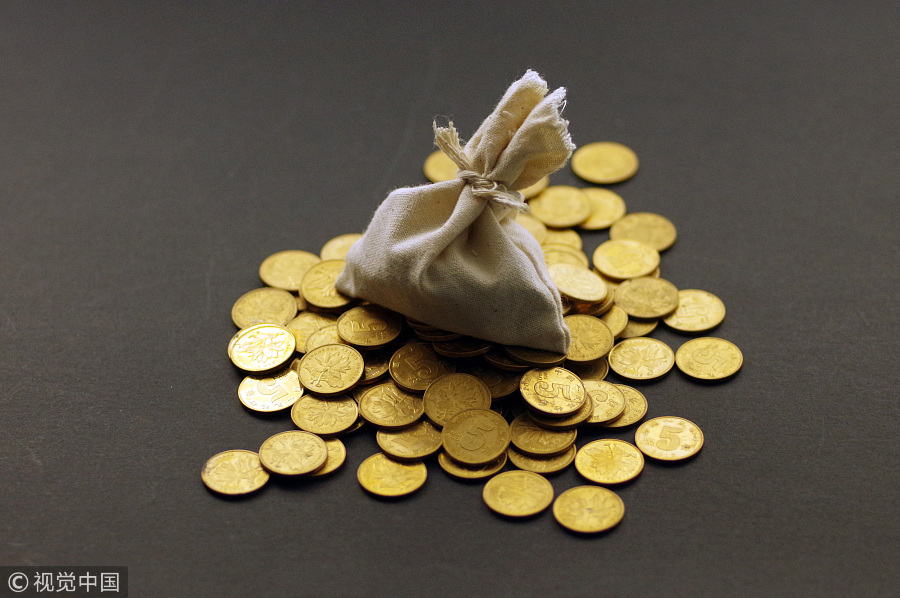
Eight men own as much wealth as the poorest 3.6 billion people, or half of the world's total population, says Oxfam in its latest report. The report titled "An economy for the 99 percent", released just before the Jan 23-26 World Economic Forum in Davos, Switzerland, reflects the horrific global wealth disparity that is being further widened as big businesses and the super rich continue to dodge taxes, lower wages and use their powers to influence political regimes.
Oxfam says that, thanks to new, updated data on the global distribution of wealth, especially in developing countries such as India, it is clear now that the poorest half of the world population owns less wealth than previously thought.
Economies across the world are "channeling" wealth to the super rich at the cost of the poor, with women being most exploited, the Oxfam report says. The astonishing pace at which the super rich are accumulating wealth could in only the next 25 years create the world's first trillionaire. To put things in perspective, a person would need to spend $1 million every day for 2,738 years to exhaust $1 trillion.
That the wealth disparity in India is among the widest in the world should be a grave concern, as the country is considered an emerging economy with a relatively high economic growth rate.
Last year's Oxfam survey showed the richest 1 percent people in India owned 58 percent of the country's total wealth, which was already higher than the global average of about 50 percent. This year's report says the richest 1 percent Indians pocketed 73 percent of the total wealth generated in the country last year.
It is indeed "obscene" that so much wealth is held by so few, as executive director of Oxfam International Executive Director Winnie Byaninma said, particularly because one in every 10 people in the world is forced to survive on less than $2 a day. Income disparity is pushing millions of people into poverty, fracturing economies, dividing societies, making a mockery of democracy, and fueling anger against the world order created and run by the rich and powerful. No wonder people in many countries seem disillusioned with globalization, and the majority of voters in the United Kingdom supported Brexit in the 2016 referendum and people in the United States elected Donald Trump as president.
The situation is also cause for concern. In 2016, the income inequality was the lowest in Europe, with the top 10 percent of the population controlling 37 percent of Europe's total wealth, and the highest in the Middle East (top 10 percent possessing 61 percent of the wealth). Although the corresponding figure for China was 41 percent, the Chinese leadership headed by President Xi Jinping has vowed to eliminate abject poverty by 2020 to realize its goal of establishing a moderately well-off society in an all-round way. In fact, China is the only country to take such a vow and act on it.
Aggravating the global problem is climate change, which is causing more droughts, floods and other natural disasters and thus forcing more people to lose their livelihoods and fall into the poverty trap. And thanks to rising unemployment and loss of hope, more youths are joining terrorist groups. Public anger with the wealth disparity is already creating political shockwaves in many countries. If world leaders do not take immediate action to break this vicious circle of climate change, forced poverty and terrorism, the world could sooner than later be caught in a web of conflicts, which would neutralize the gains of globalization and free trade, and render even elected governments ineffective.
Governments can and should narrow, if not end, the wealth inequality to alleviate poverty, by increasing taxes on wealth as well as high incomes, using more of their revenue to improve education and healthcare, and create jobs. They should also support enterprises that take care of workers and society, rather than just their shareholders.
And they have to do all of this before it is too late.
The author is a senior editor with China Daily. oprana@hotmail.com