



Was the SpaceX launch a game changer?









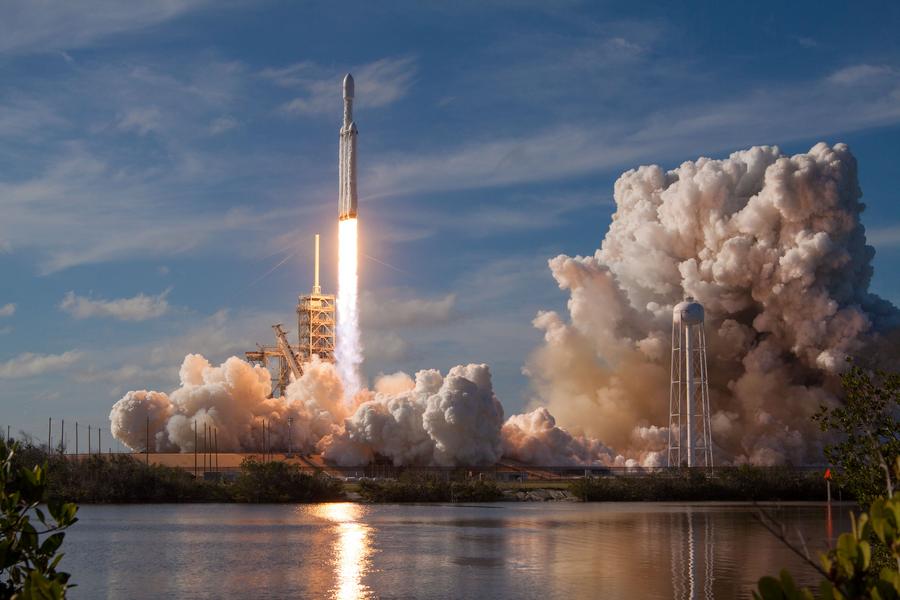
Has the successful launch of Falcon Heavy changed anything?
Yes and no. No, since Falcon Heavy has a payload of 63.8 tons in Low Earth Orbit. That payload is rather small compared with the Saturn V of the United States, which had a payload of 140 tons in LEO, and the Energia of the former Soviet Union, which had a payload of 105 tons in LEO. Falcon Heavy's payload is about 45 percent of the former and 61 percent of the latter. However, the Saturn V was introduced in 1967 for the Apollo moon missions and was last used in 1973 for the launch of Skylab, and the Energia-Buran was only used once, as production ended with the collapse of the Soviet Union.
Even NASA' planned Space Launch System, currently under development, has a payload of 150 tons in LEO.
Yes, because the Falcon Heavy launch cost $90 million. That number is astonishing considering both the US and the Soviet Union invested heavily in their Heavy Lift Launch Vehicle programs. From 1967 to 1973, the US spent $6.5 billion on the 13 Saturn V launches, or $500 million for each one. That's about the same amount of money it took to build the USS Enterprise, the US' first nuclear-powered aircraft carrier commissioned in 1961, which cost $450 million.
There is no official data about the costs of the Energia and N-1, the two most powerful heavy rockets of the Soviet Union, but they were undoubtedly very high. Worse, there were two accidents during launches. One in 1960 destroyed the whole launch base. The second in 1969 killed more than 150 scientists and military personnel.
The development of the Space Launch System has already consumed $18 billion from 2012 to 2017 and it is expected it will take at least another $18 billion before it is ready for use.
There are two main causes why SpaceX has managed to lower the costs so significantly.
First, it recycles and reuses the first-stage rockets, which are the heaviest and most expensive part of the rocket. The two side boosters of Falcon Heavy are second-hand devices recycled from Falcon IX, and they successfully landed side by side in unison as planned after the launch of Falcon Heavy. If the two can be used again, the cost of next launch of Falcon series will be further cut.
Second, SpaceX has no third-party supplier, as it has made all the technology needed itself. That's a remarkable achievement because even Apple has to buy parts from all over the world.
The successful launch of Falcon Heavy shows the vitality of private enterprises in the area of high technology without complicated bureaucratic procedures.
More than one expert has said that NASA might consider using Falcon Heavy as a way to fast-track its plans to reach the moon again for the first time since 1972.
Reports indicate China plans to launch its own Heavy-Lift Launch Vehicle in about 2030. As early as 2014, China had already opened its commercial astronautics market to private enterprises, and news reports suggest private enterprises might launch their own rockets in the near future, too. Public institutions and private enterprises can work together in China to make new breakthroughs.
The author is a writer with China Daily. zhangzhouxiang@chinadaily.com.cn





