Diagnosing the health benefits of nature's bounty









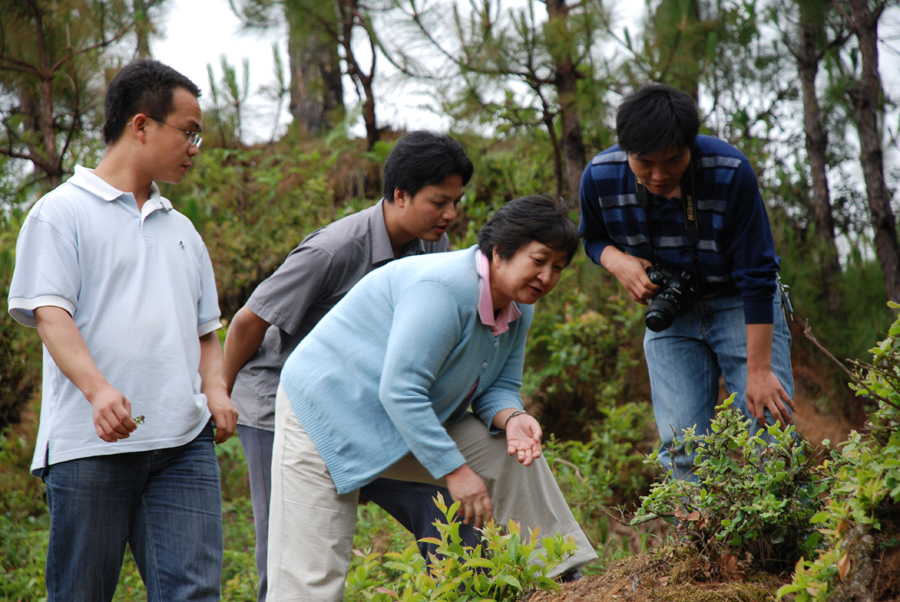
Scientist's journey of discovery takes her into the lush highlands and lowlands of Yunnan to uncover the medical secrets of ethnic groups and share them with the world
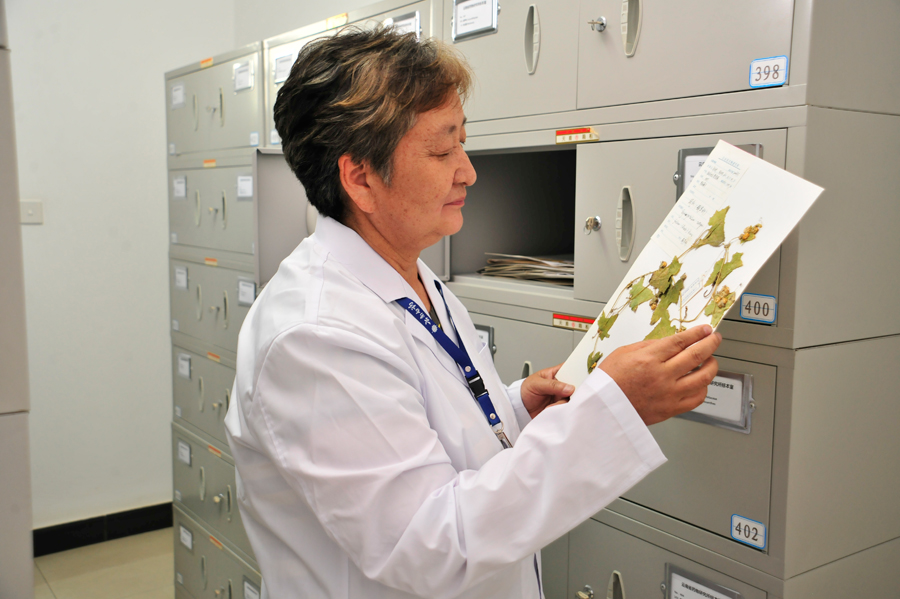
For more than three decades, Zhu Zhaoyun has been studying herbs, plants and the bounty of nature, to promote the medicine and medical knowledge of ethnic groups in Southwest China's Yunnan province.
Both far-flung mountains and labs are the battlefield for the 64-year-old senior engineer, who is now the director of the Yunnan Institute of Materia Medica and the research and development director of the listed pharmaceutical company Yunnan Bai Yao Group.
For her outstanding contribution to this field of medicine, Zhu was rewarded 3 million yuan ($476,190) by the provincial government of Yunnan in 2015. Before that, she also received first prize at the National Science and Technology Progress Awards and won a national model worker award in 2012.
In June 1982, Zhu became a member of the Communist Party of China when she was studying at the Yunnan University of Traditional Chinese Medicine. After graduation, she completed a survey of TCM resources in the Dali Bai autonomous prefecture where she worked as a technician at the Dali pharmaceutical factory.
In 1999, the Yunnan Institute of Materia Medica was set to be overhauled into a self-financed State-owned enterprise from a public institute previously funded by the government. Zhu, then 45, was appointed the institute's director, a decision that changed her life.
Difficult start
The institute, one of the 22 research institutes to be overhauled and thereby receive no more fiscal support from the government in 2000, was in desperate need for new medicines, researchers and marketing professionals. Many employees lost hope in the institute's future. At this uncertain time, Zhu took the lead in shouldering the responsibility to revive the institute's fortunes.
Zhu still remembers what the institute was like when she first arrived. "Inside the building were intertwined spider webs and rats jumped out of a drawer when I opened one in the office," she said. "It was a difficult environment to conduct experiments, not to mention research."
Cui Tao, the institute's deputy director, described that year as "a state of poverty and blankness". "Everything was started from scratch and the institute had been weighed down with too many negative things," he said.
Wang Jingkun, executive deputy director of the institute, depicted Zhu as an example of being both pragmatic and hardworking.
To get funds to restart research and the development of new medicines, Zhu began asking for help from every department she could think of. On many occasions she was turned down but there was no time to linger on the embarrassment.
However, her persistence finally paid off when she was granted more than 1 million yuan to renovate the institute's labs. Her journey to produce new ethnic medicines could finally start.
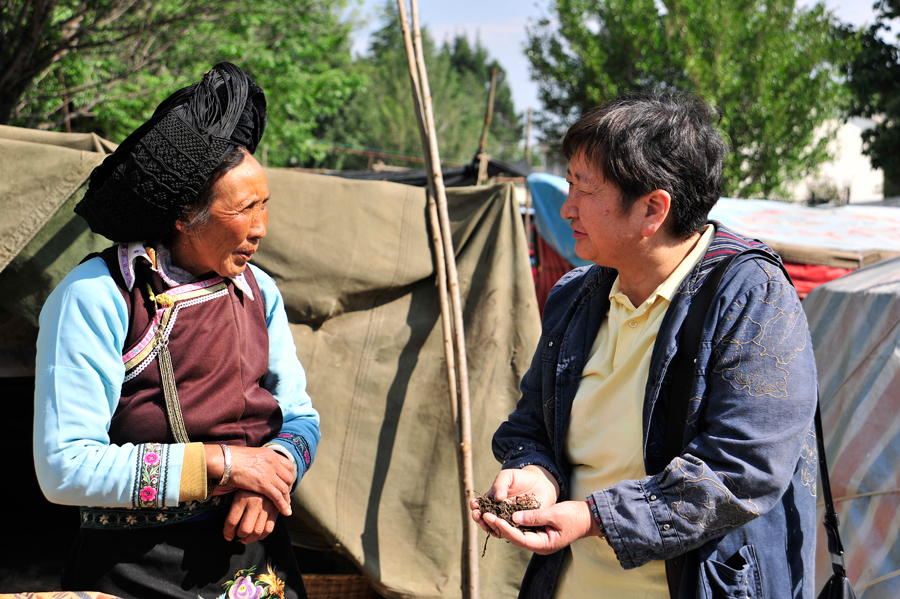
Survey and industrialization
Yunnan is known for its biodiversity with its mountains, rising more than 5,000 meters, and lush plains.
"Mountainous areas account for 94 percent of Yunnan's land. If we can develop new medicines, herb planting in rural areas can be strengthened. In this sense, the local economy can get a boost when our medicines are sold all over the world," Zhu said.
However, ethnic medicines are not well-known in the outside world. But the knowledge and expertise behind them are deeply rooted in local culture and should be cherished as unique and precious resources, Zhu said in one of her books The Innovative Development for Ethnical Medicines.
"Many fine medicines created by China's ethnic groups have not been developed and my responsibility is to promote them," she said. "We also want to bring them to the global market as well."
Innovation has been one of her priorities since she led a team, for the first time, to complete a wide-ranging survey on Yunnan's natural medicines.
Zhu's team collected more than 80,000 samples for more than 10,000 medicinal substances. About 160,000 pictures were taken to record original conditions.
She also chaired the compilation of the nine-chapter Illustration on Yunnan's Natural Medicines and other two books on medicine, to support the protection, research and development of such medicines. As the first author, Zhu was picked by the central government for the 2012 National Science and Technology Progress Award.
Based on the surveys, the institute accelerated the industrialization of ethnic medicines. Zhu and her team compared thousands of prescriptions and trialed medicinal materials to make a slew of Yi-ethnic-group medicines. Five of them were approved and patents were granted to six medicines.
Over the decades, the institute's researchers have left their footprints all over the province as they visited ethnic doctors and translated medical books. The efforts resulted in three databases to record more than 4,000 medicines.
"My team has found how to develop ethnic medicine mainly in three key steps; resource surveys, standardized research and then industrialization," she said.
Recognition and confidence
In 2012, the Yunnan Institute of Materia Medica was merged into the Yunnan Bai Yao Group, a listed company that had 2.6 billion yuan in net profit in the third quarter last year, an increase of 10 percent compared with the same period in 2016. For Zhu, the merger will provide her team with better support in technology and funds to produce more medicines.
The institute has 10 research departments, including one specifically for natural medicine research. A systematic chain of research and development has been built with world-leading hardware.
In January last year, Premier Li Keqiang visited the Yunnan Bai Yao Group in the provincial capital Kunming. As the company's chief scientist, Zhu was the one to introduce The Illustration on Yunnan's Natural Medicines to the premier.
"The premier told us that natural medicines belong to ethnic groups and the world, so the healthcare industry should be promoted to be bigger and stronger. Originating in China, natural medicines should go globally," Zhu recalled. "I will make more concerted efforts in study and research to formulate higher-quality medicines and bring Yunnan's indigenous medicine to the rest of the world."
In October, Zhu attended the 19th CPC National Congress as a member of the Yunnan delegation, a recognition of her achievements in the field of ethnic medicine and this gave her confidence to continue her course.
"As a Party congress delegate, I also want to make contributions to local economic development by integrating my research with the poverty alleviation campaign," Zhu added.




- Heady scent of wintersweet beckons all this season
- Good start for new five-year plan stressed
- Former Hainan official sentenced in bribery case
- Hangzhou residents enjoy rare snowfall
- Artificial reefs part of successful marine conservation efforts in Guangdong
- Zigong lantern festival combines cultural heritage with advanced technology