An agent of change









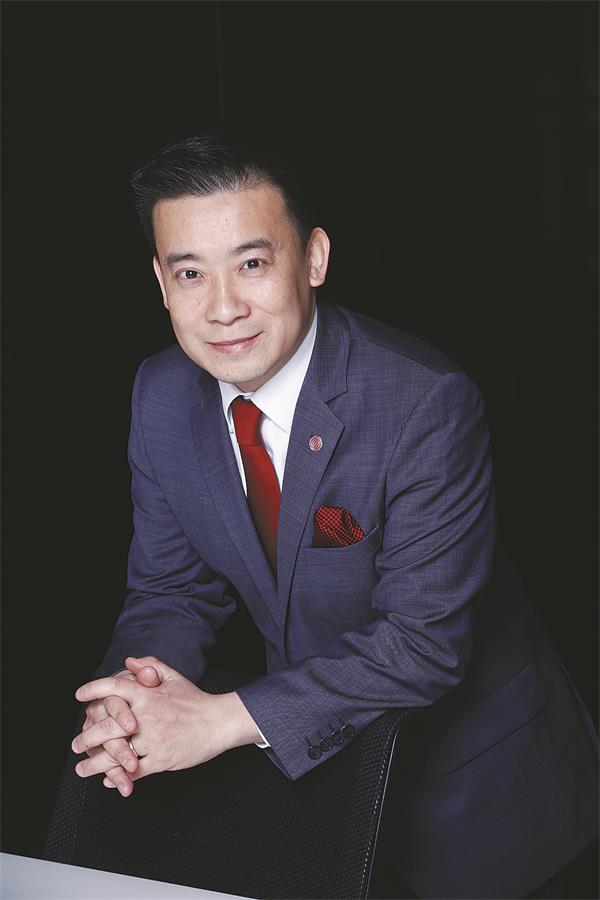
As a young boy, Julien Zhang’s playgrounds were the hutong that connected courtyard houses around Beijing. Three generations of Zhang’s family grew up in these traditional narrow alleys, just off Tian’anmen Square.
Doors opened into courtyards and homes where workers lived and raised their families.
Today, these are relics of the past. Many of the hutong that once symbolized “old Beijing” have disappeared under asphalt and concrete. The few that remain are now tourist attractions in a city totally unrecognizable from the one where Zhang grew up.
Born in 1973, he was witness to an era when China underwent unprecedented economic change and development. The son of a train driver, Zhang had a front-row seat, like many of his generation, as they watched the birth of a new China.
Even though many parts of “old Beijing” disappeared, Zhang was mesmerized by the new architecture springing up around his beloved city.
“I still love Beijing,” he says. “It represents the heart and soul of China and its people.”
Growing up at a time when the skylines of Beijing and other cities around the country were changing almost daily, Zhang was irresistibly drawn to real estate.
After leaving university in 1996, he took a job with Hong Kong-based Kerry Group before being offered a position with property consultancy Jones Lang LaSalle — JLL — later that year. He has been with the company ever since.
“JLL is not just a property company,” says Zhang, managing director for North China and head of China Global at JLL in Beijing.
“We provide professional services for investors and corporate clients. And with the workplace evolving due to (new) technology, we work closely with clients on how best to own, invest and occupy property.”
Zhang notes that people today live in an ever-changing world where technology has become the dominant factor.
Last year, JLL released a report, Future of Work, which gives a “unique perspective on the changing nature of work and the impact on the next generation of corporate real estate”, Zhang says.
“The new way of working will come even faster than we anticipated and this will fundamentally change how property operates today,” he says.
“Our Future of Work propriety model highlights five areas that companies should address to actively manage disruption through this period of change: Human experience, digital drive, continuous innovation, operational excellence and financial performance.”
Zhang says the rapid adoption of new technologies means “ripping up the rule book for companies and their employees”.
“It’s changing the world of work dramatically. We believe technology will bring new flexibility and an enhanced human experience into everyday life in terms of where and how people work and interact with each other,” he adds.
Given China’s high percentage of internet users, coupled with the fact that tech-savvy millennials represent a large share of the current workforce, adoption of new technology is likely to be swift.
In future, much routine work will be replaced or augmented by artificial intelligence.
Technology will also play an increasing role in how people interact with the built-up environment around them.
“The way in which precincts, buildings and spaces are designed and connected will also advance with human-centric analytics and insights driving performance with personalized experiences.
“All of this will have an impact on how the next generation will work. It’s an incredible time to be thinking about the future of work,” he says.
Zhang says technology is becoming more incorporated into the real estate sector to solve challenges in what is being called “proptech”.
Technology and real estate are converging “in exciting ways all around the world”, he says.
“We’re already seeing the potential of data analytics, AI, the Internet of Things, virtual reality and blockchain to transform how we invest in and occupy real estate in the future.
“When you combine that with all the technological advances that will power future workplaces, we see a huge amount of potential in the proptech sector as a whole.”
According to a recent report by JLL, Clicks and Mortar: The Growing Influence of Proptech, China has raised the most proptech funding in Asia Pacific, with approximately $3.02 billion from 34 deals.
“That’s not altogether surprising,” says Zhang.
“First, you have to consider the demographic and socioeconomic factors — a young population, rapid urbanization and a ‘mobile first’ mindset — that are in place to bring about mass adoption of technology solutions to real estate problems,” he says.
“Secondly, there is the sheer scale of the China market and the fact that Chinese technology companies have the ability and quality of solutions to expand globally.
“There are already a few well-funded proptech startups that we think will have a significant impact in the near future. As long as China continues to encourage innovation and support entrepreneurship, we’ll see many more proptech companies coming through.”
One of the biggest changes from technology and AI, however, will be in the workplace.
One of the positives will be that the emergence of these technologies will enable people to work “according to their productivity peak or go to the office earlier or later” to avoid congestion in big cities like Beijing and Shanghai, says Zhang.
“Remote work will become more popular, regardless of where you are, be it from home, a cafe or other flexible spaces, given that seamless communication is becoming more ubiquitous.”
Meanwhile, new business models in the workplace include a rapid adoption of co-working spaces — not just for startup entrepreneurs, but for corporates too.
Similarly, developers are beginning to offer amenities within their buildings to provide their tenants with greater flexibility outside the four walls of their offices.
Future workplace arrangements will be less about being deskbound, but with the opportunity to work in multiple environments, depending on what people need — for example, public areas, maker spaces, meeting and event spaces, learning labs, incubator hubs and other inspiring places.
Zhang, however, believes most companies are still taking a “wait-and-see attitude” before embracing new technologies and digital transformation.
“They are first going to try to educate themselves about the key trends before they begin experimenting within pockets of their organization,” he says.
“The point is we aim to create a workplace for the future, (and) involving the young generation and future workforce is a must.
“Not only will they bring new ideas on how best to leverage the current technologies, they can also build upgraded tech advancements on the current products.”
At the same time, in his view, more experienced workers will be critical in the future as every industry will “need to support the development of strategies based on their wealth of knowledge”.
Contact the writer at karlwilson@chinadailyapac.com.