



New cadres to drive rural rejuvenation









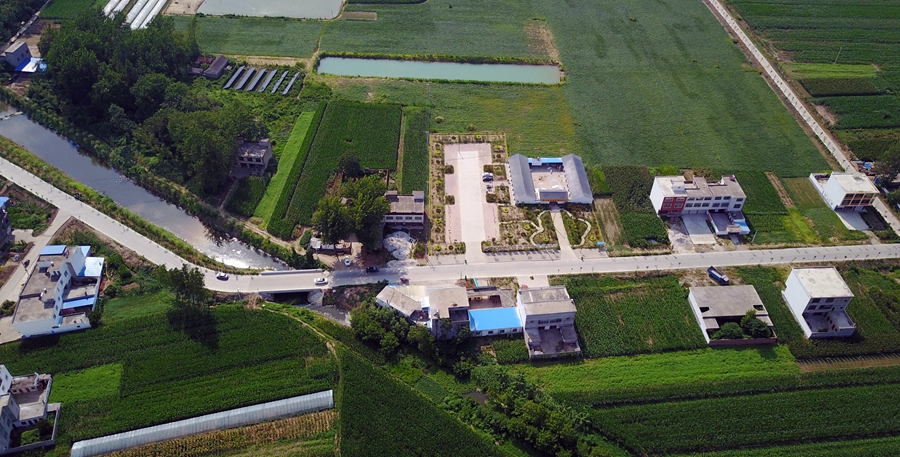
A township in Anhui province is recruiting young villagers in a bid to raise living standards, as Zhu Lixin reports.
In his report to the 19th National Congress of the Communist Party of China in October, General Secretary Xi Jinping announced that the nation will implement a revitalization strategy to promote the development of rural areas.
In the 40 years since China implemented the reform and opening-up policy, a wide range of measures related to rural rejuvenation have been implemented.
In fact, this is the 15th successive year that the "No 1 Central Document", an important raft of polices released by the CPC central authorities, has been devoted to countryside issues.
On Monday, when he delivered the annual Government Work Report, Premier Li Keqiang said the central government will strongly promote the rural revitalization strategy. Plans will be well-designed, and efforts will be made to advance supply-side structural reform in agriculture and deepen all rural reforms.
On Tuesday, Zhang Yong, vice-minister at the National Development and Reform Commission, told a news conference during the first session of the 13th National People's Congress that the commission and a number of government departments are drafting a plan to implement the rural revitalization strategy for the next five years, and major projects will be carried out during that period.
"The plan will strengthen support in three aspects - talent, finance and resources - and the support for talent will come first," Zhang said.
Talent shortfall
However, with more policies set to be announced, authorities in the eastern province of Anhui are concerned that some village cadres who say they shoulder too much responsibility for too little reward could become a major obstacle to the success of the reforms.
"Experienced cadres' understanding of the policies and their efficient working methods could make a great difference, but many of them just fail to catch the tide," said Wang Jiabao, deputy Party chief of Gaoliu, a rural township in Hefei, Anhui's capital city.
Chen Ping has been director of the villagers' committee in Chenxiaozhai, a small settlement in Linquan county, Anhui, since March 2016.
The 34-year-old physician was running a clinic in the village when officials from Lyuzhai, the township that administers Chenxiaozhai, persuaded him to replace his predecessor, who retired before he had completed his three-year term.
"I had never thought about being a village cadre until the officials encouraged me to take the job," Chen said.
Although Chenxiaozhai, which has a population of 6,964, was taken off a list of poverty-stricken places in September, raising living standards remains high on Chen's agenda.
Of the seven cadres in the village, only Chen and one other have computer skills.
In addition to overseeing village life, each cadre must maintain regular contact with a specified number of villagers.
"I am responsible for more than 1,500 people, but I have been unable to take good care of my own family," Chen said, referring to his heavy workload and low income.
Elections looming
Elections for cadres to serve a new three-year term will be held this month.
"The Anhui authorities require all the villages in the province to complete the elections before the end of June, while the county requires us to hold them before the end of April," said Yu Haitian, Party chief of Lyuzhai.
Linquan, which has a population of about 2.3 million, is one of the main targets of poverty-relief measures.
"As 2020 has been set as the deadline for the eradication of rural poverty nationwide, the earlier we elect the new cadres, the earlier they can start preparing for the task ahead," Yu said.
Two of the cadres in Chenxiaozhai will not stand for re-election, so Chen and his colleagues must find new blood to replace them.
However, although Lyuzhai has a registered population of about 63,000, many people have moved to more prosperous areas.
"More than 40 percent of local residents have migrated to cities for work, and most of those who remain are children or elderly," Yu said.
Under the rules governing rural areas, village cadres act in a part-time capacity and are not formally employed by the local government. As a result, they are not paid a salary; instead, they receive a monthly subsidy.
Chen and the local Party chief receive 1,700 yuan ($268) a month, while the other cadres get 1,100 yuan.
However, to fulfill his "part-time" duties, Chen practically works full time. "Occasionally, I have thought about quitting because of the unbearable workload and low income," he said.
"The post of village cadre was designated 'part time' when there were fewer things to attend to, but nowadays we have too many responsibilities and spend too much time working. It's very hard to find people willing to take on the job."
Yu would like more young people to express an interest. "We want more young villagers to become cadres because they are better qualified for this new era," he said.
To that end, the authorities introduced measures to strengthen rural administration, including recruiting graduates as cadres.
The recruitment project was launched about 10 years ago, and graduates who passed exams arranged by the provincial human resources authorities were sent to villages to serve a three-year term.
Even though they were employed by the government, the young people, known as "college graduate village cadres", were not civil servants. However, when civil servants were recruited, a number of positions were reserved exclusively for graduates who worked in rural areas.
"Many took the job as a transition stage, and most of them left at the end of their three-year terms. Those who wanted to stay found it extremely hard to find promotion opportunities," Wang said.


- Protection for minors enhanced
- Regional hub sets sights on world-class innovation
- Hainan FTP off to a good start, sees imports and arrivals soaring
- Emerging sectors in legislative focus
- Nation intensifies crackdown on telecom, online fraud
- Fudan University president suggests 'Lego thinking' to transform academic disciplines





