Peking University's new electronic games class popular with students









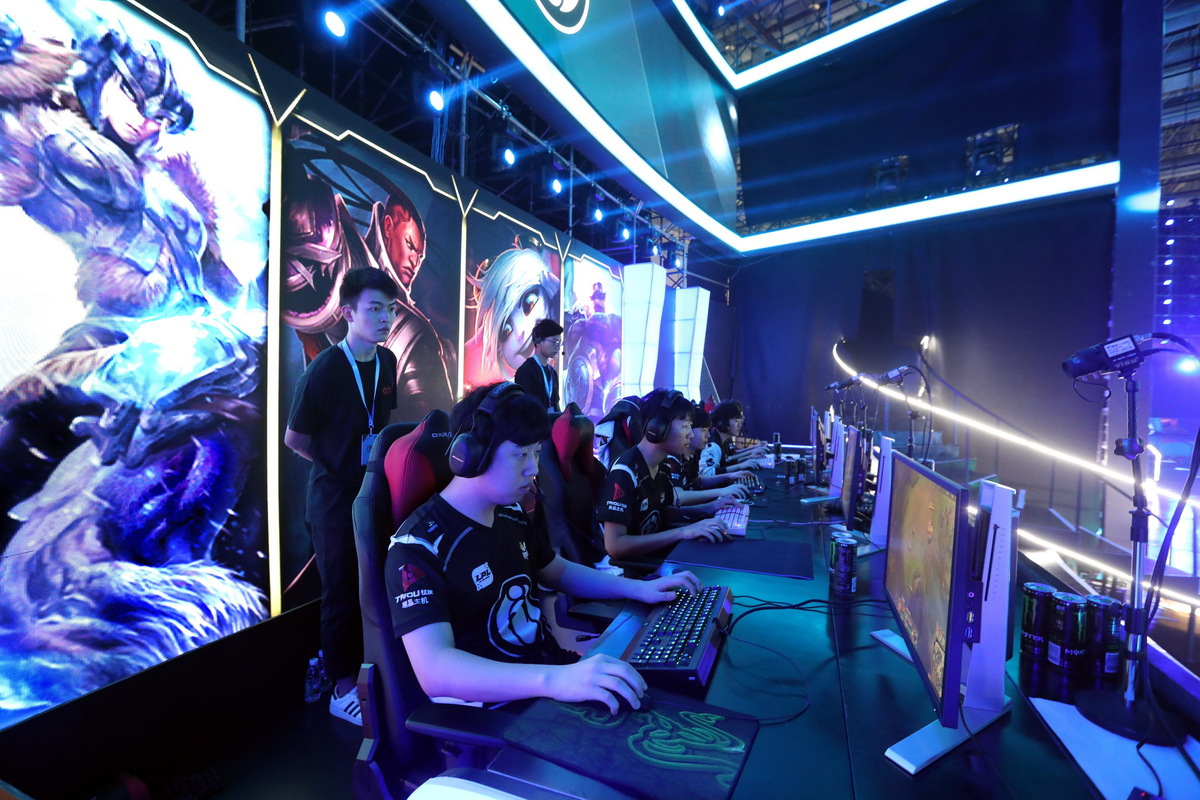
Peking University opened a new course on electronic games this semester, and students have responded with tremendous enthusiasm amid the fast-developing game industry in China, Beijing News reported.
The optional course General Theory of Electronic Games, which is open to all students, was designed to accommodate 120 students but attracted about 200 for the first two lessons.
"The course does not teach students how to play electronic games, but to study issues related to electronic games, including research and development, technology, the industry, publicity, and players' psychological problems," said Chen Jiang, the course instructor and deputy professor of the School of Electronic Engineering & Computer Science.
Chen wants the course content to have variety.
Apart from his own lectures, he invited guests to talk to students, including a team with firsthand experience in developing games, an alumna who created her own game, and a psychology teacher who could discuss the social and psychological problems caused by games.
Some students even have the opportunity to attend electronic sports competitions for close observation.
According to the 2017 China Game Industry Development Report, the annual revenue for the industry has reached 219 billion yuan ($34.6 billion), catching up with the US, the world leader that year at $36 billion.
Though the industry is a great contributor to GDP and employment, playing electronic games is still seen by many as an inappropriate pastime, especially for students.
The course is not meant to challenge traditional thinking, said Chen. "I like playing games, but I deeply understand the problems that games have caused."
Chen predicted many students will be involved into the game industry either through employment or investment, as the industry may develop into a backbone of the entertainment industry before long.
A report from the Wall Street Journal reveals that almost all Chinese people have mobile phones and one-third of phone users are game players.
"In 20 years, Chinese people of all ages have played electronic games and the development of the industry will affect many people," said Chen. "Our students are projected to make or enforce policies. It matters how they think and lead the industry's development."
"I have a sense of mission. I want more students know what electronic games are -- the benefits and problems," he said.
In response to widespread criticism of electronic games luring adolescents into addiction, Chen believes the government, game companies and parents should work together to change the situation.
"In the future, the government can order biological detectors to be installed on all games, to identify whether the player is an adolescent through fingerprints and irises," Chen said.
Also, game companies should have moral standards when developing games and parents should not simply use games to comfort a crying child.
He also suggested having the government collect a tax based on the time a player spends on a game. "Playing consumes national productivity," said Chen. "Game companies earn profits from games but also have to pay for the productivity consumed in playing games."
Chen's course on electronic games is not an innovation. In 2016, the Ministry of Education authorized 13 new disciplines and "electronic sports and management" was one of them.
In the same year, a higher vocational college in Inner Mongolia autonomous region opened a course on electronic sports, the first of its kind in the country.
In 2017, the Communication University of China set up a major for Digital Media & Arts (oriented in digital entertainment), which focuses on the planning and operation of digital games.


- Xiangchao concludes with Yongzhou claiming championship
- Answers
- CPC leadership meeting urges steadfast implementation of eight-point decision on improving conduct
- Ethiopian coffee trading center unveiled in Zhuzhou
- Mouse births pups after space mission, paving way for future research
- Autumn grain purchases exceed 200m tons in China