Overproduction threatens Andes superfood haven









LIMA - From atop the Andes mountains to the depths of the Amazon rainforest and frigid Patagonia, indigenous people have long eaten quinoa, camu camu and calafate, a healthy diet that has become a global phenomenon now threatened by overproduction.
Rich in antioxidants, vitamins, amino acids, minerals and fiber, the grains of the high plains (quinoa, amaranth, kaniwa), roots (cassava and yacon) and berries (calafate, Chilean guava) offer new hope to prevent cardiovascular disease, obesity and cancer.
Consumed for thousands of years by indigenous people, these superfoods have only recently been widely popularized and made accessible to international markets.
Between 2011 and 2015, these ancient natural products saw their prices jump 202 percent, according to Promperu, Peru's export and tourism commission.
There was a 10 percent increase from January to November 2017 in the exports of these foods, such as the sacha inchi nut rich in fatty acids and the high-vitamin lucuma fruit, Promperu said.
The growing consumption of these health foods praised by foodies, vegetarians and dietitians has led producers to try to align their annual yields with demand.
Between 2012 and 2017, exports of Peruvian quinoa, the "golden grain of the Incas," have quadrupled in value from $34.5 million to more than $124 million, data from Promperu showed.
Sacha indi exports increased 116 percent last year.
But the soil composition and the processing the superfoods undergo to be sold commercially and exported can alter or destroy their unique properties, warned Marcela Zamorano, a chemist specializing in food analysis at the University of Santiago, Chile.
Quinoa is often processed using high temperatures.
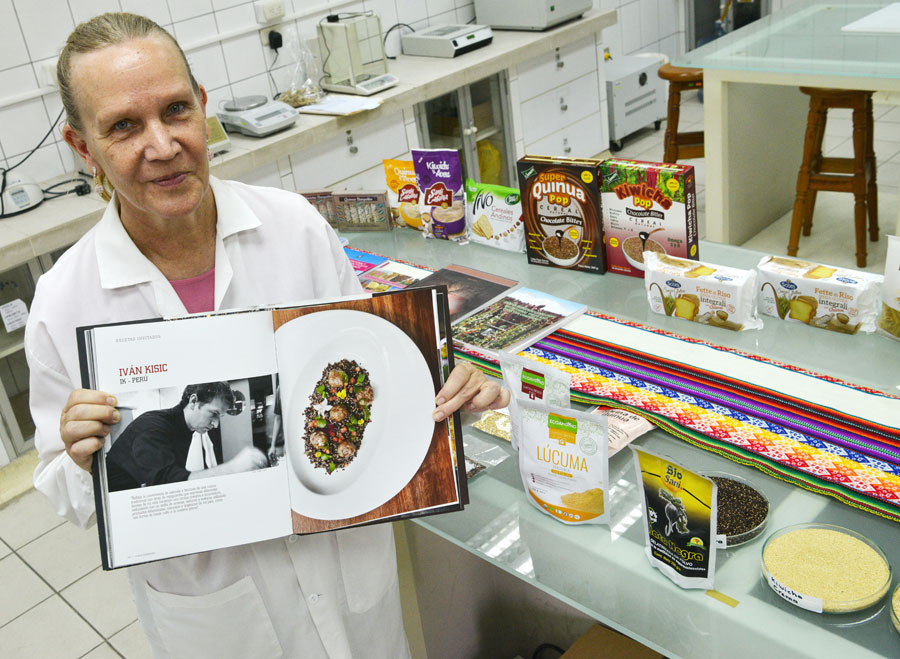
"The main challenge is to make sure the nutrients of an industrialized product don't decrease compared to the original grains," said Finnish food chemist Ritva Repo of La Molina agrarian university in Lima, who has written several books about quinoa.
Originally from the Andean Plateau of Bolivia and Peru, quinoa is now also grown in China, India, the Netherlands and the United States, among others.
Taken out of its natural habitat, this Andean grain loses some of its nutrients, according to Repo.
"The quinoa that grows at 4,000 meters is the most nutritious," said Promperu director Isabella Falco, who is pushing for labeling the grain by origin so the consumer can identify Peruvian products.
Amaranth, which is richer in calcium and protein than quinoa, and kaniwa, which contains more fiber and iron than amaranth, could eventually join other ancient Andean grains in meeting the same fate as quinoa.
Experts say these grains, fruit and berries can help prevent or slow the progress of noncommunicable chronic diseases such as diabetes.
But they can't replace medicine if you're sick, stressed chemist Marcela Zamorano.
"Usually, superfoods don't fight a particular pathogen, but they prevent the development of certain diseases," she said.
Agence France-presse