A China-US trade war would hurt everyone









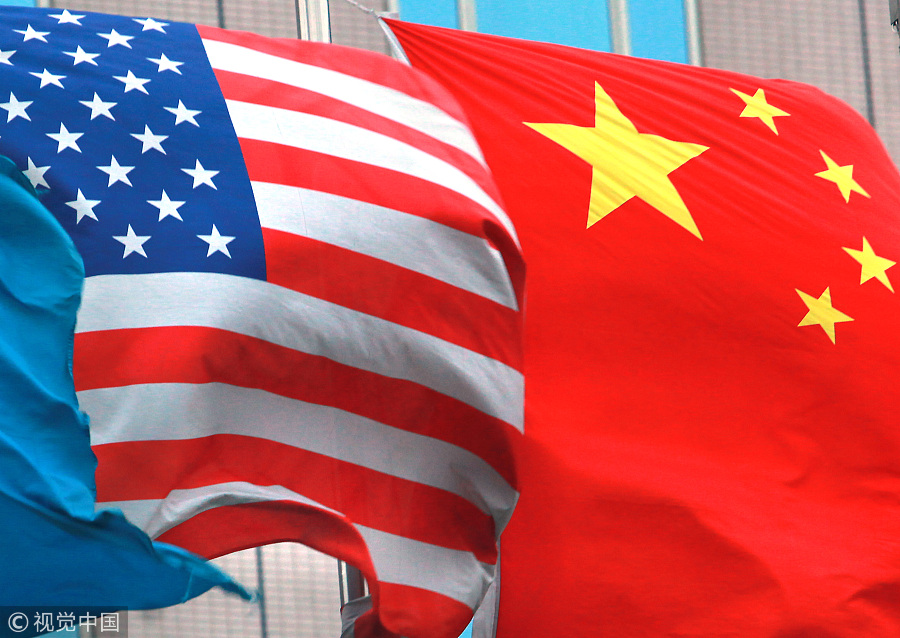
Sino-US economic ties seem to be entering a troubled time since US President Donald Trump signed a presidential memorandum on March 23 that could impose tariffs on up to $60 billion of imports from China, despite warnings from business groups and trade experts.
Last week, the Office of the US Trade Representative published a Section 301 investigation report that can lead to an additional 25 percent of tariff hikes on listed imports from China worth about $50 billion in annual trade value. Later, Donald Trump suggests an additional list of imported goods from China, worth about $100 billion, be subject to 25 percent tariff hikes under Section 301.
The United States' trade deficit with China — $375.2 billion by US calculation and $275.8 billion by China's computing in only the trade in goods — is cited by the Trump administration as the main cause of its protectionist ploy. But any sensible mind would not easily ignore the huge gap between the two figures.
The US has not included its surplus of $50 billion in its service trade with China. Also, a considerable part of China's surplus in the trade in goods with the US is the surplus secured by South Korea, Japan and Germany in their trade with the US, as many of their companies export to the US from their manufacturing base in China. So, China's surplus is only nominal.
According to the Ministry of Commerce, 59 percent of China's surplus in goods trade comes from processing trade. Last year, the South Korea's surplus in its trade of goods with China neared $75 billion.
The US' trade deficit with China shows the decline of its industrial competitiveness, which happened during the rise of China's production efficiency. The US is stronger than China in service sectors, and China stronger in manufacturing industries.
The US accomplished its industrialization a long time ago, so most of its manufacturing industries have relocated to other countries, and the service sectors account for nearly 80 percent of its economy.
China has a complete industrial system that runs at comparatively low operating costs compared with developed countries.
These basic facts cannot be changed because of trade disputes. Instead, they are the foundation that the trade policymakers must adapt to.
The US keeps silent over the fact that the trade surplus is different from real profits. What China earns, mainly from processing fees, pales in contrast with the US' profits from design, parts supply and sales. The foundation of economic relations between China and the US is win-win cooperation. Otherwise, it would not be impossible for the ties to develop into the most important economic ties, in both size and influence, over four decades.
The other cause of the US' deficit is the US government's restrictive policies discouraging export. The US has taken a series of measures to prevent high-tech products from being exported to China. Statistics from US researchers show that lifting the high-tech ban could reduce the US' trade deficit by 35 percent.
Trade wars or tit-for tat tricks can only escalate trade frictions, which can only be resolved by negotiations on equal footing between the two sides. All countries are obliged to defend the framework of the World Trade Organization, and use it as a mechanism to resolve disputes and frictions related to trade.
As the world's two largest economies, the US and China should know that their trade ties are the most important bilateral trade ties in the modern world and is of great importance to the global trade and economy. The two countries should demonstrate more prudence, foresight and wisdom to properly handle their trade disputes, which will directly influence the restorative growth of the global economy.
The author is a researcher of industrial economics in the Development Research Center of the State Council.