



Domestic demand backbone of China's economic development









Chinese domestic demand's contribution rate to economic growth averaged 105.7 percent between 2008 and 2017, according to National Bureau of Statistics data.
The highest contribution rate of 142.6 percent was registered in 2009, when the financial crisis shocked the globe, and the lowest contribution rate of 90.9 percent was recorded in 2017, when the global economy was recovering.
Between 2013 and 2017, national per capita disposable income increased 7.4 percent yearly, 0.3 percentage points higher than the average annual GDP growth rate. In 2017 alone, consumption contributed 58.8 percent to economic growth, 13.5 percentage points higher than the contribution rate in 2007.
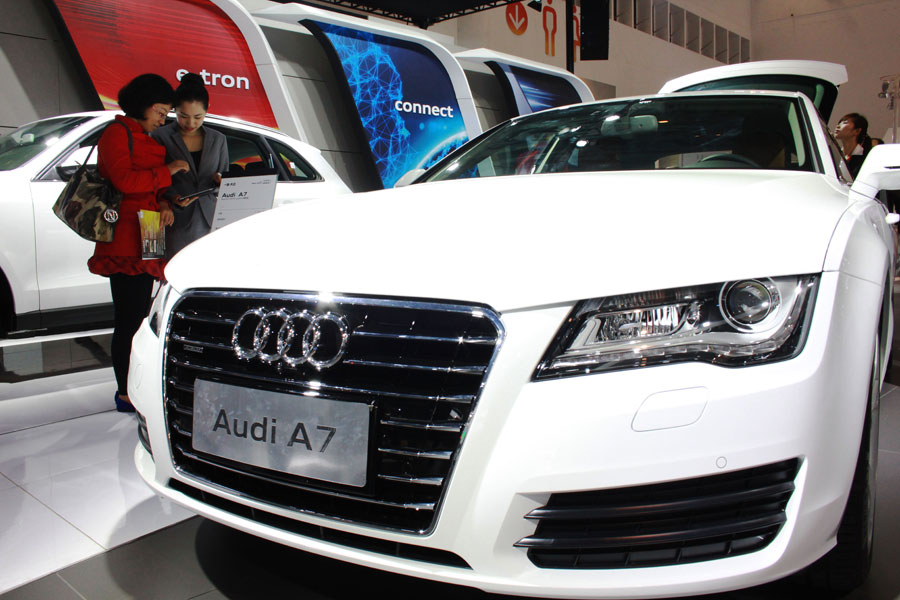
By 2017, Chinese residents' Engel's coefficient — which designates the proportion of income spent on food — has dropped to 29.3 percent, indicating there is high possibility for consumption of clothes, housing and transportation to increase. For example, there are 29.7 cars for every 100 Chinese residents, compared to 200 cars for every 100 US residents and 150 for every 100 residents of Europe, the NBS said on its website Tuesday.
In the first two months of this year, 1.73 million sport utility vehicles were sold in China, up 11.6 percent, year-on-year, accounting for 38.3 percent of all cars sold, and 3.5 percentage points higher than the rate last year, according to a post Tuesday on the website of the National Development and Reform Commission. In addition to SUVs, new energy vehicles, another example of consumption upgrading in the auto sector, saw a year-on-year increase of 200 percent as a total of 75,000 e-vehicles were sold in the first two months of this year.
Chinese residents' need for service consumption has also started to increase in areas such as information, medical care, elderly care, home maintenance and tourism. In 2017 alone, the country's information consumption hit 4.5 trillion yuan ($714.8 billion).
By the end of February, China had 1.28 billion mobile internet subscribers, up by 14.8 percent year-on-year, according to the post on the NDRC website. Entire data traffic over these two months amounted to 6.89 billion gigabytes, up by 186 percent year-on-year.
During the seven-day Chinese Spring Festival holiday in February, the country received a total of 386 million visitors, up by 12.1 percent year-on-year, resulting in revenue from tourism of 475 billion yuan, up by 12.6 percent, according to the NDRC.
In the first quarter of this year, the country's box office revenue amounted to 20.22 billion yuan, up by 39.8 percent year-on-year, according to the NDRC.
Broken down, domestic films' box office revenue reached 15 billion yuan, up by 93.2 percent year-on-year, accounting for 74.2 percent of the entire box office revenue, up from 53.7 percent in the same period last year.
As logistics, telecommunication and transportation are improving, e-commerce is extending further to rural areas. In the first two months of this year, retail sales in rural areas hit 903.6 billion yuan, up by 10.7 percent, 1.1 percent higher than the growth rate for retail sales in urban areas.
The country's urbanization progress will also boost consumption, as NBS's primary assessment shows that one percentage point of growth in the urbanization rate will lead to a two percentage point growth in consumption. There is still a huge gap between the 80 percent urbanization rate in developed countries and China’s rate of 58.52 percent, achieved by the end of 2017.




















