



'Understanding deficit' biggest risk









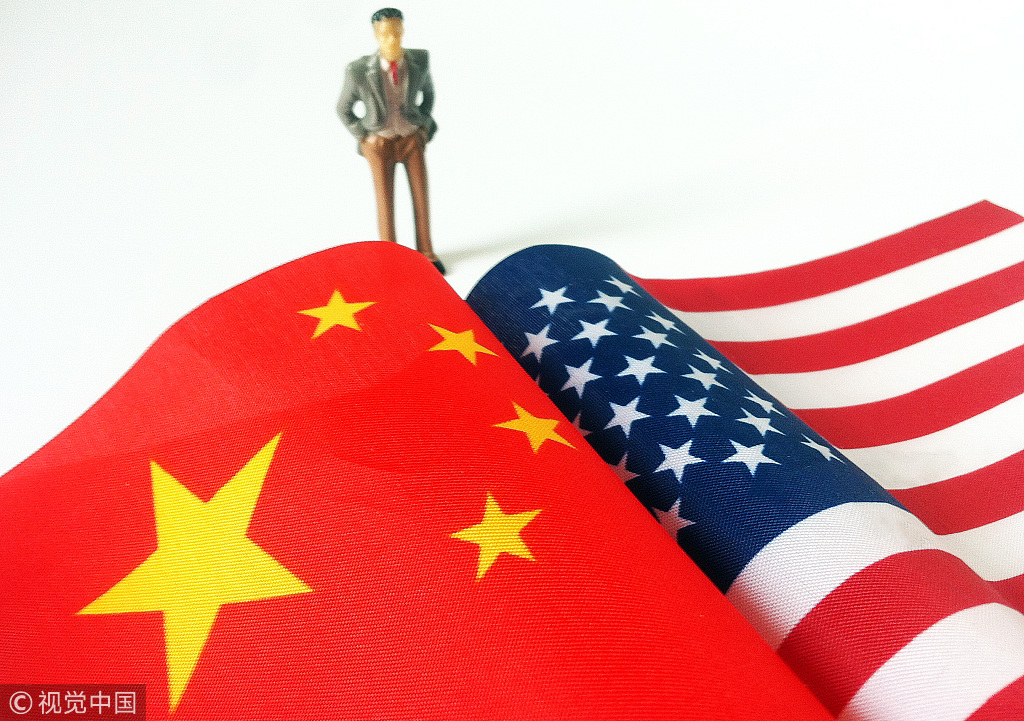
With the world talking about the impact of, and solutions to, a possible trade war between China and the US, a senior Chinese diplomat cautioned that an "understanding deficit" is greater risk for the two countries than their trade deficit.
Cui Tiankai, China's top envoy to Washington, has on many occasions said that the large trade deficit between the world's top two economies is owing to many factors, including the US' economic structure, low savings rate and high-tech export restrictions.
Delivering a speech at Harvard University's Fairbank Center for Chinese Studies on April 17, Cui said that although some people want to make the trade deficit a big issue, the "understanding deficit" is more significant, more difficult to balance and "may have negative impact that lasts longer if we don't make our best efforts to reduce it".
"Understanding deficit" is a term used by Michael Szonyi, Fairbank Center director and professor of Chinese history, in his introduction to a new book, The China Questions, in which he said: "We might even say that just as the United States has a trade deficit with China, it also has an understanding deficit."
One of the foremost concerns of Cui, China's longest-serving ambassador to the United States, is about the "new era", a term that has caught global attention. The "new era" is domestically focused, rather than a geostrategic plan. It prefers quality over quantity in economic development, and also takes into account political, cultural, social and ecological aspects.
The new era has some outward-looking aspects, though, because China's development has to keep pace with global trends, Cui said. But as he said: "This is certainly not a plan for securing world dominance, it is certainly not a Chinese new era to replace the old American era."
Another "gross misinterpretation of China's intention" lies in the US' recent labeling of China as a "revisionist power" attempting to overturn the existing world order, Cui said. China has religiously followed the principles set forth in the United Nations Charter, from honoring sovereign equality of the UN member states and peacefully settling disputes to not interfering in other countries' internal affairs.
By contrast, cases of violating these principles are not rare, Cui said. For example, some countries have frequently used force or threatened to use force to violate the sovereignty of other countries, launched wars without the UN Security Council authorization, and even defied the Security Council to unleash chaos and bloodshed in the name of "humanitarian intervention".
"The very people who are responsible for all this are now pointing the finger at others as a revisionist country." Cui said. "I think it is high time for us to review and reaffirm these basic principles so that we could have a better and more effective international order."
Cui also refuted US President Donald Trump's claim that China has stolen American jobs. US jobs have been lost because of the "global resource allocation of US companies, who seek the best for their interests", Cui said in a speech at the Wharton China Summit in Philadelphia on April 15.
Between 2001 and 2017, US gross domestic product doubled, meaning the US' overall social benefits have vastly increased, Cui said. But even so the living standards of many Americans have dropped. "This is obviously a domestic problem, an issue caused by management," he said.
Cui also rebutted accusations that Chinese academics working in the US might be covertly gathering intelligence for the Chinese government, calling the charge "baseless".
Thus what urgently needs to be addressed is Washington's "understanding deficit" with Beijing rather than its trade deficit. Promoting better, deeper, and more realistic mutual understanding between the two countries is in their mutual interest as well as in the interests of the world.
The author is deputy editor-in-chief of China Daily USA.





