



Nation's success an example for the world









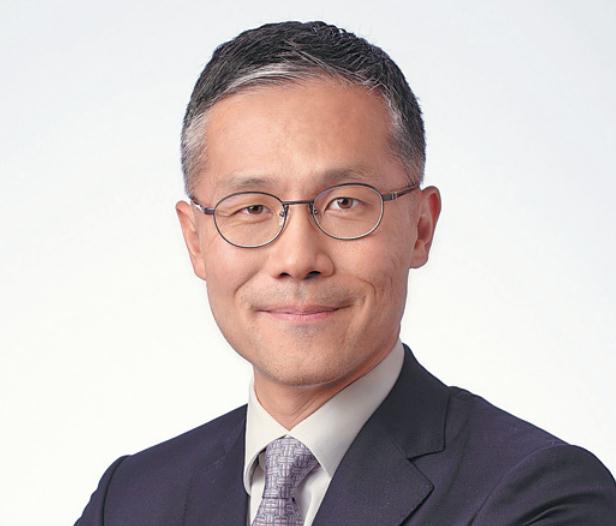
Editor's Note: This year marks the 40th anniversary of China's reform and opening-up. China Daily interviewed top executives of well-known multinational companies for their views on the country's socioeconomic development.
McKinsey China executive says many Chinese companies are shifting focus from 'learning from the West' to 'exporting to the West'
Please use three words to describe China's changes in the past 40 years.
Unprecedented scale, transformation, ambitious.
What are the biggest achievements in China since the introduction of the reform and opening-up policy 40 years ago?
The rise of modern China is the most consequential story of our times. More than 700 million people have been lifted out of poverty over the past four decades, and China is now the world's second-largest economy. The country has probably experienced more change at a greater scale over this period than at any other in history, even as it has projected itself onto the world with more effect than ever before.
Clearly, policies from the top were crucial to this positive outcome. The government created incentives for the domestic economy, encouraged foreign investment and allowed innovation to thrive. China's entrepreneurs and workers then converted these policies into an economic transformation that took advantage of the country's scale and talent pool. Their adaptability, flair, and willingness to take risks created today's China.
According to McKinsey Global Institute, China's urbanization level increased from around 20 percent in 1978 to nearly 60 percent today, and will continue to be an important theme over the coming decade. China has become the world's leading manufacturer and has created world-class infrastructure such as the train networks, high-speed rail and is expanding its roads and airports continuously. China is achieving large productivity gains and moving up the value chain in different industries.
What's the biggest challenge China faces today and how can the country overcome it?
The biggest challenges China faces today are: Balancing continued growth with a shift from investment to consumption, SOE reform and social inequality. The path that we have been on is a proven formula: Set a clear vision and ambition from the top, create the right policies and incentives and empower the local level to execute.
How has your company benefited from China's reform and opening-up policy?
McKinsey established our Beijing and Shanghai offices in the 1990s. In the first phase of our firm's activities in China, we were counseling many State-owned enterprises in their reforms. At the same time, many of our global clients were accelerating their operations to participate in the China market. That gave us a great foundation in many industries, including manufacturing, financial services, high-tech, industrials and consumer goods.
In the 2000s, we started to help many privately owned enterprises as they scaled up their businesses, many of them transitioning from family-run businesses into large-scale enterprises. These involved many operational transformations and organizational changes, as well as developing institutional capabilities.
In the last few years, our clients have all transformed their business models due to the digital economy and other innovations and technological changes. Some of our clients are also looking at expanding beyond China and becoming global enterprises. The business context has become a lot more complex, and we are privileged to be a core partner to many of China's leading companies across sectors.
Has competition intensified between your company and Chinese companies?
In our industry (management consulting), it is really important to have scale and a global footprint. Our Chinese clients want to understand innovations and best practices from around the world. With our presence in more than 60 countries and with over 14,000 consultants, we are able to mobilize our global network and experience for our clients as "One Firm". This capability is not easy for local Chinese companies in our industry to replicate, at least not yet. We actually work with some Chinese companies as collaborators-for example, sometimes we will form a consortium of different firms to jointly help our clients. At the end, I think of collaboration in our industry more than competition.
How do you view China's role in the world today?
China is one of the top priorities for businesses around the world, in both mature and emerging markets. Whether it is around accessing Chinese consumers, sourcing from Chinese suppliers, collaborating with Chinese partners or competing with Chinese companies, a "strategy for China" is critical in many boardroom discussions. For many companies, China is a huge opportunity. Of course, there are also those for whom competition from China is a threat-but in a global ecosystem, China is undeniably an increasingly critical component.
Could China's experiences and practices be used to solve global problems?
Absolutely. I think for many developing countries, China's experience and innovation in the past decades can be very helpful. Of course there is never a "copy and paste" solution, but I think that some of the innovation and bold moves that China has made in the past decade are very inspiring. As consultants, we can see a lot of good "case examples" and "lessons learned" from China's development.
What is the most unforgettable experience you have had in China?
I have worked with many fast-growing Chinese companies over the past decade-what is unique about this is the rate of transformation of businesses. Many businesses that started off with "learning from the West" have now surpassed many global companies in terms of their innovation in technology, business model and even organization. In November 2017, I brought 20 multinational CEOs to China to learn about these developments, and the CEOs all left China in amazement in terms of what our local companies are doing. I believe that in the next decade, we will see a lot more of "exporting to the West" from Chinese companies-the progress has been amazing and frankly, very inspirational.
What will be the country's"calling card" in the coming years?
China doesn't need a calling card-we are already the second largest economy and will soon become the largest economy in the world. Of course there are still a lot of challenges and problems to solve, including SOE reform, development of the western region, bridging the increasing gap between the rich and the poor and better healthcare. But in a country of our size, these are natural challenges that we need to work on. If you look at the amount of energy from young people, the rate of innovation that is happening, people's aspirations and the ambitions of Chinese companies, you can only see much more upside that will come from China in the next few decades.
CV
Name: Joe Ngai
Age: 44
Career:
Current position: Managing partner, McKinsey China; senior partner, McKinsey & Company
2002-now: McKinsey
2000-02: Co-founder of an internet startup
Education: Bachelor's degree in economics from Harvard University, JD and MBA from Harvard Law School and Harvard Business School
Family: Married with two children




















