A Himalayan opportunity for integration









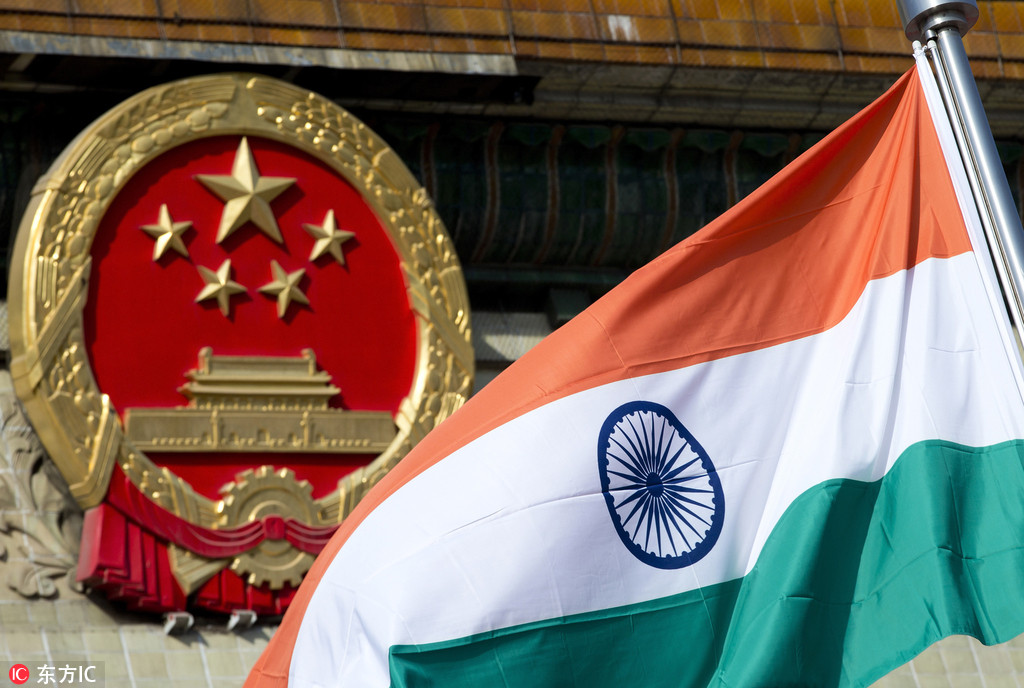
The third Himalayan Consensus summit saw 75 speakers from around the world elaborating on a variety of issues which have an impact on the lives of those living in the greater Himalayan region, who comprise a sizable percentage of the world population. The political boundaries across the fragile Himalayas have had a great impact on the lives of many.
When birds fly, they do not see boundaries nor do the animals that crisscross different regions, and definitely not the air pollutants that affect the health of millions of people. Until now, countries have been secretive about the data they gather on the flow patterns of rivers or the movement of people, but the time has come to open up discussions to share such data so there is more of a regional focus rather than an individual country focus.
The International Centre for Integrated Mountain Development, a multilateral organization headquartered in Kathmandu, has built a repository of knowledge and research. It has formed a partnership with the Himalayan Consensus to look into the business aspects of regional partnerships and other arrangements that can leverage their findings for practical purposes.
Toward building a Himalayan charter
Nirupama Rao, India's former foreign secretary and former ambassador to China and the United States, proposed that a group of countries in the Himalayan region sign a charter that will delve into areas of mutual cooperation and action. She reflected on the principles of Panchasheel, or the Five Principles of Peaceful Coexistence, which China and India signed 60 years ago. Recognizing the challenges of shared boundaries, shared ecologies, cross-border connectivity and sustainable development is important. The fragile Himalayan environment and ecology needs to be protected, and heritage, both tangible and intangible, conserved. In this respect, David Molden, director-general of ICIMOD, has proposed the formation of a Himalayan Council that would be tasked with working on specific issues related to the future of the Himalayas.
What is also required is a platform for track-two dialogue, especially because China and India are trying to work together on economic issues and figure out ways to strengthen cooperation. The global landscape has changed over the past couple of years with the US increasingly preoccupied with domestic issues, Brexit raising a set of new discourse, and the free movement of people across geographies being questioned.
Contrary to what we read or hear in the media formulated as a result of Western perspectives on Asian issues, the China-India relationship has improved significantly. President Xi Jinping and Indian Prime Minister Narendra Modi have developed a personal working relationship. Chinese investment is increasingly visible in India, while in China, Indian students comprise the third-largest group among foreign students. There has also been more movement of scholars and para-academics between the two countries.
At the Himalayan Consensus summit in January in New Delhi, it was surprising to see many an interesting development vis-à-vis China-India relations. Although the Donglang (Doklam) border standoff strained bilateral relations in the short term, we can expect Modi's "informal" summit with Xi in Wuhan, Hubei province, to further boost bilateral ties.
Never in recent history have there been so many high-level visits and interactions between the two countries. China realizes it cannot fulfill all the Belt and Road Initiative goals without the support of India, and India realizes that by joining the BRICS New Development Bank and the Asian Infrastructure Investment Bank, it has put a foot in the door and needs to figure out how it can take advantage of the new paradigm instead of trying to oppose it.
As Mahendra P. Lama, board member of the Himalayan Consensus, said, the Himalayan Consensus works as a perfect platform for discussing how to make China's Belt and Road Initiative and India's "Act East" policy work, and the Himalayas are at the center of the two initiatives. The Himalayan Consensus is thus now surely recognized as a platform for track-two dialogue.
Unleashing growth through connectivity
Humanoid Sophia, who was awarded an honorary citizenship of the imaginary "Kingdom of Shambala" at the summit, was very clear that the future of the robots would be better if technology-driven China and India can work together.
These sentiments were prevalent throughout the summit, as everyone is exploring how to take advantage of the opportunities that connectivity presents. In India and China, the discourse now focuses on the glorious past of the 12th century, when the two countries were the most prosperous in the world. It is therefore important for the two countries to achieve similar levels of prosperity in the region through better transportation networks and connectivity.
Economic growth in the Himalayan region is centered on its topography, landscape and abundant natural resources. However, the future of growth is also dependent on the care we take of the fragile ecology and environment. There is also a challenge in ensuring that growth does not invite more conflict, and there is a necessity to keep an eye out for any crises that could be induced either by humans or by nature.
History tells us that sharp changes in livelihood patterns and economic transformations can bring about challenges of different natures. Under the aegis of the United Nations, multi-layered dialogues will begin, as announced at the summit, and continue this year across the region, especially in Beijing and New Delhi.
The author is general secretary of Himalayan Consensus and founder of Nepal Economic Forum.