Chinese interest for US IPOs still strong









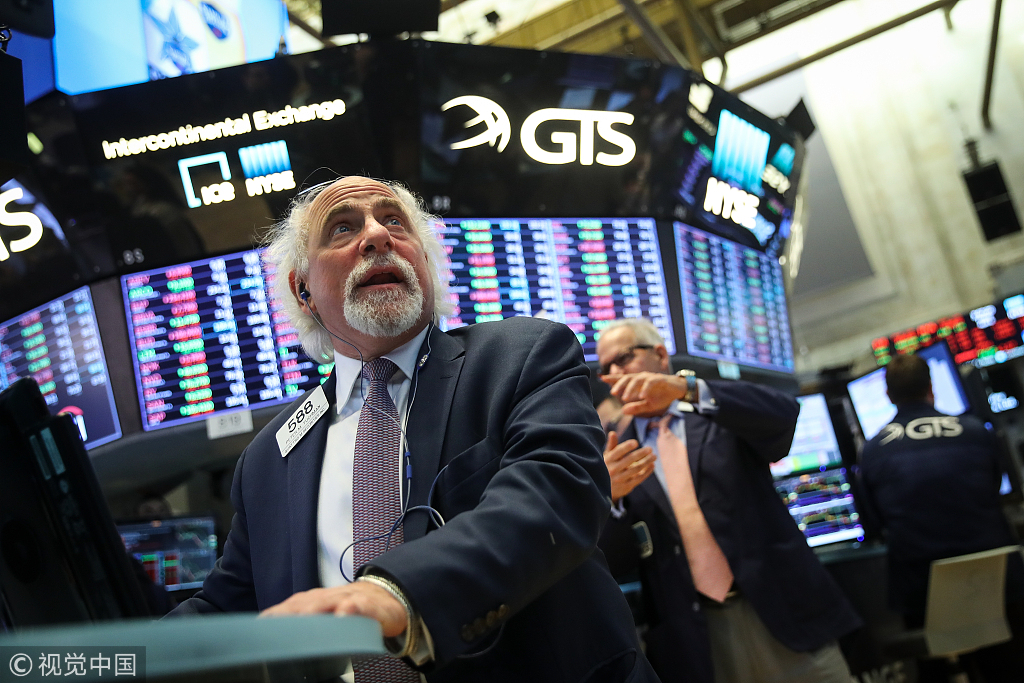
Trade disputes haven't curbed businesses' plans to list overseas
Chinese companies are looking to launch IPOs in the United States regardless of the ongoing trade tensions between the two countries.
"Despite the heated talk on trade, I remain an optimist about US-Chinese relations, economic and otherwise," said Drew Bernstein, co-head of the China practice at Marcum Bernstein & Pinchuk and an auditor of Chinese IPOs in the US. "I can tell you that we are getting more inquiries about US IPOs from China right now than at any time in recent memory."
Chinese IPOs in the US accounted for about a fifth of US IPO proceeds in the first quarter this year, according to Renaissance Capital, an IPO research firm based in Connecticut.
"There are several factors that make a US listing attractive to Chinese companies," said Bernstein. "Time to market can be much faster, given that IPOs need to meet disclosure requirements but are not subject to government approval and don't have to wait in line.
"The US also has very active, liquid markets for follow-on equity and debt offerings. As long as a company performs financially, they can return for multiple rounds of funding at a lower cost of capital," Bernstein said.
Matt Kennedy, IPO market strategist at Renaissance Capital, said: "There is a backlog of Chinese IPOs there pending approval. There are several restrictions in place ... And the dynamic in China seems to favor investors rather than issuers."
However, Kennedy said Chinese IPOs' performance so far this year has been disappointing.
"Looking at the eight companies that have listed in the US, six of them have had a negative return. The two positive ones (microcaps) have raised less than $15 million. Also, investors are not making money on Chinese IPOs," he added.
"We continue to see a wide spectrum of the readiness of teams to truly be successful as US public companies," Bernstein said. "That is why when I talk to Chinese CEOs, I always frame this as training for a marathon while running a sprint. You don't want to be that broken IPO that does only one financing, and two years after the opening bell trading has dried up, analysts have dropped you, and institutional funds have fled."
Kennedy said in 2017 and in the first quarter of 2018, Chinese IPOs in the US hit a multiyear high, but changes in China's exchanges could affect that. He said Chinese mainland technology firm Xiaomi Corp was considering listing in the US at one point, but submitted its application for an IPO in Hong Kong last week.
"Everyone is fixated right now on the changes that Hong Kong has made to its listing standards to accommodate dual-class shares so as to be able to attract the big China tech unicorns," Bernstein said. "While I do think this makes Hong Kong more viable at the margin, there are a whole host of factors that go into choosing the best listing venue, and dual-class now creates a level playing field between the US and HKEX."
Bernstein said that there is also a lot of discussion about the potential for China depositary receipts to enable tech titans such as Alibaba and Tencent to tap into Chinese shareholders.
China's securities regulator published draft rules on the issuance of CDRs on May 4, paving the way for the domestic flotation of offshore-listed companies and the launch of a cross-border link between the exchanges in Shanghai and London.
The rules on CDRs, modeled after American depositary receipts, came days after the Hong Kong Stock Exchange adopted new rules to broaden its listing regime, intensifying a battle for listing resources. Both Beijing and Hong Kong are targeting the likes of Baidu Inc, Alibaba Group Holding Ltd and JD by allowing them to list at home via secondary listings.
The rules "lay the foundation for innovative companies to return to the domestic capital markets via the issuance of CDRs", the China Securities Regulatory Commission said on its website.
"There are a lot of technical issues that would need to be ironed out, but I think that giving Chinese investors access is ultimately a positive," according to Bernstein.
Reuters contributed to this story.