



Coal burning no longer major source of Beijing PM2.5: study









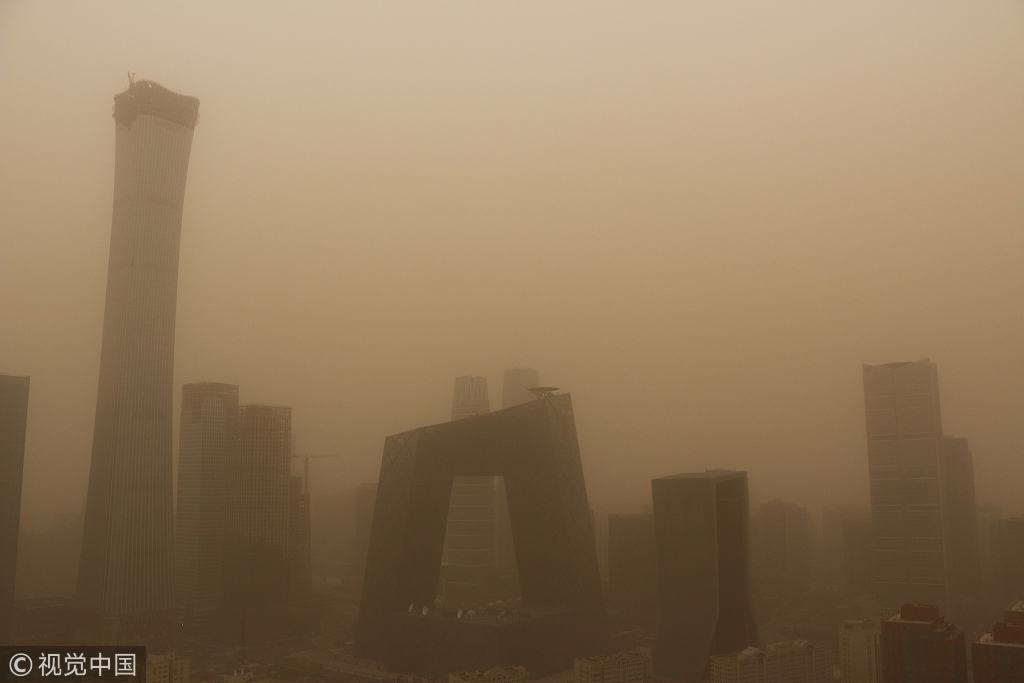
BEIJING - Coal burning is no longer a major source of PM2.5 in Beijing, while car emissions have become the top cause, according to a study released by Beijing's environment watchdog Monday.
The new findings come as Beijing is encouraging the use of natural gas instead of coal for winter heating and shutting down polluting smokestack factories.
Emissions from vehicles, ships, and construction machinery are the top sources of PM2.5 (particulate matter of diameter less than 2.5 micrometres), contributing up to 45 percent of the total pollutants in Beijing, according to the study by Beijing Environmental Protection Bureau.
Beijing has the highest level of car ownship in the country, with 5.64 million privately-owned cars at the end of 2017. The city has cut the number of license plates issued annually from 240,000 in 2013 to 100,000 in 2017.
The study also showed that Beijing's surrounding regions contributed to more than 50 percent of the pollutants on heavily polluted days when the air quality index (AQI) exceeded 200 in the city.
Air samples were gathered daily in 11 different locations around Beijing and more than 300,000 sets of data were analyzed, said Liu Baoxian, deputy director of Beijing Municipal Environmental Protection Monitoring Center, under Beijing Environmental Protection Bureau.
The level of PM2.5 in Beijing has dropped to its lowest level since 2013 when the national air pollution control campaign began. Across the country, average PM2.5 density in 338 cities fell by 6.5 percent in 2017.


- China releases reports on budgets, national economic and social development plans
- China issues guidelines to enhance professional social work workforce
- China-Vietnam friendship exchange to strengthen bonds, security, ministry says
- Beyond the racetrack: F1 Chinese Grand Prix showcases Shanghai culture
- AWE 2026: A glance at tech for the future
- China has broken disability-poverty link, Rome seminar hears





