



High and dry no longer apply









Reforestation efforts making a real difference on the cold, barren Tibetan plateau
Across China, ecological conservation is increasingly becoming a high priority, even high upon the Tibetan Plateau.
When traveling along Highway G219 from Lhasa, capital of the Tibet autonomous region, to Gar county in Ngari prefecture, there is little to interrupt the beautiful monotony of the rolling mountain scenery.
But as travelers approach the town of Shiquanhe, two lines of "white centurions" standing along the highway come into sight. On closer inspection, the centurions turn out to be a species of willow tree - more commonly found in the Loess Plateau in northwestern China - and their presence is a key weapon in fighting wind erosion and desertification.
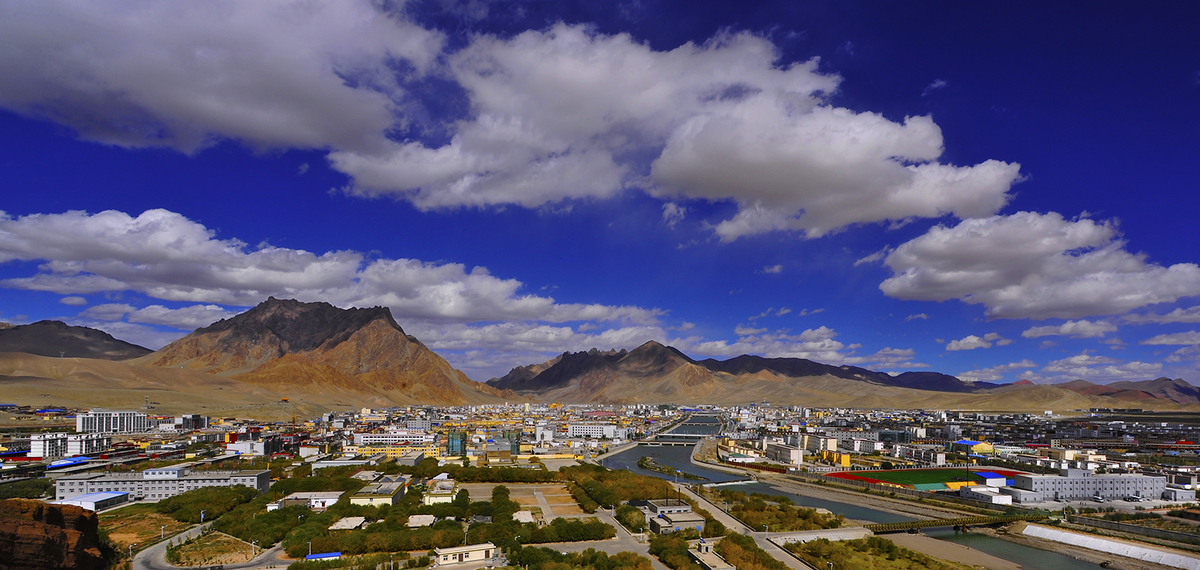
The white clothes the trees "wear" are actually plastic covers installed to help the willows make it through the chilly and windy winters, said Gao Baojun, Gar's Party secretary.
The willows, along with tens of thousands of other trees of varying species, were introduced from distant regions of the country to help green the county's once-barren land.
For residents, the sight of green trees used to be a rarity due to the area's hostile natural environment featuring long, arid winters, Gao said.
Over the past two years, nearly 300,000 trees have been planted along city streets, in parks and public spaces, as well as beside highways in Gar, western Tibet, in a massive reforestation campaign to protect the fragile natural environment.
The newly arrived trees include poplars, willows and Chinese scholar trees that come from places with climates comparable to Ngari.
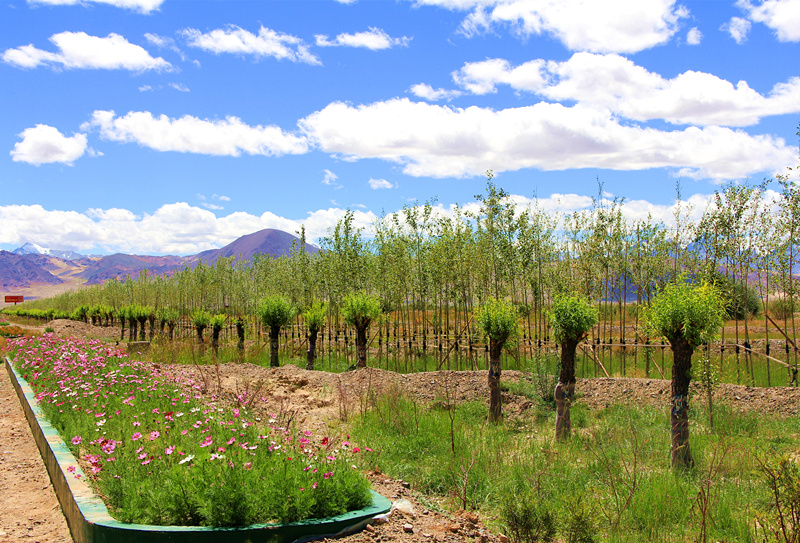
"In Ngari, planting a tree is even more difficult than raising a child," said Qi Xijun, deputy head of the Gar government who is in charge of forestry work.
With an average altitude of 4,500 meters, Ngari is known as the "land of no life" for its extraordinary dryness and coldness.
Last year, the annual evaporation capacity was nearly 15 times that of precipitation, which was just 130 millimeters. The lengthy winters last for more than half a year and the frost-free season was only around 170 days.
The rocky land is largely covered by sand, which makes for an inhospitable environment for trees, shrubs, grass and flowers, Qi said.
Han Junwen, head of Gar's forestry bureau, said: "In the past, it was believed that only indigenous trees such as tamarisks - small shrubs with slender branches and feathery flower clusters - could survive the harsh environment in Ngari."
Most of the county's tamarisks had been felled and burned as a source of fuel since the 1950s, reducing Gar to a barren land plagued by sandstorms. "The sand would block the doors of homes after a windy day," Gao Baojun, the Party secretary, said.
To help restore vegetation and curb erosion, since 1994 the Ngari government has planted more than 5 million tamarisks and Salix bangongensis - a species of flowering plant - along the Shiquan River that runs through Shiquanhe, the administrative center of Ngari and Gar.
The reforestation efforts have remarkably improved the natural environment of Shiquanhe, with the number of frost-free days more than doubling from 83 in 1994 to 170 days in 2017, and precipitation increasing from 76.5 mm to 130 mm during the period.





- China's Global Governance Initiative receives positive feedback at forum
- China's Xizang sees steady tourism growth in 2025
- First-of-its-kind pearl auction held utilizing Hainan FTP
- Agarwood exhibition steeps Shanghai museum in fragrance
- The Fujian Coast Guard conducts regular law enforcement patrol in the waters near Jinmen
- IP protection for new fields to improve














