Waging changes in the job market










China's GDP growth has stabilized but wages continue to rise rapidly due to the country's changing economy and, in no small measure, the ongoing industrial upgrading plan.
The average annual wage in China has seen quite a transformation in recent years. From 29,229 yuan ($4,586) in 2008 it had reached 67,569 yuan by 2016.
The wage increases, combined with a falling unemployment rate of around 5 percent in the first quarter of 2018, suggest a pretty good economic outlook. By all indications, this fair weather will continue.
"Higher rates of employment and levels of salaries are usually closely related to the performance of the economy," said Edward Hsu, managing director at global advisory firm Willis Towers Watson.
"Last year, China's gross domestic product growth was 6.9 percent while the projection for this year is at 6.7 percent. The economy is expected to be fairly stable but (growth) has a small drop compared to last year."
Data from the National Bureau of Statistics show year-on-year GDP growth has been stable for the past 11 quarters, ranging between 6.7 and 6.9 percent. Growth in salaries, meanwhile, has been rising.
"The projection for salary increases for the overall market this year is 8.4 percent, higher than the 8.1 percent of 2017 and the 8 percent in 2016," said Hsu. "We can see that the salary rate is going up while the GDP (growth) is going down slightly."
"In terms of the labor attrition rate, we have a more stable workforce in China than before. From 2000 to 2015, the turnover rate was about 25 percent each year. If we look at 2016, it was 19 percent. Then last year, the turnover rate was at 17 percent," he said.
The actual situation is more nuanced, depending on the industry and type of job.
'We observed a solid employment record and wage increase in retail sales, property, leasing and business services and delivery services," said Su Yue, an economist with The Economist Intelligence Unit.
Salary growth for urban employment has dropped in recent times, she said.
"Growth of salary of urban employment has tapered since 2012… but the rising average wage rate will continue due to a decline of the working age population since 2012," said Su.
"The weakened wage growth for urban employment is mainly because of the cut in capacity at traditional secondary industries, such as mining and metal manufacturing," said Su, who added that laid-off workers have been quickly absorbed by rising tertiary industries.
She attributed this to the initiative to move the country's economy up the value chain through manufacturing innovation and promoting homegrown products.
Hsu from Willis Towers Watson said China is moving its economic direction away from "just being a big manufacturing country" because "it wants to be a powerful industrial force too".
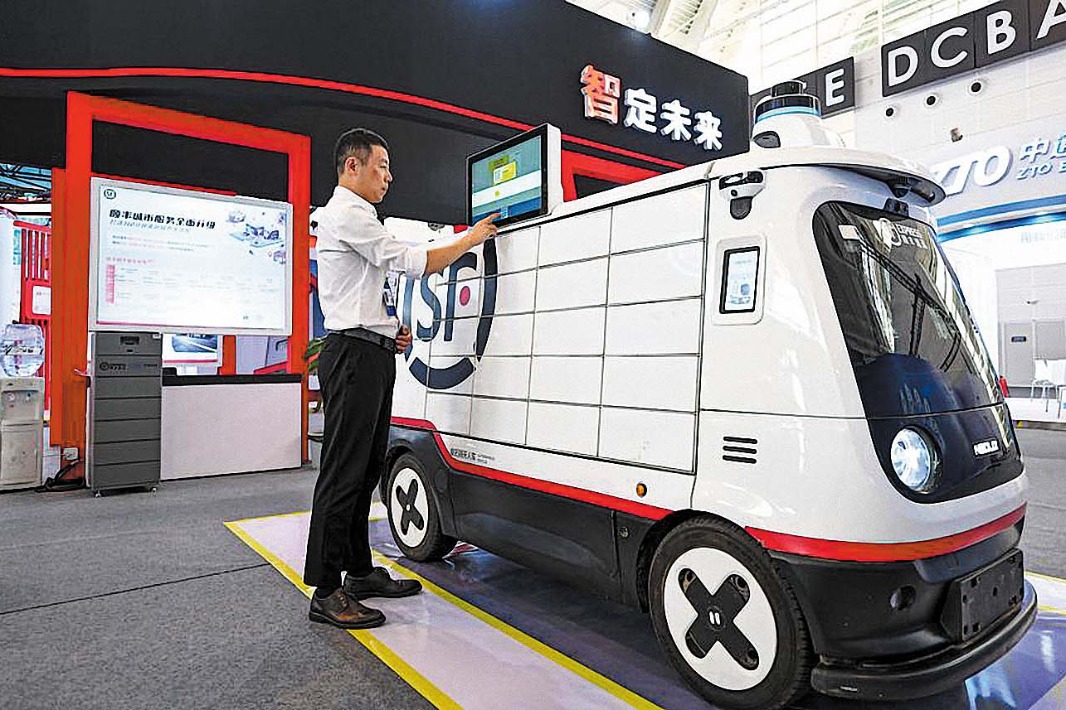
"The government has been placing the focus more on innovation, automation, artificial intelligence and intelligent production," said Hsu.
"It has basically been enhancing the high-end tech field. And with a focus on a higher value field comes the need and development for high-quality expertise."
So, higher wages and a demand for talent are essentially changing the occupational landscape of the country.
"The younger generations are less interested in engineering works, because of a lower social status and poorer career development channel than graduates who work in a service industry such as finance," said the EIU's Su, who noted that this is contributing to "the biggest bottleneck" in China.
"China lacks skilled workers and technicians. The Ministry of Education estimates the country needs 30 million additional engineering talents by 2025," Su said. "The existing students in vocational school and university can only meet half of this need."
Su said areas with large talent gaps include new advanced information technology, automated machine tools and robotics, power equipment and new energy vehicles and equipment.
"Engineering training and practice for students are still quite weak in school. As a result, sometimes graduates' skill sets cannot meet enterprises' demand," Su added.
Sameer Khatiwada, an economist with the Asian Development Bank, agreed that education is key.
"The right set of skills is essential in bridging the gap between labor and technology. The urgency to close that gap is forcing us to rethink not just tertiary, secondary or primary education but learning at a foundational level," said Khatiwada.
"There's always been a lag between supply and demand. We need to stay ahead of the curve by supplying the future workforce with the skills to be agile enough to match the demands of the market and tech changes. An example would be coding, which is widely needed now."
But, Su said, the current imbalance of labor supply and demand will benefit the highly skilled graduates with wage premiums.
"Talents who can work in an international background will also be in demand with the deepening of China's opening-up," she said.
A side effect of the changes in China is that manufacturing jobs are moving to other countries throughout the region.
"Labor-intensive manufacturing such as textiles and footwear has been moving to other Asian countries such as Vietnam, Indonesia, India and the Philippines due to their lower labor cost and large labor pool," noted Su.
The model of transitioning from manufacturing to service industries has proven successful in places like the Chinese mainland, Hong Kong and Singapore.
"When you look at our region, a lot of the goods and services produced here are actually to meet the demand within. We are way more reliant on regional increases in income," said the ADB's Khatiwada.
"The rising wages in China have led to stronger buying power from consumers there. So, more and more Chinese companies are the ones seeking affordable manufacturing capabilities.
"Chinese capital is very mobile across the region, despite recent attempts to cap it. Investors will no doubt be drawn to where they might get better returns," Khatiwada added.
Su suggested that China needs to forge comparative advantages in other industrial goods, either for export or for domestic consumption. But not everyone believes China will lose its appeal as a manufacturing hub just yet.
"China is an important market for many companies and they will likely want to maintain a presence there," said Khatiwada.
Hsu at Willis Towers Watson believes China's tech advances will influence companies to keep manufacturing bases in the country.
"China provides a good ground base to experience future tech advances and develop future business models. It's likely they will use China as a testing ground for products before bringing the manufacturing and products to other places," Hsu said.