



UNESCO hails Belize's efforts to protect world's second largest barrier reef









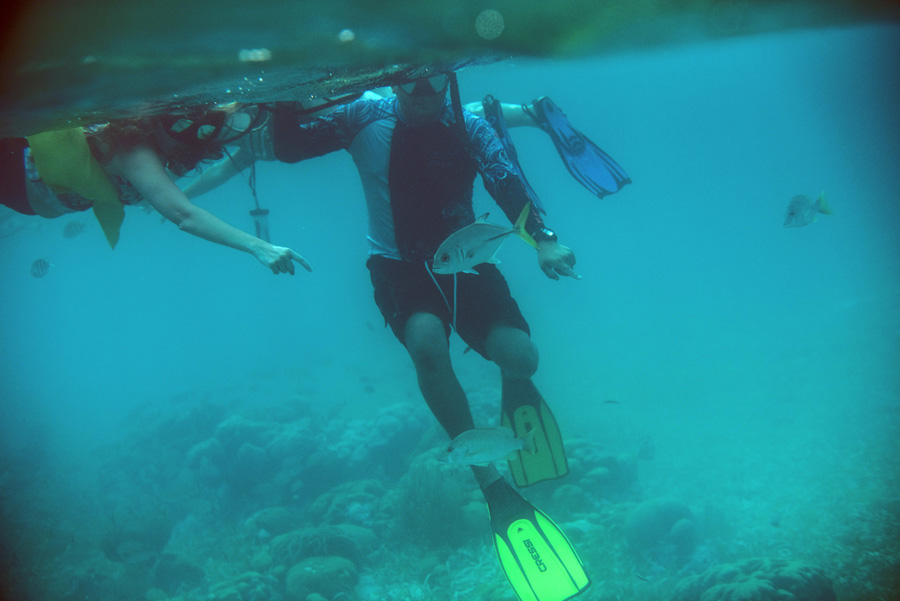
SAN PEDRO, Belize - Beneath the crystalline waters off the coast of Belize, colorful fish weave through the arms of the world's second-largest barrier reef, an environmental treasure that UNESCO removed from its list of endangered World Heritage Sites on Tuesday.
Second in size only to the Great Barrier Reef in Australia, the Mesoamerican Reef spent nearly a decade on the list, prompted by concerns over Belize's plans to allow oil exploration nearby and the general lack of laws to protect the site.
Known for its breathtaking biodiversity and its proximity to the shore - just a few hundred meters in many places - the Caribbean reef system was added to the prestigious World Heritage List in 1996, but given endangered status in 2009.
The warning also encompassed the mangroves that help protect the coral reef, and serve as a breeding ground for many of the hundreds of fish species that inhabit the area's bright turquoise waters.
The mangroves had been disappearing at an alarming rate as urban development encroached on the coastline.
Ultimately alarmed over the fate of one of its top tourist attractions, the government of Belize started adopting a series of laws to protect the reef, culminating in a moratorium on offshore oil exploration passed by the nation's parliament in December.
Teaching tourists
That was applauded by UNESCO at its meeting this week in Manama, Bahrain, where the United Nations body praised Belize's "visionary" steps to protect the reef.
The legislation came after environmentalists in Belize organized an informal referendum in 2012, in which 96 percent voted against offshore oil exploration - choosing the reef over the potential economic gains for the Central American country.
"We have seen an incredible turnaround from when the reef was being threatened by seismic testing for oil just eighteen months ago," said Marco Lambertini, head of the World Wildlife Fund, which helped lead the push to safeguard the reef.
"Belizeans stood up to protect their reef, with hundreds of thousands more globally joining the campaign to save our shared heritage. ... Belize has shown that it is possible to reverse nature loss and create a sustainable future."
The reef stretches from the tip of Mexico's Yucatan Peninsula all the way to Guatemala and Honduras, including 380 kilometers in the waters off Belize, the portion covered by the World Heritage declaration.
Tourism and fishing are vital to communities along the coast.
"We live off on the reef," said chef Jenni Steines, owner of a fusion restaurant that blends indigenous Mayan and Belizean cuisine in San Pedro, a small, sandy town popular with divers.
"Many years ago that's all we did.... And now it's the biggest attraction for tourists."
Livelihoods
Belize estimates that 20 percent of the country's 367,000 people depend on the reef for their livelihoods, directly or indirectly. It brings in some $37 million a year.
Karen Waight Canul, who runs a dive shop with her husband, said it is also up to locals to teach tourists to take care of the reef.
"Tourists are the kids of the industry. We're the caretakers, we're the teachers," she said.
"Because we know the ecosystem, we know the destination. So we can teach them, you know, this is how Belize is, this is how the reef is."
"We are happy that in this instance the government and the people decided that this is something that we can't risk," said Deputy Prime Minister Patrick Faber.
But the battle to protect the reef is far from over.
Other threats remain: Garbage, cruise ship waste and the potentially harmful effects of too many tourists.
"It doesn't stop there. We need to hold the government accountable," said Nadia Bood, country director for the World Wildlife Fund.
Agence France-Presse










