China's homegrown auto industry -- growth amid pain









Editor's note: Liu Chunsheng is an associate professor at the Beijing-based Central University of Finance and Economics, and deputy dean of Blue Source Capital Research Institute. The article reflects the author's opinions, and not necessarily the views of CGTN.
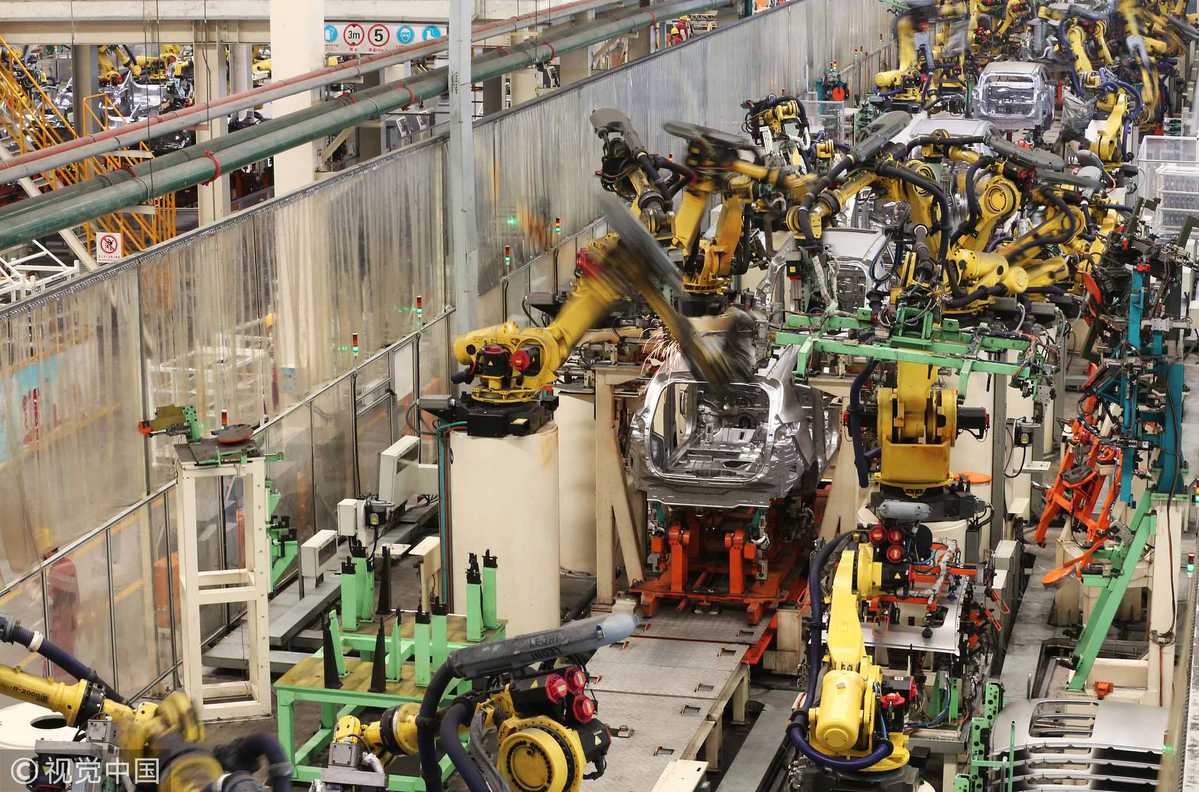
Scene of a car factory in east China's Anhui Province, July 8, 2016. /VCG Photo
China has reduced import tariffs on vehicles, auto components and parts. For vehicles, China cut 25-percent tariff on 135 items and 20-percent tariff on four items to 15 percent. Tariffs on 79 auto components and parts would fall to 6 percent from the current level of 8 percent, 10 percent, 15 percent, 20 percent and 25 percent. The new tariff rate came into effect on Sunday.
Meanwhile, shortened from 63 items in its 2017 version to 48 items, the new version of "Special Administrative Measures on Access to Foreign Investment (Negative List)" will take effect on July 28. According to the new Negative List, China will gradually cancel the restrictions on the shareholding ratio of foreign automakers.
The moves affirm China’s determination to open the world’s No. 1 automobile market more to foreign companies. Auto companies in Germany, Japan and the Republic of Korea will benefit from these favorable policies. However, due to the possible fallout from US-China trade frictions, carmakers from the US and Made-in-US cars may not benefit from them. In a report from the China Automobile Dealers Association, China’s auto imports reached more than 1.2 million in 2017, a year-on-year increase of 16.8 percent.
Even though some experts argue that a 5-10 percent tariff cut will not bring a huge drop in car sales prices, it is predicted that the lower duty will increase the market share of imported cars in China. Facing the growing competition, Chinese domestic car makers will be forced to be involved in a price war.
In addition, the duty cut on car parts will save the input cost of Chinese foreign joint venture companies; therefore joint venture brand cars will also reduce their sale prices and after-sale services prices.
After its entry to the WTO in 2001, China speeded up the tariff cut on vehicles and car parts, which signified efforts to fulfill its WTO promises. China has carried out duty reduction on imported autos and car parts six times. The average tariff rate on cars was reduced from 80 percent before its WTO entry to 25 percent at present.
Meanwhile, the car parts tariff went down from 30 percent to an average of 10 percent. The world witnessed an enormous growth in imported cars from about 70,000 in 2001 to over 1.2 million in 2017 in China.
The competition did not devastate China’s homegrown car brand. In fact, fundamental changes have taken place in China’s car industry due to the process of opening up and full competition. Local Chinese carmakers gained from technology spillover effects of car imports and foreign direct investment in the auto industry.

In the first five months of 2018, over 1 million homegrown brand sedans were sold, an 11.6-percent year-on-year rise from 2017 and about 2.57 million homegrown brand sports utility vehicles were sold, a 12.8-percent increase from last year. A few Chinese auto brands have started to expand their market in Africa and Southeast Asia.
Moderate protection for one's domestic auto industry provides a safe development space during its infancy. But as the market opens up, one should gradually adjust its policies.
China made the right, timely decision in this move to increase the competition of its auto industry in the global market.
It is significant for the Chinese government to protect intellectual property through law regulation and enforcement and to create a fair and friendly business environment in the market. The homegrown car brands need to transform their development model to gain research and development investment and boost self-innovation from now on.