
<tt id="6hsgl"><pre id="6hsgl"><pre id="6hsgl"></pre></pre></tt>
          <nav id="6hsgl"><th id="6hsgl"></th></nav>
          国产免费网站看v片元遮挡,一亚洲一区二区中文字幕,波多野结衣一区二区免费视频,天天色综网,久久综合给合久久狠狠狠,男人的天堂av一二三区,午夜福利看片在线观看,亚洲中文字幕在线无码一区二区
          Steve FitzGerald
          Australia's first ambassador to China (1973-1976)
          EDUCATION:

          1957-1960: University of Tasmania, Asian History

          1966-1968: PhD, Australian National University, Canberra

          BOOKS AND AWARDS:

          1977: China and the World, ANU Press

          1984: Officer of the Order of Australia

          2015: Comrade Ambassador: Whitlam's Beijing Envoy, Melbourne University Publishing

          BORN:

          Hobart, Tasmania, 1938

          CAREER:

          1961-1966: Department of External Affairs

          1971: Adviser to Labor opposition leader, Gough Whitlam

          1973-1976: Ambassador to China

          1975-1976: Ambassador to the Democratic People's Republic of Korea

          1980-2010: Established private consultancy for Australian businesses dealing with government in China

          1987-1988: Chaired the Australian government's Committee to Advise on Australia's Immigration Policies, which wrote the landmark report, Immigration: A Commitment to Australia

          1990-2004: Professor and head of the University of New South Wales' Asia-Australia Institute

          1991: Member of the first Australian Human Rights Delegation to China

          1998-2002: Member of the Foreign Affairs Council

          Since the late 1960s, he has been involved in public policy development and reform in Australia's relations with Asia and for an Asia-literate Australian society.

          He was professorial fellow and head of the Department of Far Eastern History and the Contemporary China Centre at the Australian National University, Canberra, in the late 1970s.

          In the 1980s, he chaired the Hawke government's Asian Studies Council, which in 1988 developed a national strategy for the study of Asia in Australia.

          Since 2004 he has been chairman of the Griffith Asia Institute and research strategy director of the University of Technology Sydney's China Research Centre.

          He is currently chairman of the independent public policy initiative China Matters, a distinguished fellow at the Whitlam Institute at the University of Western Sydney, and an honorary fellow at the China Studies Centre at the University of Sydney.

          Opening-up: The view from down under
          Australia's first ambassador to the People's Republic of China reflects on decades of transformation
          Karl Wilson
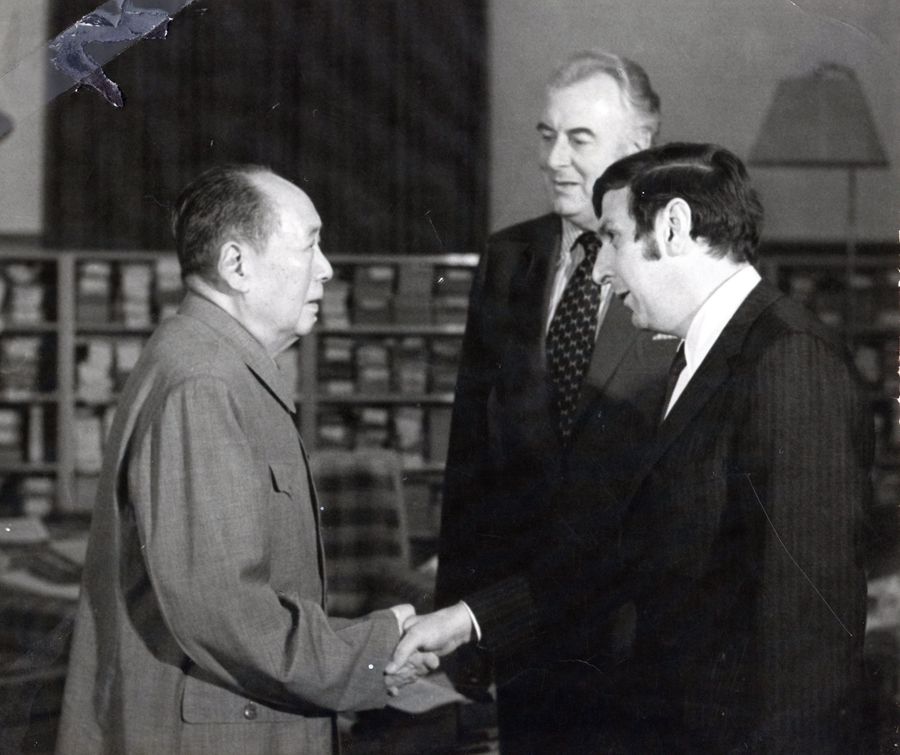
          Stephen FitzGerald (right) and former Australian prime minister Gough Whitlam meet Chairman Mao Zedong on Nov 2, 1973, in Beijing. Photo provided to China Daily

          When Stephen FitzGerald arrived in Beijing to take up his post as Australia's first ambassador to the People's Republic of China in April 1973, he was entering a country on the threshold of monumental change.

          It was a transformation that in the space of 40 years would see the economy grow at breakneck speed, deliver unprecedented economic growth, lift some 700 million people out of poverty and see the country become one of the most powerful nations on earth.

          The China of 1973, however, was vastly different to the China of today.

          At the time it was coming to terms with the full impact of the "cultural revolution" (1966-76).

          It was a time when the founding father of the People's Republic of China, Mao Zedong, was in poor health and a bitter power struggle was being played out behind the scenes by the "Gang of Four".

          It was also the year that saw the rehabilitation of Deng Xiaoping, who had been purged and stripped of his Party posts between 1967-69.

          Deng was widely tipped to succeed Zhou Enlai as premier but he was purged again following Zhou's death in January 1976.

          It was not until Mao's death in September that year and the consequent fall from power of the "Gang of Four" that Deng was rehabilitated.

          For the next two decades, Deng set China on a course of change that would eventually propel the country to the forefront of the world stage as an economic and political power.

          Looking back over the past 40 years, the mild-mannered former Australian diplomat said the transformation of China has been "nothing short of staggering", and Deng's reforms have had an impact on all levels of Chinese society.

          "If I were to pick an area where the impact of those reforms has been the greatest I would say in the fields of science and technology," FitzGerald said.

          "It took time for China to shake off the excesses of the 'cultural revolution', when universities and schools were closed, and teachers purged.

          "It wasn't a question of not having the students ... China didn't have the teachers for these subjects.

          "So began a program of sending the best and brightest out to study science and technology. These young men and women didn't go to ordinary universities either, they went to the best."


          1 2 3 Next   >>|
          Steve FitzGerald
          Australia's first ambassador to China (1973-1976)
          EDUCATION:

          1957-1960: University of Tasmania, Asian History

          1966-1968: PhD, Australian National University, Canberra

          BOOKS AND AWARDS:

          1977: China and the World, ANU Press

          1984: Officer of the Order of Australia

          2015: Comrade Ambassador: Whitlam's Beijing Envoy, Melbourne University Publishing

          BORN:

          Hobart, Tasmania, 1938

          CAREER:

          1961-1966: Department of External Affairs

          1971: Adviser to Labor opposition leader, Gough Whitlam

          1973-1976: Ambassador to China

          1975-1976: Ambassador to the Democratic People's Republic of Korea

          1980-2010: Established private consultancy for Australian businesses dealing with government in China

          1987-1988: Chaired the Australian government's Committee to Advise on Australia's Immigration Policies, which wrote the landmark report, Immigration: A Commitment to Australia

          1990-2004: Professor and head of the University of New South Wales' Asia-Australia Institute

          1991: Member of the first Australian Human Rights Delegation to China

          1998-2002: Member of the Foreign Affairs Council

          Since the late 1960s, he has been involved in public policy development and reform in Australia's relations with Asia and for an Asia-literate Australian society.

          He was professorial fellow and head of the Department of Far Eastern History and the Contemporary China Centre at the Australian National University, Canberra, in the late 1970s.

          In the 1980s, he chaired the Hawke government's Asian Studies Council, which in 1988 developed a national strategy for the study of Asia in Australia.

          Since 2004 he has been chairman of the Griffith Asia Institute and research strategy director of the University of Technology Sydney's China Research Centre.

          He is currently chairman of the independent public policy initiative China Matters, a distinguished fellow at the Whitlam Institute at the University of Western Sydney, and an honorary fellow at the China Studies Centre at the University of Sydney.

          Opening-up: The view from down under

          Australia's first ambassador to the People's Republic of China reflects on decades of transformation
          Karl Wilson
          Stephen FitzGerald (right) and former Australian prime minister Gough Whitlam meet Chairman Mao Zedong on Nov 2, 1973, in Beijing. Photo provided to China Daily

          When Stephen FitzGerald arrived in Beijing to take up his post as Australia's first ambassador to the People's Republic of China in April 1973, he was entering a country on the threshold of monumental change.

          It was a transformation that in the space of 40 years would see the economy grow at breakneck speed, deliver unprecedented economic growth, lift some 700 million people out of poverty and see the country become one of the most powerful nations on earth.

          The China of 1973, however, was vastly different to the China of today.

          At the time it was coming to terms with the full impact of the "cultural revolution" (1966-76).

          It was a time when the founding father of the People's Republic of China, Mao Zedong, was in poor health and a bitter power struggle was being played out behind the scenes by the "Gang of Four".

          It was also the year that saw the rehabilitation of Deng Xiaoping, who had been purged and stripped of his Party posts between 1967-69.

          Deng was widely tipped to succeed Zhou Enlai as premier but he was purged again following Zhou's death in January 1976.

          It was not until Mao's death in September that year and the consequent fall from power of the "Gang of Four" that Deng was rehabilitated.

          For the next two decades, Deng set China on a course of change that would eventually propel the country to the forefront of the world stage as an economic and political power.

          Looking back over the past 40 years, the mild-mannered former Australian diplomat said the transformation of China has been "nothing short of staggering", and Deng's reforms have had an impact on all levels of Chinese society.

          "If I were to pick an area where the impact of those reforms has been the greatest I would say in the fields of science and technology," FitzGerald said.

          "It took time for China to shake off the excesses of the 'cultural revolution', when universities and schools were closed, and teachers purged.

          "It wasn't a question of not having the students ... China didn't have the teachers for these subjects.

          "So began a program of sending the best and brightest out to study science and technology. These young men and women didn't go to ordinary universities either, they went to the best."

          主站蜘蛛池模板: 91av国产在线| 成人网站在线进入爽爽爽| 五月丁香六月狠狠爱综合 | 99久久国产综合精品麻豆| 色猫咪av在线网址| 亚洲人成电影网站 久久影视| 精品无码一区二区三区水蜜桃| 亚洲天堂激情av在线| 亚洲一区二区偷拍精品| 九九热在线免费播放视频| 国产AV无码专区亚洲AV漫画| 久久精品超碰AV无码| 四虎国产精品久久免费地址 | 国产精品原创不卡在线| 久久久综合九色合综| 亚洲精品国模一区二区| 成人字幕网视频在线观看| 国产午夜福利视频合集| 久久久久亚洲AV无码专| 九九热在线视频观看最新| 91热在线精品国产一区| av无码一区二区大桥久未| 国产av普通话对白国语| 综合色天天久久| 成人又黄又爽又色的视频| 亚洲人成人网色www| 国产精品福利中文字幕| 精品国产自| 美女自卫慰黄网站| 日韩乱码视频一区二区三区| 国产精品伊人久久综合网| 日本国产精品第一页久久| 久久综合精品国产一区二区三区无| 亚洲一卡2卡3卡4卡精品| 精品亚洲精品日韩精品| 亚洲国产精品人人做人人爱| 亚洲日韩精品制服丝袜AV| 久热这里有精彩视频免费| 日韩狼人精品在线观看| 国产福利永久在线视频无毒不卡| 中文日韩在线一区二区|