China makes headway in structural deleveraging









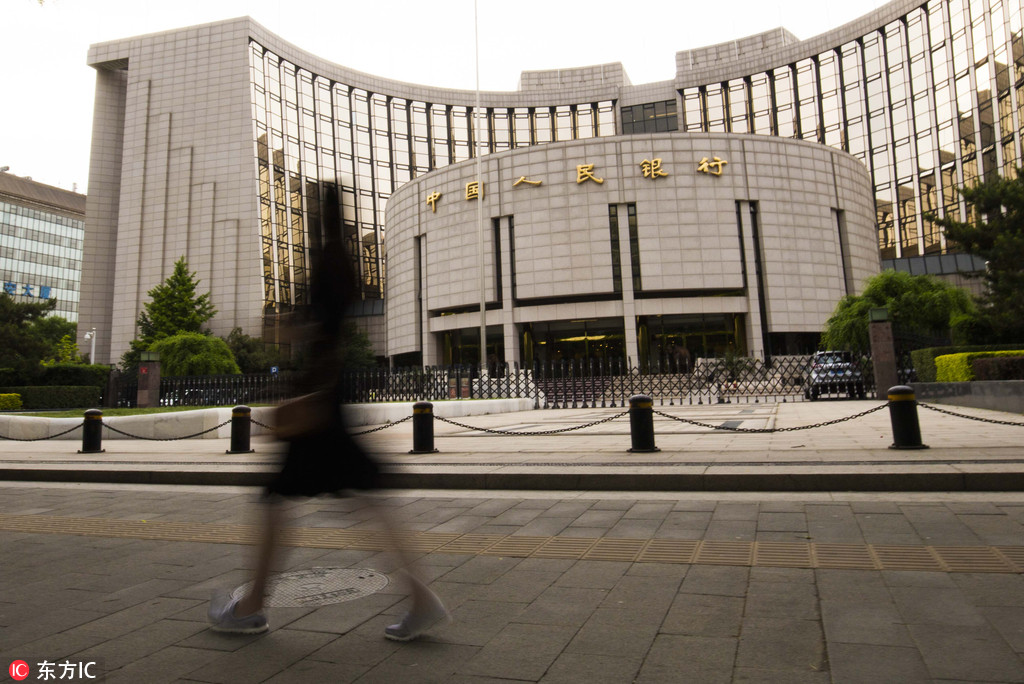
BEIJING - China has made steady progress in what it calls "structural deleveraging," with leverage ratios in major sectors under control.
Growth in China's overall leverage ratio dropped substantially in 2017, with an increase of only 2.7 percentage points from the previous year, compared with an annual average of 13.5 percentage points during the 2012 to 2016 period, central bank data showed.
The trend has continued into the first quarter this year, with growth in overall leverage ratio narrowing by 1.1 percentage points year-on-year, indicating progress in government deleveraging efforts, according to Liu Shijin, member of the monetary policy committee of the People's Bank of China (PBOC).
While fast credit growth in the past few years has fueled investment and consumption that boosted economic growth, it also contributed to the rapid build-up of debt on the balance sheets of local governments, households, and corporations.
Well aware of the risks, China's policy makers have introduced tailored measures to bring down leverage ratios in different sectors.
The corporate sector, often considered the most troubled in terms of debt levels, has become a major target of the deleveraging drive.
The debt-to-equity swap program, for example, was introduced to help reduce leverage in corporations including many debt-ridden State-owned enterprises (SOEs).
In the first half of the year, the value of newly-added market-oriented debt-to-equity swap projects in centrally-administered SOEs reached 20.2 billion yuan ($3 billion), official data showed.
Thanks partly to such projects, the average debt-to-asset ratio for central SOEs stood at 66 percent by the end of June, down by 0.3 percentage point from the beginning of the year.
Compared with the corporate sector, risks in China's household sector are relatively low, as household savings more than covered total household loans by the end of 2017, according to Liu.
Still, risks arise from substandard financing channels and housing market speculation, which authorities try to rein in.
In May, the China Banking and Insurance Regulatory Commission tightened regulation of the growing private lending market, saying that no entities or individuals can set up institutions or platforms with lending as the primary business without official approval.
The move followed the release of new asset management guidelines in April, which unified rules covering asset management products issued by all types of financial institutions to curb risks and reduce leverage.
According to PBOC data, the amount of entrusted loans dropped more than 800 billion yuan in the first half of the year while trust loans dropped 186 billion yuan, indicating a decline in shadow banking activities.
"Previously, some of the entrusted loans and trust loans were channeled into local government financing vehicles or real estate enterprises. Such substandard financing activities have been on the decline thanks to deleveraging efforts," said Ruan Jianhong, the spokesperson of the PBOC.
Potential asset bubbles in the real estate sector were also contained thanks to tighter credit policies. Property loans to individual purchasers grew at a slower pace in the first half of the year, PBOC data showed.
Besides the household and corporate sectors, local governments also saw healthier balance sheets.
China's local government debt balance stood at 16.8 trillion yuan at the end of June, remaining within the official limit, data from the Ministry of Finance showed.
To contain local debt risks, authorities have been ramping up efforts to correct irregularities in local debt issues such as financing through fake public-private partnerships and illegal borrowing through local government financing vehicles.
As China continues to crack down on shadow banking activities and clean up hidden local government debt, the overall leverage ratio will stabilize and trend down gradually, Liu said.