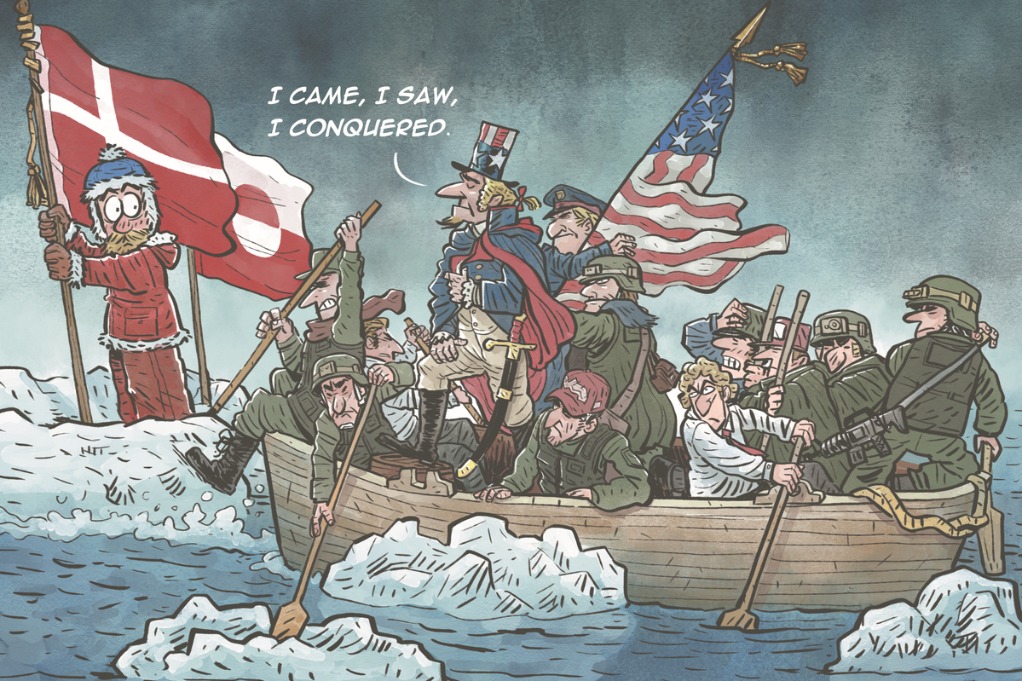
US loans to Africa have strings attached









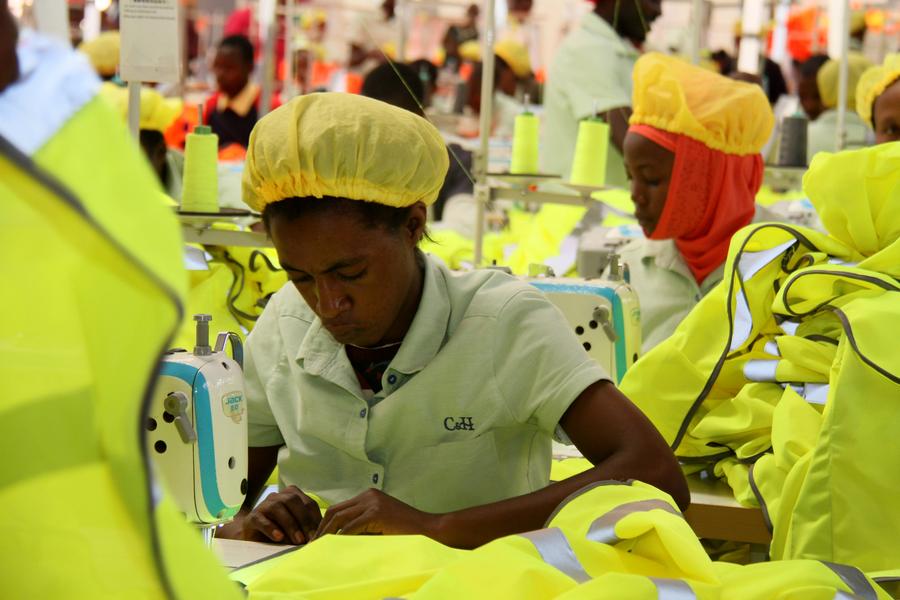
Ray Washburne, president and CEO of the US development finance institution, Overseas Private Investment Corporation, spoke to Reuters recently. Playing the role of a "savior" of poor nations, he said: "China was overloading poor nations with unsustainable debt through large-scale infrastructure projects that are not economically viable."
And he claimed that the China-led Belt and Road Initiative, which aims to promote better connectivity among Asian, African and European countries, was creating a debt trap for many poor nations.
"Just look at any project in these countries and they're overbuilding the size, we try to have countries realize that they're indebting themselves to the Chinese," Washburne said.
Many political analysts have cast doubt on whether the US executive was being genuine in his concern for the well-being of African nations, or acting as another front to extend the trade dispute between the US and China, since BRICS is seen as a threat to the US and its allied financial institutions-the International Monetary Fund and the World Bank-which are losing their long-held monopoly as the sole lenders (conditionally) to poor nations.
The statement from the US executive came at a time when heads of state and government from BRICS-Brazil, Russia, India, China and South Africa-were meeting in Johannesburg, South Africa, for their 10th annual summit, which had the theme of "BRICS in Africa: Collaboration for Inclusive Growth and Shared Prosperity in the 4th Industrial Revolution".
Poor nations have for decades received conditional loans and advice from the two Bretton Woods institutions, the IMF and the World Bank, that have only served to plunge them deeper into poverty. The structural adjustment policies and their negative effects in the 1980s on economies and developmental projects in poor nations are a case in point. These were a hindrance rather than a form of assistance.
In fact, some observers from developing countries view Washburne's advice as reflecting the traditional arrogance of developed countries, which have long taken the position that African countries cannot make the right choices for themselves and someone has to make the decisions for them.
Why can the loan seeking countries not determine what is good for them? When you look at the development projects in many African countries today, many are being funded by the China through Chinese Development Bank and the Export-Import Bank of China.
China is also the continent's biggest trading and development partner. And Africa's largest sources of foreign aid today are not Western countries, but Brazil, India and China. Early this year, the Export-Import Bank of China announced a plan to establish a $500 million loan facility for 15 nations in Africa.
Loans are a necessary evil for less developed countries. But unlike beggars who have no choice but to accept the conditions attached to any assistance offered them, countries have the right of self-determination, which means that now they have a choice, which was not the case in the past, and they have the right to choose the loans offered with the most favorable terms.
The difference now is the countries seeking loans can no longer be taken advantage of because they know what they want and where to get it.
The West has for long advocated giving aid to poor countries rather than making investments in them. This has had little significant impact on poverty alleviation. It is estimated that in the year 2013 alone, over $10 billion, which was half of the foreign aid received, was "repatriated" to foreign countries through corruption.
Hearing Washburne's advice brought to mind the words of economist Dambisa Moyo, who in her book, Dead Aid: Why Aid is Not Working and There is Another Way for Africa, states that in order to maintain the lender-borrower see-saw, the aid relationship is tipped in favor of corrupt countries, and the donors have greater need for giving the aid than the recipient has for taking it.
A new bill, to be called the BUILD Act after the US Congress passes it, says private US investment should be boosted in developing nations, by doubling the access Washburne's organization has to the US Treasury credit to $60 billion.
In 1961,
former US president J.F. Kennedy said: "Foreign aid is a method by which the United States maintains a position of influence and control around the world and sustains a good many countries which would definitely collapse or pass into the communist bloc". And former US president Richard Nixon said: "The main purpose of aid is not to help other nations but to help ourselves."
In contrast, the emerging economies have created a paradigm shift in the relationship between the rich and poor nations.
Poor nations will not remain poor. They also have ambitions to develop and are willing to collaborate with all partners to get out of the poverty as long as the collaboration is favorable and there is mutual respect between the rich and the poor nations.
The author is a Rwandan journalist.