Cutting-edge tech protects ancient culture









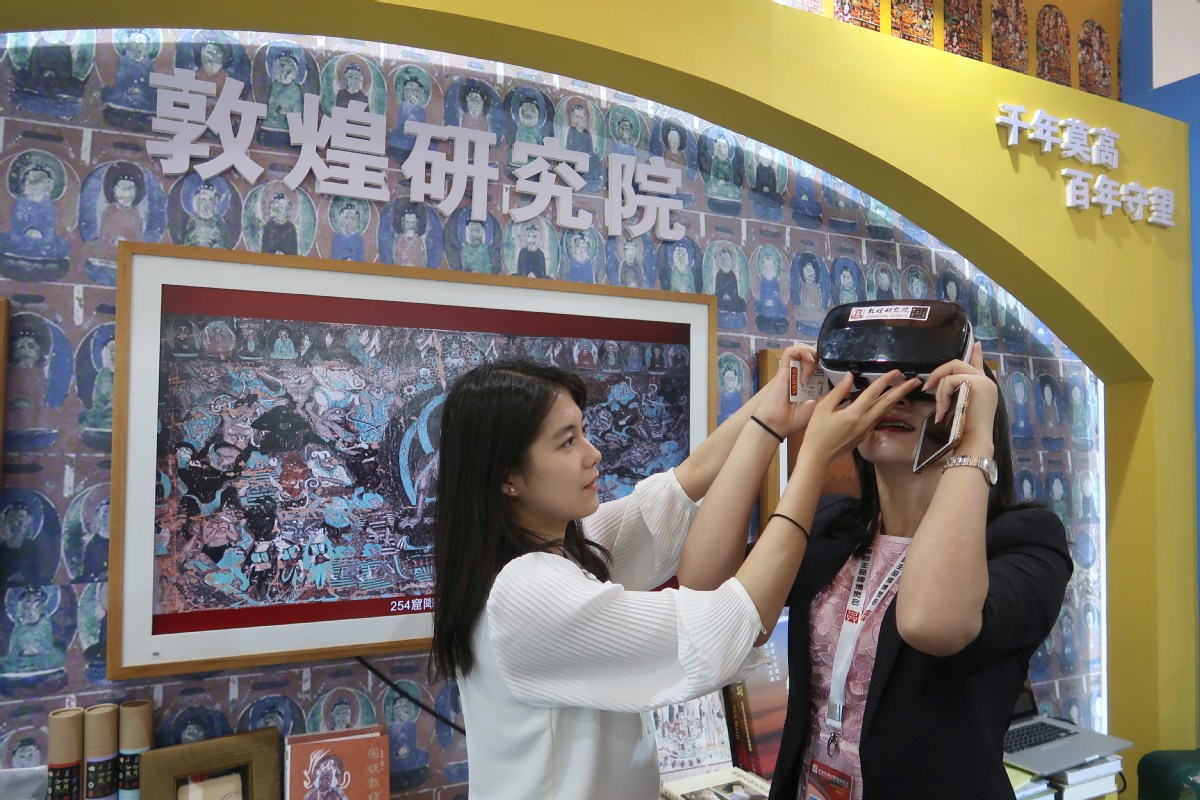
Tencent endeavors to safeguard heritage and relics by utilizing modern methods, such as artificial intelligence, virtual reality
Li Xi, a 21-year-old college student from Beijing, had always dreamed of spending more time in the Mogao Grottoes, also known as the Thousand Buddha Caves, in Dunhuang, Northwest China's Gansu province, to study the rich collection of ancient paintings housed there.
Although Li had been there several times, there were several obstacles that prevented her from going more often. In addition to constraints on money and time, there was also the question of getting access to the huge collection of paintings, most of which are no longer visible to the public in their entirety due to preservation requirements.
The Mogao Grottoes, a UNESCO World Heritage Site, boasts a history of more than 1,600 years. Its 2,000 colored sculptures and 45,000 square meters of frescoes are on the verge of being lost forever due to natural disasters, looting and geological erosion.
According to Zhang Xiantang, deputy director of the Dunhuang Research Academy, many paintings in the Mogao Grottoes are in urgent need of repair. More than half of the 492 caves are suffering from discoloration and shedding.
But now, modern interactive technologies are helping to preserve and showcase China's ancient cultural heritage and relics, increasing their exposure to cultural fans such as Li.
Chinese internet giant Tencent Holdings Ltd and the Dunhuang Research Academy have developed an interactive H5 program to promote and preserve the grottoes' artworks, which can now be accessed online.
When entering into the interactive online experience, flying apsaras-supernatural entities in Hindu and Buddhist mythology-dressed in colorful silks and satins appear on screen and take the user through a magical tour of the ancient grottoes, with real-life images of the ancient Buddhist artworks.
In one of the H5 displays, below the apsaras-which are depicted in replica of a wall painting in the No 172 cave of the Mogao Grottoes-appears a "wisdom bag", which unfolds to reveal the tenet: "One should have a stable frame of mind toward life."
Such a vivid restoration of paintings that were created thousands of years ago, as well as the modern re-interpretations of their implied meanings, make viewers such as Li feel as though they are receiving wisdom first-hand from the ancient masters.
"I am not really fond of history. But the program has stirred my interest in the subject," said Sun Shengqi, a 24-year-old graduate from Nanjing, Jiangsu province. "The main attraction is that it interprets a lot of information into more modern terms that are easy to understand."
He said that in one of the interactive presentations, the wisdom bag was translated as "being a center", which is a popular internet buzzword that refers to the most talented people.
"To speak the ancient wisdom of Dunhuang in the language that young people love is a very smart way of bringing traditional Chinese culture closer to young people," said Du Juan, deputy director of the culture and creativity research center at the Dunhuang Research Academy.
The interactive program has a digital donor initiative, allowing users to donate any amount, even less than 1 yuan (15 US cents), to become a digital donor.
Du said that donors from the interactive program enter into a rich heritage. In the past, the donors of the Mogao Grottoes were the founders of the cave statues. They were not necessarily rich people, but actually a lot of common people were donors, she said.
"Meanwhile, more and more people can join us in protecting the Mogao Grottoes," she said. "All the money raised from this project will be used entirely to support the restoration work of the No 51 cave in the Mogao Grottoes."
As of mid July, more than 67,100 people had donated 350,000 yuan through the digital donor initiative.
Emperor's mausoleum
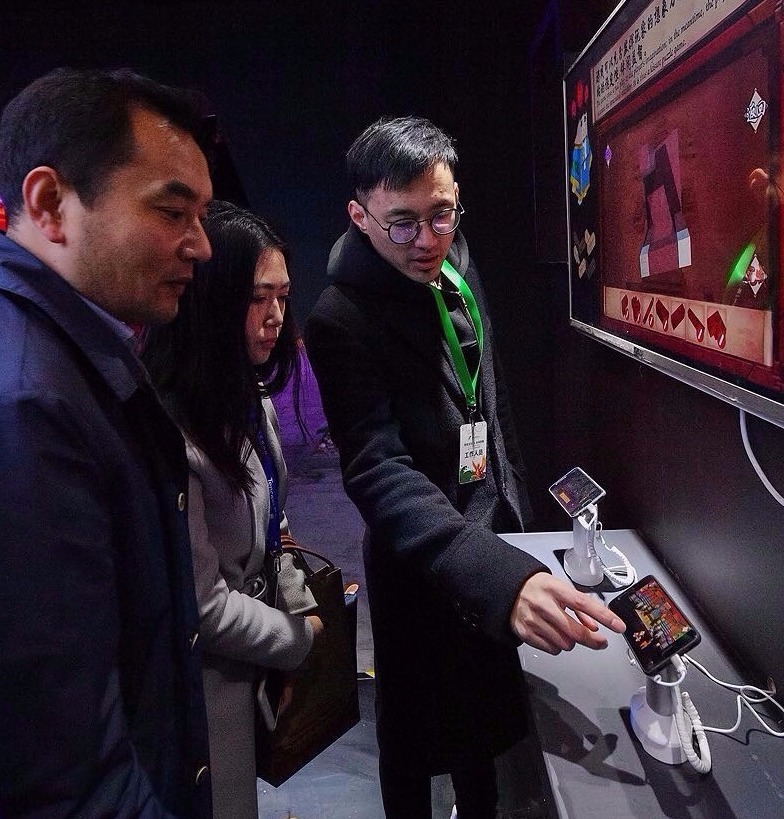
In Emperor Qinshihuang's Mausoleum Site Museum in Northwest China's Shaanxi province, technology is helping visitors in another way. Visitors can see exhibits via a 3D display through Bowuguan, a Tencent Mini Program, a mobile app-like functionality embedded in its WeChat instant messaging app.
"We have apps but the reason why we use the Mini Program is that visitors can learn more about those exhibits simply by scanning the code, and we want to offer an easy-to-operate way of using technology," said Wang Can, product manager of Bowuguan.
He said in some exhibits, foreign visitors can find the translated version of the exhibit introductions.
"WeChat has a natural advantage as it can bring museums huge online traffic. Like this, a wider group of people can get to know more about the history," he said.
Tencent, as one of the country's leading internet behemoths, launched its business with a focus on social networking and internet games. But in the past few years, it has been fortifying its cultural focus and content creation by utilizing technologies, including artificial intelligence and virtual reality, to direct more people's attention toward traditional culture.
It has forged strategic collaborations with an array of museums, including the Palace Museum in Beijing, to offer museums digital solutions for preserving and promoting cultural heritage through the integration of digital technologies.
Tencent Weishi, a subsidiary focusing on short videos, is promoting a product to equip the experts who repair antiques in the museums with pairs of AI-enabled glasses. With the glasses, the repairing process can be watched live by the audience, which could be witnessed during normal visits.
In this way, museums can achieve the desired publicity effects while protecting the relics.
In addition, QQ, Tencent's social networking platform, is popularizing ancient forms of written characters. Users can download and use these ancient characters when chatting online.
Seng Yee Lau, senior executive vice-president of Tencent, said: "Investors need to focus not only on the business value, but also on the long-term impact of business behaviors and changes made to society. That is the reason why the full integration of technology and culture is a good first step for investors to consider."
Lau said that in the digital era, users also tend to look for personalized experiences that enable self-expression, while seeking empathetic experiences that connect them to others.
Rich rewards
Statistics show that Tencent's efforts in integrating technology and culture are reaping rich rewards.
Last year, it released an H5 interactive program on its mobile app, allowing users to upload personal photos to generate their own military uniform photos. Focusing on patriotism and military culture, the program quickly went viral and received a record high user participation of over 1.07 billion page views and 168 million unique visitors within two weeks.
The Shenzhen-based company is now working to promote such efforts abroad. Tech and culture creativity competition event Next Idea was launched recently in the Louvre Museum in Paris, France.
"Moving forward, we will continue to promote technology and culture in various parts of the world," said Li Hang, general manager of Tencent's marketing and public relations.
"In the future, we hope to encourage more cultural exchanges, enhance understanding of cultural diversity and nurture a more global perspective among the younger generations," he said.