



Hexi Corridor excavations lead to climatic change discovery









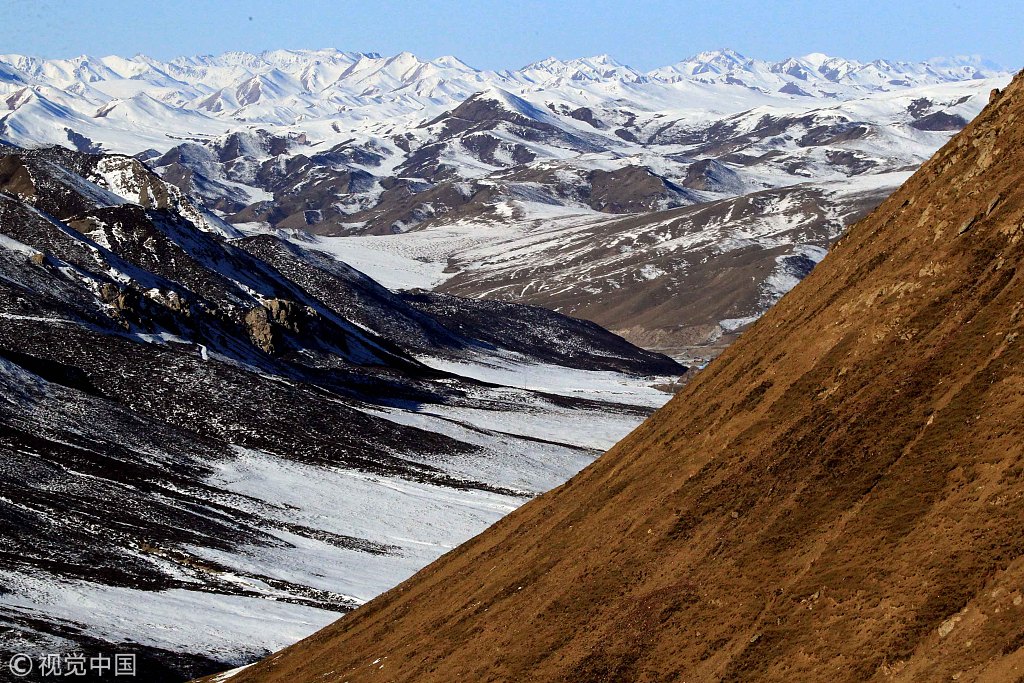
LANZHOU -- The Hexi Corridor, part of the ancient Silk Road in China's northwest, experienced sharp climatic change from about 3,700 years ago, archaeologists have said.
The corridor extends over 1,000 kilometers in Gansu Province. Its climate is now dry with ample sunshine.
Researchers spent eight years studying excavations from Xichengyi, a prehistoric remains located in Zhangye city in the middle part of the Corridor.
The remains, dating back between 4,100 and 3,500 years ago, cover around 350,000 square meters, said Chen Guoke from the Gansu Institute of Cultural Relics and Archaeology.
Archaeologists found charcoal in the remains, showing the existence of at least 13 types of plants such as tamarisk, sea-buckthorn, poplar, willow, elm and spruce.
"The existence of spruce shows the climate conditions were mild and wet. Willows probably grew in low-lying wetland where rivers flowed," Chen said.
"Moving on to the early Siba culture, from 3,700 to 3,500 years ago, poplars that were resistant to heat and cold started to take a higher percentage, showing that the climate started to cool. The existence of cattle and sheep in the same period led researchers to believe that the natural environment in the period was mainly covered by grass.
"Climate began to change at Xichengyi during the period from 4,100 years ago to 3,500 years ago.
"Starting from 4,000 years ago, northern parts of China started to get cold, and the trend was particularly obvious at the Hexi Corridor.
"Sectional analysis of natural sedimentation in the area led to the discovery of a falling trend in precipitation and temperature."
The research was carried out jointly by Gansu Institute of Cultural Relics and Archeology, the Institute of Archaeology under the Chinese Academy of Social Sciences and the University of Science and Technology Beijing.



- PLA Daily: China resolute in winning anti-graft war
- China unveils regulations on Party organization elections within armed forces
- Pick your own cherished flowers in downtown Shanghai
- Liangjiang New Area of Chongqing inaugurated
- 17 rescued Filipino crew members transferred
- Team of Chinese, US scientists identifies key tumor cell state driving cancer growth, drug resistance














