Belt and Road Initiative embraces Brazil









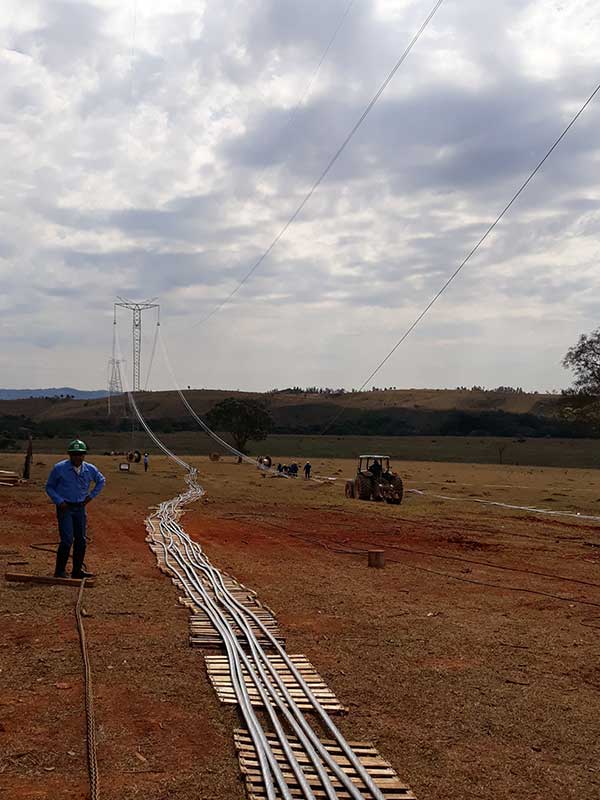
The Belt and Road Initiative has definitely arrived in Brazil and could improve Sino-Brazilian relations, helping to boost infrastructure in the biggest Latin American country. There are two projects already under construction connected to the Belt and Road Initiative: The ultra extra high voltage system to transport energy from the Belo Monte Dam to Southeast Brazil, and the S?o Luís Port, in the northeast region.
Both projects would help Brazilian development efforts by delivering sustainable options to the country’s growth. Probably they are just the beginning of a relationship that is expected to be even stronger in the near future, since the New Development Bank is starting a local operation in Brazil in 2019, the same year that the country will host the BRICS Summit. Taking this scenario, the Belt and Road Initiative will be much more present in the Brazilian talks, media and an object of discussion in political and economic circles. Although the Belt and Road Initiative is not directly connected to the BRICS, they are not exclusive.
To be precise, it is helpful to stress that the Belt and Road Initiative is already on Sinologists and stakeholders agendas in Brazil. One practical example is a meeting scheduled for Aug 14 by one of the most prestigious Brazilian think tanks, CEBRI, to discuss the impacts of the Belt and Road on Brazil. The meeting, conducted by CEBRI’s China’s watchers, is not open to the general public. But academics, government officials and entrepreneurs already have confirmed their presence at the meeting which, thanks to a video conference system, will be held simultaneously in Rio de Janeiro, S?o Paulo, Brasília, Washington and Beijing. The date also celebrates the Belt and Road Initiative's fifth anniversary.

Another practical example linked to the Brazilian Sinologists and watchers is the discussion about the Belt and Road Initiative that will be a special part of the first meeting of the Brazilian Association of China Watchers (ABEC, for the Portuguese acronym) that is schedule for next October in Belo Horizonte, a city in Southeast Brazil. Expected at the event are Chinese and Brazilian scholars, academics, diplomats and officials.
The Chinese initiative launched in 2013 by President Xi Jinping aims to strengthen international cooperation. By that point, China invites countries and regions to jointly build the Silk Road Economic Belt and the 21st Century Maritime Silk Road, focusing on infrastructure projects in regions such as Central and Western Asia, Russia, the Persian Gulf, Indochina Peninsula and Europe, as well prioritizing connections by oceans, linking China to parts of the Indian Ocean and to the South Pacific. Since then, China has pointed out that every country in the world can join the initiative, since every region is welcomed. Now this movement is already taking root in Brazil.
It is worth noticing that Chinese investments in Brazil are growing. According to the Brazilian Planning Ministry, there is already $54 billion invested in Brazil in many areas, such as banks, infrastructure and agribusinesses, just to list a few area. So it is time to detail more about the Belt and Road in Brazil.
As China’s permanent representative to the United Nations (UN), Ma Zhaoxu, stressed last June during an UN conference, Belo Monte dam, the second largest hydroelectric project in Brazil, uses Chinese transmission technology that contributes to Brazilian socio-economic development, introducing China's ultra-high voltage electric transmission technology to the Latin American country. This system, with an installed capacity of 11,000 megawatts, also will transmit clean energy in large volumes with little loss from Belo Monte to the southeast region.
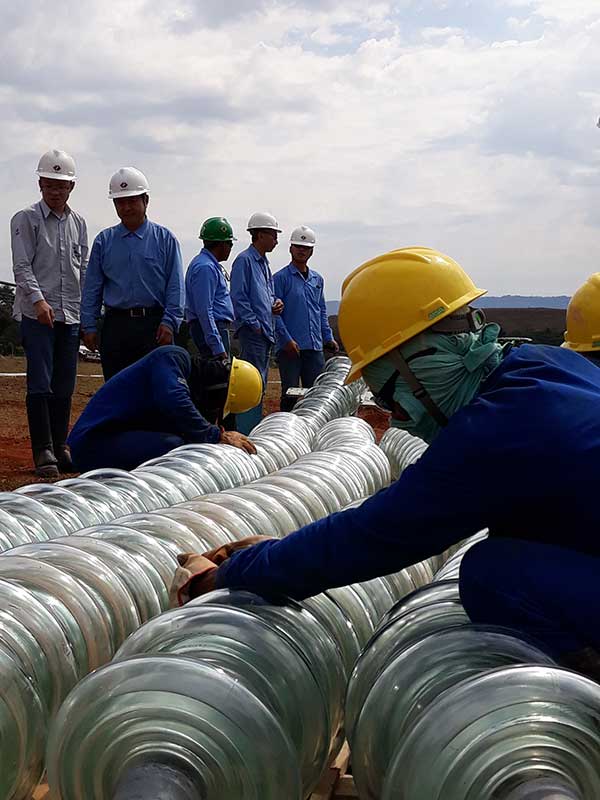
The first transmission line is already finished. The stretch delivered two months in advance (in 2017) of that established by the original contract, is 2,076 kilometers long and passes through four Brazilian states, leaving the Xingu area, in Pará, passing through Tocantins, Goiás and going to Estreito, in Minas Gerais. This is the largest power transmission network in Latin America, with capacity to take up to 4 MW to the major consumer centers in the country, benefiting 22 million people and reducing the need for thermal generation, which has a higher cost.
The second line is under construction and the expectation is that it will be completed by February next year. If this happens, the project would be finished three months ahead of the contract’s deadline. The second phase, when finished, will be the longest system for ultra high voltage on a direct current in the world, totaling 2,550 km.
State Grid Brazil Holding won the concession. Another Chinese company, Shandong Electric Power Construction No. 1 (SEPCO1), already built two sections for the first phase. In the second phase, which could be finished by February, SEPCO1 also is responsible for the construction of two sections. During a visit to the construction site at Section 9, it is possible to realize how quick the work is being done and how friendly the environment and the culture exchanges are between Chinese and Brazilian teams.
S?o Luís Port, in Maranh?o, lead by China Communications Construction Company (CCCC), has special features for Sino-Brazilian relations, since it is a greenfield project on logistics in Brazil for a Chinese investor and also is the first project related to the the Belt and Road Initiative under the leadership of the CCCC. The port will have an annual handling capacity of 10 million tons, 7 million of which will be grains, especially soybeans and corn, 1.5 million in fertilizers and 1.5 million in general cargo. In addition, it will be able to operate 1.8 million cubic meters of oil products. Completion is expected in 2022.
Chinese ambassador to Brazil Li Jinzhang, in a meeting last month, recalled that within the Belt and Road Initiative, the Chinese government launched last year a platform to facilitate the integration of agricultural infrastructures and the flow of capital, which may benefit Brazil. In 2017, China purchased from Brazil $ 23 billion in agricultural products, 30% of total Brazilian exports in this category. China imported more than 50 million tons of soybeans, almost 80% of the total exported by Brazil, according to the ambassador. The diplomat also noted the purchase by China of more than 560 thousand tons of beef, approximately 40% of the Brazilian total, and the increase in the purchase of poultry meat.
In the face of vigorous trade flow, Mr. Li suggests expanding the level of liberalization and facilitation in bilateral trade, including agricultural products, and that Brazil should also pay attention to the importance of accelerating the construction of logistics infrastructure and optimizing cooperation throughout the production chain.
Janaína Camara da Silveira is director of Radar China and a Sino-Brazilian relations researcher. She holds a master's degree in economics from Unisinos University, Brazil.
The opinions expressed here are those of the writer and do not represent the views of China Daily and China Daily website.