
<tt id="6hsgl"><pre id="6hsgl"><pre id="6hsgl"></pre></pre></tt>
          <nav id="6hsgl"><th id="6hsgl"></th></nav>
          国产免费网站看v片元遮挡,一亚洲一区二区中文字幕,波多野结衣一区二区免费视频,天天色综网,久久综合给合久久狠狠狠,男人的天堂av一二三区,午夜福利看片在线观看,亚洲中文字幕在线无码一区二区
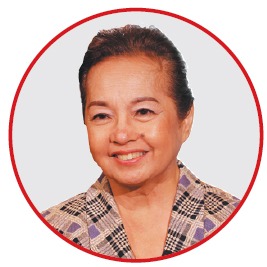
          Gloria Macapagal Arroyo
          Former Philippine president
          BORN:

          April 5, 1947, in Lubao, Pampanga province, the Philippines

          In 1961, when she was 14 years old, Gloria Macapagal Arroyo's father Diosdado Macapagal was elected president of the Philippines.

          In 1964, she studied for two years at Georgetown University's Walsh School of Foreign Service in Washington, where she was a classmate of future US president Bill Clinton.

          She earned a bachelor's degree in economics from Assumption College in the US, graduating in 1968. She pursued a master's in economics at Ateneo de Manila University in 1978, and a PhD in economics at the University of the Philippines Diliman in 1985.

          Arroyo was an economics professor from 1977 to 1987 at several universities, including the University of the Philippines and Ateneo de Manila University.

          She entered politics in the 1992 election, running for senator. She was vice-president of the Philippines from 1998 to 2001, before serving as the 14th president of the Philippines between 2001 and 2010.

          She is now a member of the House of Representatives representing the second district of Pampanga and was the deputy speaker of the 17th Congress from 2016 to 2017.

          Arroyo was elected speaker of the House of Representatives on July 23, becoming the first woman to hold the position.

          She was recognized by Asiaweek as one of Asia's most powerful women in 2001, and ranked fourth in Forbes' most powerful women list in 2005.

          A Philippine view of 40 years of 'breathtaking' changes
          Former president Gloria Macapagal Arroyo first visited China in 1975
          Cao Desheng
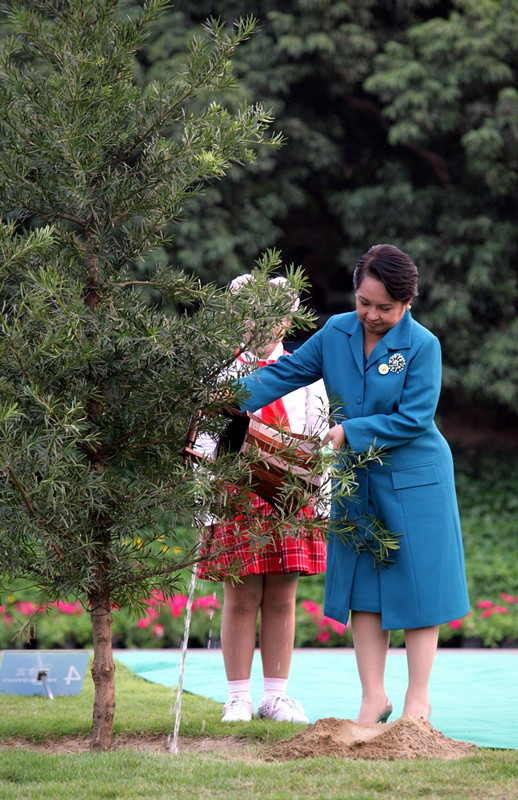
          Arroyo plants a tree during the commemorative summit marking 15 years of China-ASEAN ties in Nanning, capital of the Guangxi Zhuang autonomous region, on Oct 30, 2006. WU ZHIYI/CHINA DAILY


          The 19th CPC National Congress set out a clear and strategic plan on deepening reform on all fronts and opening up wider to the world in the new era. It said the central task will be supply-side structural reform, reflecting China's determination to give the market the decisive role in resources allocation. At the same time, China will open its door wider to the world and increase alignment of domestic practices with international economic and trade rules.

          In April, President Xi Jinping pledged China will embrace further reform and opening-up when addressing the opening of the Boao Forum for Asia in Hainan province.

          Xi said in his speech that history has shown opening-up was key to China's economic growth over the past 40 years, and, in the same vein, high-quality development of China's economy in the future can only be achieved with greater openness.

          "China's door of opening-up will not be closed and will only open even wider," Xi said. "It is a strategic decision made by China based on its need for development as well as a concrete action taken by China to move economic globalization forward in a way that benefits people across the world."

          Xi announced an array of measures at the forum to continue opening the country's economy, including broadening access to the Chinese market, enforcing strong protection of intellectual property rights, lowering tariffs on vehicle imports, importing more products that are competitive and needed by the Chinese people, and holding the first China International Import Expo in Shanghai in November.

          "We are very impressed and encouraged by the informative speech made by President Xi Jinping, about the need for further reform and opening-up," said Arroyo, who became a board member of the Boao Forum for Asia at its annual conference this year.

          Arroyo said the China-proposed Belt and Road Initiative, which encourages two-way trade and mutual investment between all countries and aims to build an open world economy, is an important platform for China to develop cooperation with other countries, including the Philippines.

          "I would describe the importance of the initiative by using the language of computers - the software and the hardware," said Arroyo, who is also the permanent honorary chairperson of the Philippines Silk Road International Chamber of Commerce.

          "The software of the relations of China with other countries would be the trade and investment agreements, like the free trade agreement between the Association of Southeast Asian Nations and China, because those agreements constitute the framework for trade and investment to thrive, but you also need hardware - the modern infrastructure - that is where the Belt and Road comes in."

          She said the Philippines is discussing a series of cooperative projects with China under the Belt and Road Initiative, including some railway projects. Some are coming to close a deal while others are still preparing the paper work, she said.

          Arroyo said she was impressed by Xi's proposal to build a community of shared future for mankind, saying the Belt and Road Initiative serves as an important platform to achieve this end.

          The bilateral relationship between China and the Philippines has witnessed ups and downs in the past 40 years, but Arroyo said she is optimistic about the future.

          "If you look at the long term, a succession of presidents in the Philippines will carry on the same policy," she said.

          Another reason for her optimism is the large and important Philippine-Chinese community, she added, which has been in her country for many years and has been important to the bilateral relationship.

          Arroyo called for people-to-people exchanges, saying they were key to the countries' relations.

          "Because at the end of the day, government is the body of a country, but people are the heart of a country," she said. "So people-to-people exchanges are like what I was doing for the Association for Philippines-China Understanding. I found that was the natural way to develop ties between our two countries and two peoples."

          Arroyo also called for ASEAN countries to treat China as a "collaborator, donor and market".

          "When China was beginning to develop in 1978, many were somewhat fearful that China would become a rival," she said. "But in the past years, we did not predict that China was going to be in a class all its own. Now we see China is not a rival, it is a collaborator, a market and a donor."

          The rise of China had been healthy for the Philippines and ASEAN, she added.

          |<< Previous 1 2 3 4   
          Gloria Macapagal Arroyo
          Former Philippine president
          BORN:

          April 5, 1947, in Lubao, Pampanga province, the Philippines

          In 1961, when she was 14 years old, Gloria Macapagal Arroyo's father Diosdado Macapagal was elected president of the Philippines.

          In 1964, she studied for two years at Georgetown University's Walsh School of Foreign Service in Washington, where she was a classmate of future US president Bill Clinton.

          She earned a bachelor's degree in economics from Assumption College in the US, graduating in 1968. She pursued a master's in economics at Ateneo de Manila University in 1978, and a PhD in economics at the University of the Philippines Diliman in 1985.

          Arroyo was an economics professor from 1977 to 1987 at several universities, including the University of the Philippines and Ateneo de Manila University.

          She entered politics in the 1992 election, running for senator. She was vice-president of the Philippines from 1998 to 2001, before serving as the 14th president of the Philippines between 2001 and 2010.

          She is now a member of the House of Representatives representing the second district of Pampanga and was the deputy speaker of the 17th Congress from 2016 to 2017.

          Arroyo was elected speaker of the House of Representatives on July 23, becoming the first woman to hold the position.

          She was recognized by Asiaweek as one of Asia's most powerful women in 2001, and ranked fourth in Forbes' most powerful women list in 2005.

          A Philippine view of 40 years of 'breathtaking' changes

          Former president Gloria Macapagal Arroyo first visited China in 1975
          Cao Desheng
          Arroyo plants a tree during the commemorative summit marking 15 years of China-ASEAN ties in Nanning, capital of the Guangxi Zhuang autonomous region, on Oct 30, 2006. WU ZHIYI/CHINA DAILY


          The 19th CPC National Congress set out a clear and strategic plan on deepening reform on all fronts and opening up wider to the world in the new era. It said the central task will be supply-side structural reform, reflecting China's determination to give the market the decisive role in resources allocation. At the same time, China will open its door wider to the world and increase alignment of domestic practices with international economic and trade rules.

          In April, President Xi Jinping pledged China will embrace further reform and opening-up when addressing the opening of the Boao Forum for Asia in Hainan province.

          Xi said in his speech that history has shown opening-up was key to China's economic growth over the past 40 years, and, in the same vein, high-quality development of China's economy in the future can only be achieved with greater openness.

          "China's door of opening-up will not be closed and will only open even wider," Xi said. "It is a strategic decision made by China based on its need for development as well as a concrete action taken by China to move economic globalization forward in a way that benefits people across the world."

          Xi announced an array of measures at the forum to continue opening the country's economy, including broadening access to the Chinese market, enforcing strong protection of intellectual property rights, lowering tariffs on vehicle imports, importing more products that are competitive and needed by the Chinese people, and holding the first China International Import Expo in Shanghai in November.

          "We are very impressed and encouraged by the informative speech made by President Xi Jinping, about the need for further reform and opening-up," said Arroyo, who became a board member of the Boao Forum for Asia at its annual conference this year.

          Arroyo said the China-proposed Belt and Road Initiative, which encourages two-way trade and mutual investment between all countries and aims to build an open world economy, is an important platform for China to develop cooperation with other countries, including the Philippines.

          "I would describe the importance of the initiative by using the language of computers - the software and the hardware," said Arroyo, who is also the permanent honorary chairperson of the Philippines Silk Road International Chamber of Commerce.

          "The software of the relations of China with other countries would be the trade and investment agreements, like the free trade agreement between the Association of Southeast Asian Nations and China, because those agreements constitute the framework for trade and investment to thrive, but you also need hardware - the modern infrastructure - that is where the Belt and Road comes in."

          She said the Philippines is discussing a series of cooperative projects with China under the Belt and Road Initiative, including some railway projects. Some are coming to close a deal while others are still preparing the paper work, she said.

          Arroyo said she was impressed by Xi's proposal to build a community of shared future for mankind, saying the Belt and Road Initiative serves as an important platform to achieve this end.

          The bilateral relationship between China and the Philippines has witnessed ups and downs in the past 40 years, but Arroyo said she is optimistic about the future.

          "If you look at the long term, a succession of presidents in the Philippines will carry on the same policy," she said.

          Another reason for her optimism is the large and important Philippine-Chinese community, she added, which has been in her country for many years and has been important to the bilateral relationship.

          Arroyo called for people-to-people exchanges, saying they were key to the countries' relations.

          "Because at the end of the day, government is the body of a country, but people are the heart of a country," she said. "So people-to-people exchanges are like what I was doing for the Association for Philippines-China Understanding. I found that was the natural way to develop ties between our two countries and two peoples."

          Arroyo also called for ASEAN countries to treat China as a "collaborator, donor and market".

          "When China was beginning to develop in 1978, many were somewhat fearful that China would become a rival," she said. "But in the past years, we did not predict that China was going to be in a class all its own. Now we see China is not a rival, it is a collaborator, a market and a donor."

          The rise of China had been healthy for the Philippines and ASEAN, she added.

          主站蜘蛛池模板: 日韩欧美精品suv| 亚洲中文字幕伊人久久无码| 国产资源精品中文字幕| 中文字幕日韩一区二区不卡| 91人妻熟妇在线视频| 欧美变态另类z0z0禽交| 2021国产精品自产拍在线| 久久夜色精品国产嚕嚕亚洲av| 亚洲国产韩国欧美在线| 最新国产精品精品视频| 啦啦啦高清视频在线观看| 女人腿张开让男人桶爽| 亚洲熟女乱色综合一区| 午夜无码国产18禁| 亚洲粉嫩av一区二区黑人| 国产人伦精品一区二区三| 国产精品女人毛片在线看| 亚洲综合高清一区二区三区| 亚洲成人精品综合在线| 欧美国产日产一区二区| 久久天天躁夜夜躁狠狠ds005| 亚洲永久精品ww47永久入口| 国产精品伦人视频免费看| 欧美日韩国产三级一区二区三区| 精品一区二区三区在线播放视频 | 中文字幕乱码亚洲美女精品| 亚洲欧洲日韩国内高清| 日本免费人成视频在线观看| 蜜桃av多人一区二区三区| 天堂网av一区二区三区| 丰满人妻一区二区三区色| 老熟女熟妇一区二区三区| 日韩中文字幕国产精品| 亚洲WWW永久成人网站| 日韩av综合免费在线| 久久精品国产再热青青青| 夜爽8888视频在线观看| 国产成人亚洲欧美日韩| 久久精品国产亚洲av麻豆甜| 日本高清一区免费中文视频| 好姑娘高清影视在线观看|