Belt and Road – A unique platform for exchanges









This year marks the fifth anniversary of the Belt and Road Initiative (BRI) put forward by Chinese President Xi Jinping on his visit to Central Asia and Southeast Asia, to revitalize the ancient Silk Road and connect Eurasian countries via trade and transit. The initiative comprises the land-based “Silk Road Economic Belt” and ocean-going “ 21st Century Maritime Silk Road” and won global approval as more than 100 countries and international organizations have joined the BRI, and 86 countries signed the Memorandum of Understanding with China.
The Belt and Road spans some 65 countries, covering more than 60 percent of the world’s population and one-third of global GDP.
The BRI will enhance the economic development of the countries participating in the BRI; strengthen regional cooperation, cultural exchanges and people-to-people contact, and promote global peace and common prosperity. The initiative will have far-reaching results for market integration in the Asia-Pacific area and beyond.
So far, remarkable steps have been taken for changing the BRI dream into reality. The BRI has gained widespread recognition and understanding within the past five years.
It is estimated that the financial support mechanism has taken shape and it is estimated China will put up to $1 trillion in the BRI. Beijing is supporting the BRI with sustainable funds, including $40 billion from the New Silk Road Fund, $900 billion from the China Development Bank and $100 billion from the Asian Infrastructure Investment Bank.
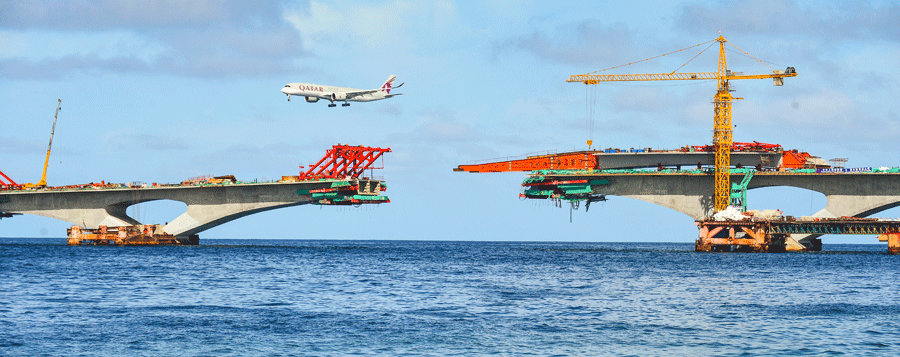
China launched an infrastructure connectivity network to connect Eurasian countries through air, land and sea routes and provided great support in this regard. The China-Laos Railway, China-Thailand Railway, Addis Ababa-Djibouti Railway, Mombasa-Nairobi Railway, Bangladesh-China-India-Myanmar Economic Corridor, China-Central Asia-West Asia Corridor, China-Indochina Peninsula Corridor and the China-Pakistan Economic Corridor, to name but a few, show significant progress as infrastructure construction projects. China also established overseas cooperation zones with 24 countries and engaged in capacity cooperation with more than 40 countries.
Trade between China and member countries has increased to a great extent and China is investing in the countries involved in the BRI. Total trade between China and BRI countries in 2014 – 2016 amounted to $3 trillion and China’s investment exceeded $50 billion. Based on data from the Chinese Ministry of Commerce, trade between China and member countries totaled 7.4 trillion yuan ($1.2 trillion).
No place tells the story of the initiative better in practice than China’s Xinjiang Uygur autonomous region, bordering seven Central and South Asian nations, which has turned from a remote border region into a forefront for international logistics services. The operation of railroad logistics in Xinjiang started with only four international lines in May 2016. Now 19 lines are available, covering 24 cities of 17 Asia and European countries; 3,600 tons of cargo are handled per day. The transportation time of China-Europe freight trains has been cut from 22 days to 15 days with the improved schedule arrangement. The cost of rail freight is only 20 percent of the cost of moving cargo by air and it is three times quicker than shipping by sea, In short, the once windswept and mountainous route for horseback traders has now changed into a bustling hub of business and culture as 70 percent of westbound freight trains pass through it, with the roar of locomotives drowning out the howling wind.
The initiative is complementary to the 2030 Agenda for Sustainable Development of the United Nations, as China prioritizes sustainable development in social and economic issues. One of the main reasons behind the SDG is alleviating poverty, as it states in the fourth section of Article 1: “By 2030, ensure that all men and women, in particular the poor and the vulnerable, have equal rights to economic resources, as well as access to basic services, ownership and control over land and other forms of property, inheritance, natural resources, appropriate new technology and financial services, including microfinance”. This is the very objective of the initiative as China seeks to build a moderately prosperous society and “a community with a shared future” where all can live free from poverty and hunger.
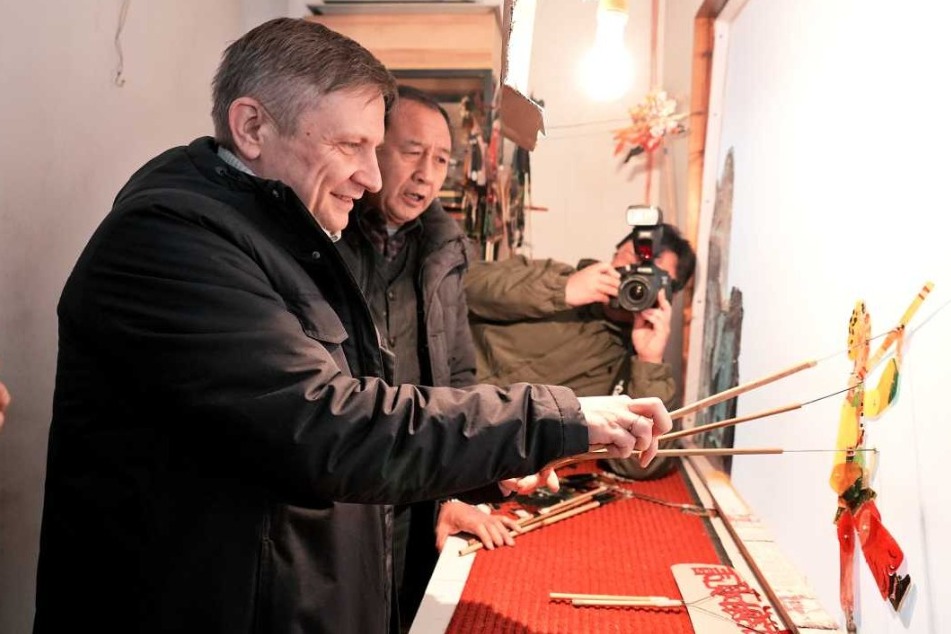
In addition to its economic objective, the initiative also aims to strengthen cultural exchanges and people-to-people contact. To have a successful negotiation, traders had to learn the languages and traditions of the countries they traveled through. A number of travelers are believed to have ventured onto the Silk Road to have cultural interaction and intellectual exchanges. The dissemination of arts, science, literature, crafts, and technologies is the main reason behind the development and influences of languages, religions and cultures. For instance, the technique of making paper and development of printing press technology were among the most technical advances of the Silk Road. In terms of religion, Buddhism is one that spread through the Silk Road, with Buddhist art and shrines found in the Afghan provinces of Bamyan and Logar, and the Chinese city of Leshan, where I visited the Giant Buddha and Mount Emei Temple a few months back. Similarly, Hinduism and Islam also are said to have been introduced into Indonesia and Malaysia by Silk Road traders.
Cultural and people-to-people exchanges, which have been reiterated by Chinese officials, are highly significant in the modern era. Since we live in “the global village”, all nations need to have not only material exchanges but also cultural and intellectual interaction.
The BRI serves as a perfect platform for strengthening trade and transit, cultural exchanges and global connectivity and bringing people of different cultures close to one another. The world should participate in the initiative to free human societies from poverty, boost mutual benefit and mutual understanding and build an open, inclusive and prosperous society.
The author is an Afghan journalist and freelance writer based in Beijing.