China refutes US trade charges in style









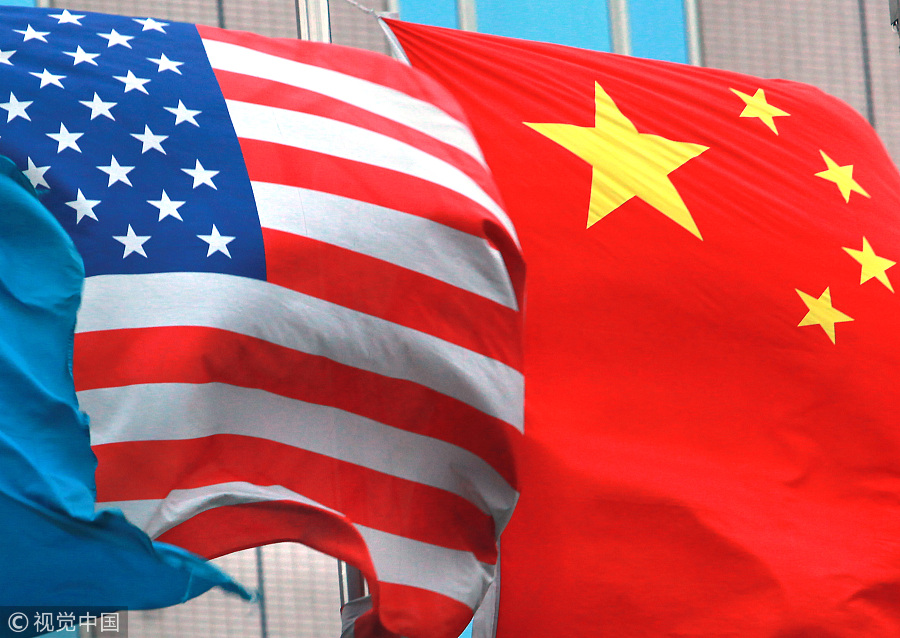
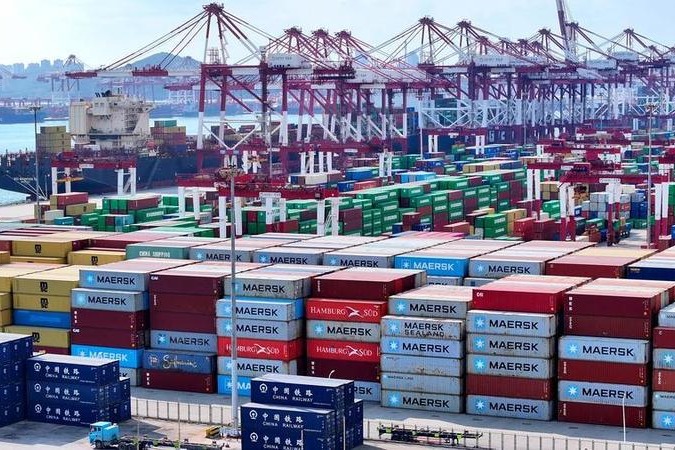
Editor's Note: China issued a white paper, The Facts and China's Position on China-US Trade Friction, on Monday to clarify its stance on the ongoing Sino-American trade conflict and provide the facts about bilateral economic exchanges. On the same day, a new round of US tariffs on $200 billion worth of Chinese goods took effect. What should we make of the white paper? And where is the Sino-US trade conflict headed to? Four experts share their views on the issue with China Daily's Liu Jianna. Excerpts follow:
Brace for the worst and hope for the best
Earlier, the Sept 27-28 trade talks in Washington were canceled because the United States has not shown any sincerity in the negotiations. With another round of tariffs coming into force, the Donald Trump administration has continued with its "maximum pressure and blackmailing" policy, without realizing that, instead of forcing China into submission, its moves will worsen the trade row and dim the trade prospects of not only the two sides but also the world as a whole.
More than other things, the timing of the white paper, which coincides with the imposition of new US tariffs on Chinese goods, is worth pondering. Overall, it aims to demonstrate that China is prepared for the escalation of the Sino-US trade conflict but also remains committed to negotiations on the grounds of equality and reciprocity.
In the face of uncertainty, a recent front-page article in People's Daily called upon Chinese citizens to deepen reform and opening-up, and meet the challenge of the times. In addition, the adjustments to macroeconomic policies, which lean toward more proactive fiscal policy and easy monetary policy, together with the appeal of the State Council, China's Cabinet, to tap the huge consumption potential on Friday, show that China is taking necessary measures to deal with the possible escalation of the Sino-US trade conflict. Which means China is bracing for the worst while hoping for the best.
Besides, the white paper is clearly targeted at readers outside the US. Whether or not the Trump administration accepts it and changes its protectionist stance is another matter. As the white paper says, China is firmly committed to mutually beneficial cooperation with developed and other developing countries, and will continue to strengthen economic exchanges with countries other than the US.
Mei Xinyu, a researcher at the International Trade and Economic Cooperation Institute of the Ministry of Commerce
Answer to the future of globalization
That China has issued a white paper on the trade conflict shows it is more proactively and constructively managing trade disputes. It also shows China is determined to safeguard the multilateral trade system and rules. The white paper is not only a response to the US' protectionist moves and bullying tactics, but also an answer to the future of globalization, which is now at a crossroad.
Since assuming office, Trump has taken a train of unilateral measures and inflicted severe damage on the world trade order and multilateral trading rules. Partly as a result of his administration's unilateral actions, the global governance system faces the most serious challenge since its establishment, and the need for deep structural reform of institutions represented by the World Trade Organization seems even more urgent.
As globalization has suffered a huge setback, the world is bound to choose between exclusiveness and openness, and isolation and cooperation. In this sense, besides stating China's stance in Sino-US trade disputes, the white paper also offers direction for future global economic exchanges. As the white paper says, economic globalization is the trend of the times and only a win-win approach will lead to a better future.
Despite the Trump administration's threats, China should avoid adopting a force-on-force approach, as it may not prompt the US to compromise. Trump is not likely to back down, because his tough stance on the Sino-US trade conflict would most probably win him more support at home, and clear the path for more harsh measures toward China. The current circumstances require sober assessment of the situation and prudent actions that lead to further negotiations, rather than escalating the war of words.
Zhang Monan, a senior fellow and professor at China Center for International Economic Exchanges
Deepening reform raises hope
With a number of facts and charts, the white paper presents the truth about the Sino-US trade friction in a most detailed way. Among others, its last chapter is new to the people. At a time when some seem wary of the ongoing trade friction, the clarification and explanation of China's stance could offer the people some guidance. There are four factors that deserve our special attention.
First, China has drawn a red line in bilateral economic exchanges-that is, China's national dignity and core interests should be always safeguarded and never be subjected to the whims of trade disputes.
Second, China will continue to promote the reform and improvement of the multilateral trading system centered on the WTO, as the system faces serious challenges. As a major country, China could and should shoulder the responsibility of helping upgrade the multilateral trading system and maintain the stable operation of the world economy.
Third, in the days ahead China will focus on deepening reform and opening-up, which have helped it achieve high-speed growth for decades. It will stick to the original course of deepening reform with or without the trade conflict.
Fourth, China will strengthen cooperation with countries other than the US. It is true that China remains committed to developing Sino-US economic and trade relations. Yet China alone cannot uphold Sino-US ties. As such, it must be prepared for a cooling-down of bilateral trade ties, and enhance collaboration with other economies, including the European Union, Japan and Canada, to offset the trade conflict's negative impact.
Eventually, China will emerge from the trade war much stronger so long as it realizes all the promises of reform and opening-up even though short-term losses, especially those incurred on small-and medium-sized enterprises, are inevitable.
Chen Fengying, a researcher at the China Institutes of Contemporary International Relations
Time for US to show sincerity
Despite US President Donald Trump's declaration that the "trade war with China is easy to win", in fact, no one will emerge winner in a trade war. As the disputes drag on, the US economy will suffer major setbacks and American consumers will be forced to bear the brunt.
And since China's capability to weather tough economic storms is well known, it is too early to say which side has the upper hand in this trade conflict.
As a Chinese saying goes, a fire at the city gate brings disaster to the fish in the moat. Other countries may gain in the short term, but are certain to lose in the long run because of the spillover effects of the Sino-US trade conflict.
That said, in the white paper, China has expressed its intension to ease tensions. So the ball is now in the US' court.
Also, it should be noted that despite many of the debates in the US on China and the trade conflict are incorrect, yet they remain unchallenged by the Chinese side. Moreover, the investigation report under Section 301 of the US Trade Act of 1974 accuses many Chinese enterprises, including China National Offshore Oil Corporation, of stealing intelligence information. But the enterprises have not refuted or responded to the accusations, which is rather weird and upsetting.
Yu Yongding, a senior researcher at the Chinese Academy of Social Sciences