



China among the countries looking to thorium as new nuclear fuel









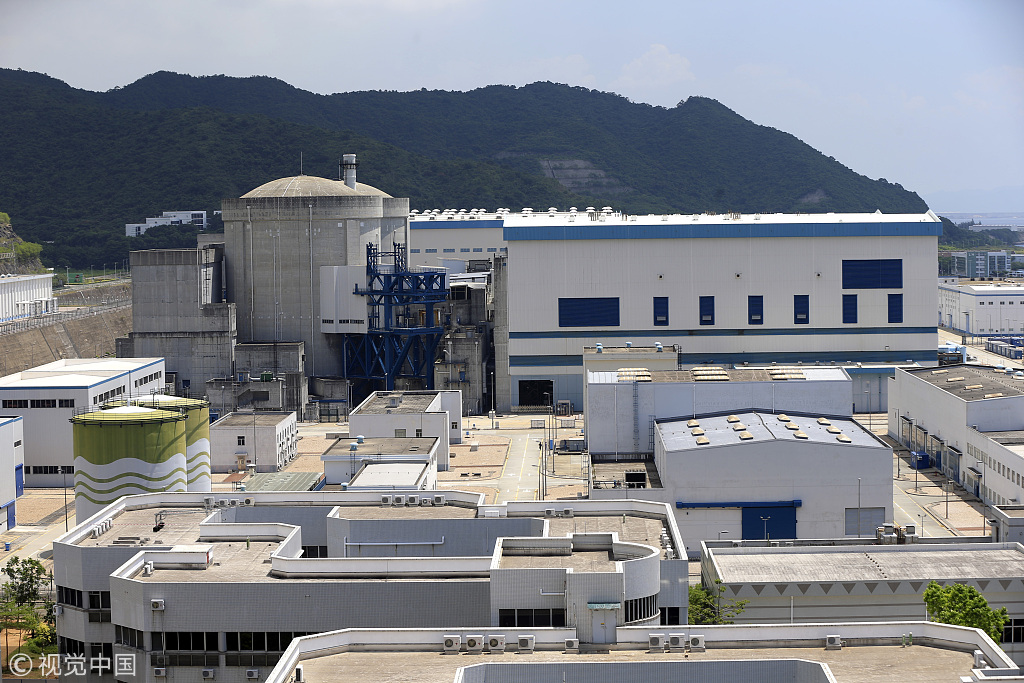
Thorium probably does not figure high on most people's list of energy sources. In fact, many may never have heard of it.
Proponents of this slightly radioactive element say it is clean, green and safer than uranium.
Thorium was being looked at by the United States in the 1950s and 60s. According to some observers, however, it was dropped when it was found it could not be weaponized.
Today, more than a dozen countries, including China, are reassessing thorium as an alternative energy source in a world that is demanding more energy than ever before.
Late last year, it was widely reported that China was to spend more than $3 billion on two experimental thorium molten salt reactors in the Gobi Desert in the northwest province of Gansu.
Also last year, NRG, a nuclear research facility in Petten on the Dutch coast, launched the Salt Irradiation Experiment Salient in collaboration with the European Commission.
In Norway, Thor Energy has begun a four-year study with Japan's Toshiba-Westinghouse to see whether they can use thorium at Norway's conventional Halden reactor south of Oslo, the capital.
Japan's International Institute for Advanced Studies is also studying molten salt reactors that use thorium.
Andrew Stuchbery, head of the nuclear physics department at the Australian National University in Canberra, said, "Thorium has been around for a long time.
"It is also surrounded by a lot of myths, such as the US dropping its research because thorium could not be turned into weapons-grade material," he said.
"In the early days of nuclear energy, thorium was thought to be a lot more abundant than uranium. The concern was that there was not enough uranium to support large-scale energy production, so thorium was considered as a long-term alternative.
"When the US dropped thorium research, uranium was no longer in short supply and the thorium research had hit technical obstacles."
According to Stuchbery, thorium reactors remain experimental.
"The point is, thorium reactors are still being developed and are not commercially viable compared to uranium reactors. That is why they have not been widely deployed at this stage," he said.
"They do have advantages and may become important in future. The waste from thorium reactors breaks down faster than the waste from uranium reactors."
As a metal, thorium can be found in rocks and soil, and some of the biggest concentrations are in China, India and Australia.
It is more abundant than uranium and is fertile rather than fissile, meaning it can be converted into fissile material through radiation. It is meant to be used alongside fissile materials such as recycled plutonium and uranium.
Thorium transforms into fissionable uranium-233 when hit by neutrons. But after use, U-233 creates fewer long-life radioactive waste products than the conventional U-235 now used in nuclear power plants.
The reactors being built in Gansu will reportedly be underground, next to a salt-rich lake, with the expected 12 megawatts of heat to be linked to a power plant and several factories.
A desalination plant next to the lake will also be connected to the reactors.
The Chinese project has been funded by the central government, and the reactors are expected to be operational by 2020, according to a statement on the Chinese Academy of Sciences' website.
The technology for the molten salt process is not new.
Oak Ridge National Laboratory in Tennessee, United States, built such a reactor in the 1960s, but it was shelved by the administration of president Richard Nixon due to technical problems and because there was no longer an urgent need for an alternative to uranium.
The thorium blueprints gathered dust in archives until retrieved and published by former NASA engineer Kirk Sorensen. The US largely ignored him; China did not.
Jonathan Cobb, senior communication manager for the World Nuclear Association, said China is undertaking research into a broad range of advanced nuclear generation technologies, including those that would use thorium as a fuel.
He said several groups are developing thorium-breeding molten salt reactors, otherwise known as liquid fluoride thorium reactors.
China is also looking to use thorium in pressurized heavy water reactors, he said.
The International Atomic Energy Agency said work on the use of thorium as a fuel for nuclear power began at about the same time that the first studies on uranium and plutonium started.
"Thorium seemed an attractive option for nuclear material," the IAEA said in a report in 2012.
"In spite of a rather long list of advantages, thorium is not yet augmenting the use of uranium fuel on a commercial basis, although research efforts regarding the thorium fuel cycle continue," the report said.
"As yet, there is no commercial fabrication or reprocessing infrastructure for thorium fuel, unlike the available infrastructure for the uranium fuel cycle.
"In the 21st century, market conditions may change in such a way that thorium options will become commercially more attractive for nuclear power application."




















