What the US has really done to China over the past 25 years









Note: This is a translation of a Chinese-language article first published by Xinhuanet.com. The article reflects the author’s own views.
On October 4, United States Vice President Mike Pence delivered a speech in Washington in which he said, “Much of (China’s) success was driven by American investment in China.” It goes without saying that the American people have become friendlier to China over the past few decades, and American investors have been friendly to China because it has been profitable. But what about the American government?
In order to force China to submit to its agenda, the United States government, along with its vassal countries, imposed a series of large-scale economic sanctions on China around 1990. China's economic growth rate was pushed down from 11.2 percent in 1988 to 9.3 percent in 1991. But before long Washington had to waive the sanctions when the resilient Chinese people managed to restore the country’s annual economic growth to double digits through continuous reform.
The United States government also tried every means at its disposal to prevent China from joining the world trading system. It prevented China from resuming its status as a contracting party of the General Agreement on Tariffs and Trade, and set many obstacles in the way of China's accession to the World Trade Organization. A generation of negotiators devoted themselves into the cause of helping China return to the world trade family, undertaking 77 formal bilateral negotiations on China's accession to the WTO, including as many as 25 between China and the United States.
Besides introducing the highest threshold for commodities and service trade with China, the United States forced China to leave a tail in the WTO accession agreement in the form of Article 15 of China’s Protocol of Accession to the WTO. This allowed WTO members to disregard China’s prices and costs in anti-dumping cases and base their calculation of dumping price margins on external benchmarks if producers couldn’t show that market economy conditions prevailed in their industry. Given the obstacles it put in China’s way, I don’t see how Vice President Pence could seriously argue that the United States “brought China into the World Trade Organization.”
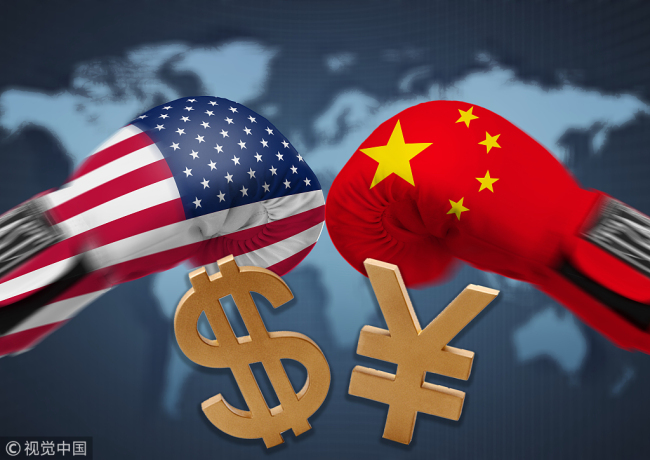
For the sake of a narrow and self-interested few, the United States government continues to suck the lifeblood from the international system it helped to build, like an economic leech. The result was the East Asian financial crisis of 1997-98, which saw American capitalists fleece East Asia. It hit China's economy hard, but the upside was that it forced China in a new direction of financial reform. The international financial crisis in 2008, caused by the subprime mortgage crisis in the United States, again put the world economy into a whirlpool of recession and slowed China’s economic development. And now, America’s 2018 trade war with the world is directly targeting China and threatens to destroy the fruits of its reform and opening up.
But even outside of these moments of crisis, it has not been smooth sailing. From 1980 to 2017, the United States launched 284 trade investigations against imports from China valued at 32.72 billion U.S. dollars. Over the course of the investigations, the United States employed unfair practices such as using surrogate countries, and subjected China’s products to abnormally high tariff rates, which seriously affected the ability of China’s enterprises to export to the United States. In addition to economic means, the United States government has spared no effort in employing military, political, and media methods to hinder China’s development and create trouble for China domestically and internationally. From the South China Sea to Taiwan, Tibet, Xinjiang, and issues relating to international bodies and world governance, it almost seems to pain the United States government to give us a break on anything it sets eyes on.
These are some contributions the United States government has made to China's reform and opening up – one failed attempt at sabotage after another. And it won’t stop until the "America first" policy has become worn out, and China's reform and opening up policy has become unbreakable.