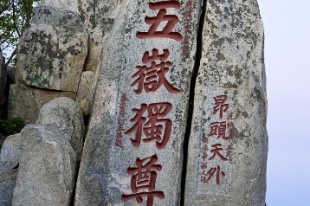



Taishan Mountain









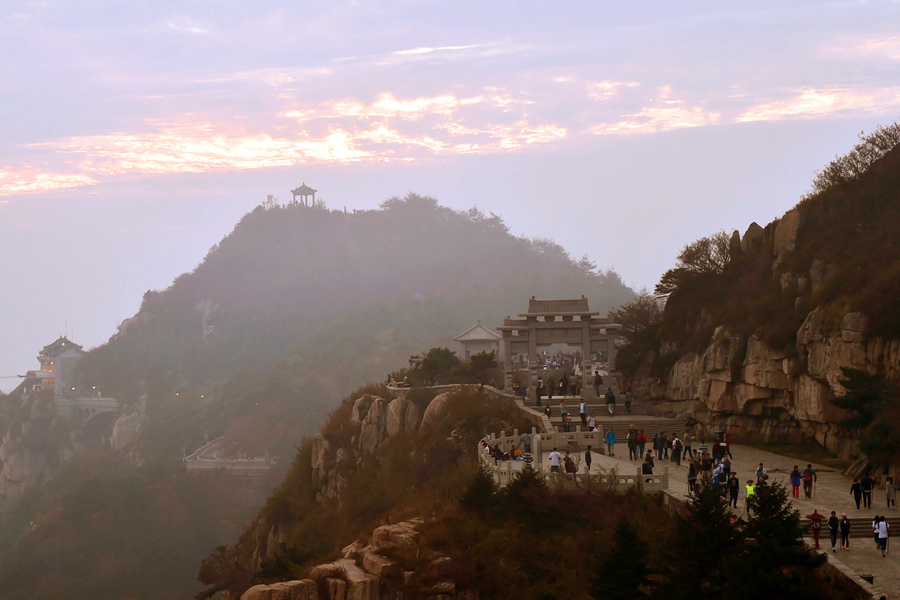
Category of site: Mixed site
Brief introduction
Located in central Shandong province in East China and spanning the ranges of Tai'an and Jinan, Taishan Mountain was known in ancient times as Daishan until it was renamed Taishan in the Spring and Autumn Period (770-476 BC), and was regarded as pre-eminent among China's Five Holy Mountains. Seventy-two Chinese emperors from various dynasties made pilgrimages to Taishan Mountain for sacrificial and other ceremonial purposes. They include Emperor Qin Shihuang, Emperor Wudi of the Han Dynasty, Emperor Xuanzong of the Tang Dynasty and Emperor Qianlong of the Qing Dynasty. A large and impressive rock mass covering 25,000 hectares and rising to 1,545m above the surrounding plateau, Taishan Mountain is considered one of the most beautiful scenic spots in China.
The natural and cultural ensemble of Taishan Mountain comprises a traditional human settlement in the form of a cult center dating from the Neolithic period, which has become an outstanding example of traditional culture under the impact of irreversible change wrought by increasing visitation and tourism.
In December 1987, Taishan Mountain was added to the world cultural and natural heritage list.
Cultural heritage
Taishan Mountain is one of the birthplaces of ancient Chinese civilization along the Yellow River. Evidence of human activities includes two flourishing cultures - the Dawenkou Culture to the north and the Longshan Culture to the south of the mountain. During the Warring States Period (475-221 BC), a 500-km-long wall was built from Taishan Mountain to the Yellow Sea. Scenic spots related to the famous ancient sage Confucius include the Confucian Temple and Menghugou, where Confucius climbed Taishan and viewed the scenery.
Taishan Mountain has an extremely rich cultural heritage. It bears unique testimony to the lost civilizations of imperial China, most particularly in relation to their religions, arts and letters. For 2,000 years it was one of the principal places of worship where the emperor paid homage to Heaven and Earth in the Fengshan sacrifices, conducted by the Son of Heaven himself. Since the time of the Han Dynasty, it has been one of the five mountains symbolizing the Celestial Kingdom, in accordance with the Doctrine of the Five Elements, a fundamental premise in Chinese thought. Poets and literary scholars of each dynasty also visited Taishan Mountain. Numerous rock inscriptions and stone tablets bear testimony to such visits. Renowned scholars, including Confucius, Sima Qian, Cao Zhi, Li Bai and Du Fu, composed poetry and prose and left their calligraphy on the mountain. The currently preserved 97 sites and 22 ancient building complexes provide materials for research into China's ancient architecture.
Natural heritage
Taishan Mountain rises abruptly to 1,300m above the vast plain of north China. The sharp contrast between Taishan Mountain and its surrounding plain and hills makes it especially majestic.
The landscape of Taishan Mountain as one of the five sacred mountains in traditional China is a unique artistic achievement. The eleven gates, the fourteen archways, the 14 kiosks and the four pavilions, which are scattered along the flight of 6,660 steps that rise between heaven and earth are not just simple architectural achievements, but are the final touches by human hands to the elements of a splendid natural site. Its very size places this scenic landscape, which has evolved over a period of 2,000 years, among the most grandiose human achievements of all time.
Taishan Mountain is a symbol of loftiness and grandeur, characterized by numerous old but still green pines and cypresses, towering precipices comprising metamorphic rock and granite, and an ever-changing seas of clouds. Other features include the Palace of the Goddess Doumu, the 100-zhang (one zhang is three and one-third meters) Cliff, the Immortal's Bridge, the Stone Valley.