Authorities join hands to protect Yangtze









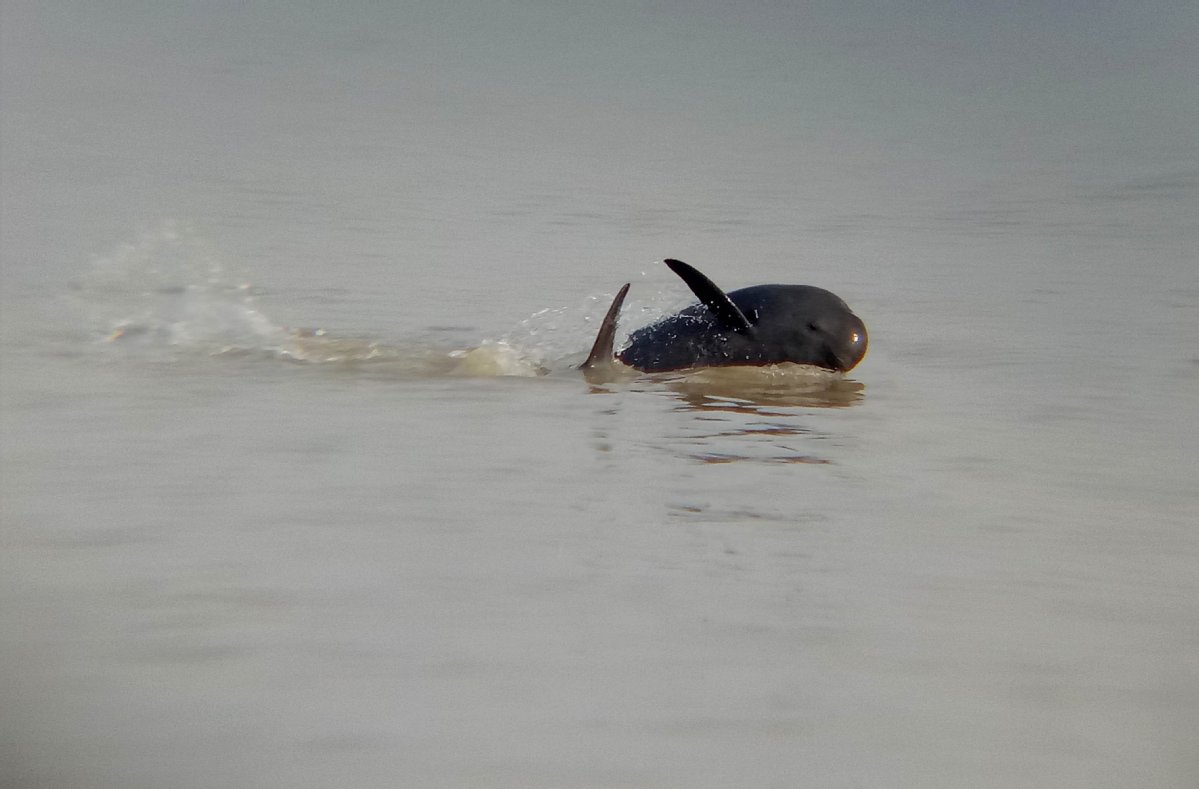
Central government departments as well as local governments of provinces along the Yangtze River vowed to jointly protect the ecological environment of the "mother river".
Despite heartening results in stopping the rapid depletion of aquatic biological resources in the Yangtze River, the environmental protection situation for the river remains severe and complex, Han Changfu, the head of the Ministry of Agriculture and Rural Affairs, said at a forum held in Wuhan, Central China's Hubei province, on Saturday.
"Protecting aquatic biological resources of the Yangtze River and restoring its eco-environment is an extensive and comprehensive social project of huge significance," Han said.
A declaration on protection of Yangtze River was made at the forum jointly by five central departments and the governments of 15 provinces, regions and municipalities along the river.
Han said a top priority should be given to the restoration of the ecological environment in the Yangtze River, while the livelihoods of fishermen should be guaranteed through exploring a diversified eco-compensation mechanism.
Li Chunliang, deputy director of the National Forestry and Grassland Administration, said the administration will implement comprehensive restoration projects targeting forests, grassland and wetlands in the Yangtze River base to improve stability and carrying capacity of the ecological system.
By the end of 2017, 896 natural reserves have been established in the provinces, regions and municipalities the trunk of Yangtze runs through, Li said.
The Yangtze River, stretching over 6,000 kilometers, is the world's third-longest. The river basin covers one-fifth of China's territory, and is home to one-third of the country's population and accounts for two-fifths of the country's GDP. It is also home to 424 fish species, among which 183 are indigenous.
In recent decades, the ecological environment of the river has been deteriorating as a result of human activities.
"The aquatic ecological environment of the Yangtze River faces problems, such as construction of water conservation projects, separation of rivers and lakes, overfishing, water pollution and invasion of alien species," said Chen Yiyu, an academician at the Chinese Academy of Sciences.
There are more than 50,000 dams built in the Yangtze River basin, he said, among which nearly 20,000 are hydropower stations. These have a huge influence on the ecological environment of the river.
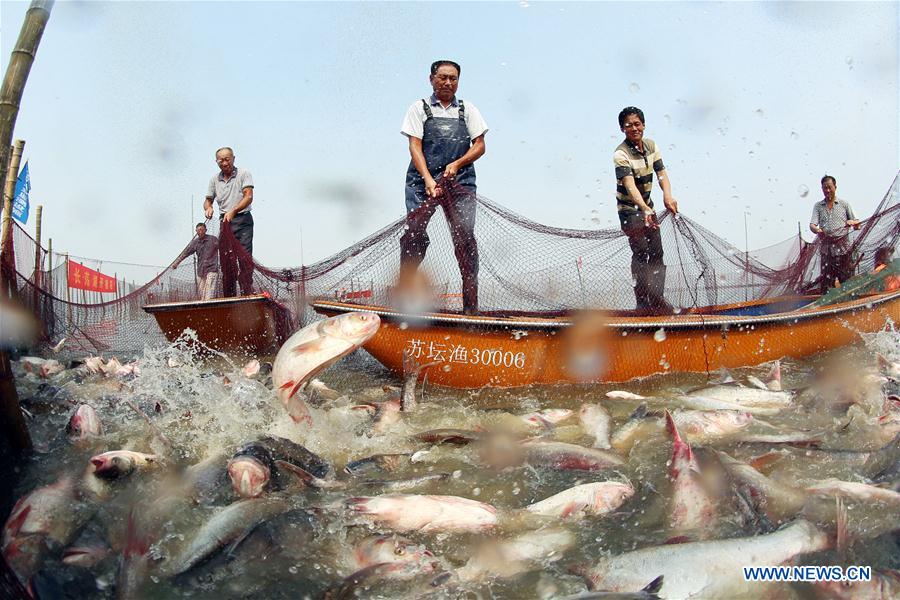
In the case of the Three Gorges Dam, 32 indigenous fish species lived in the reservoir area before water storage started in 2002. By contrast, 23 species were found in the reservoir area in a survey conducted from 2004 to 2010.
Some iconic species living in the Yangtze River have gone extinct.
Baiji dolphin, an iconic freshwater mammal, was declared extinct in 2006. Flagship species such as porpoise dolphin and Chinese sturgeon are categorized as "critically endangered".
During an inspection tour to the river in April, President Xi Jinping said that the Fish Index of Biological Integrity of the Yangtze River has been downgraded to the level of "no fish" — the lowest on the six-scale measuring system which evaluates ecological health based on fish population assessment.
The F-IBI has six categories — excellent, good, fair, poor, very poor, and no fish.
According to a report from Economic Daily, fish stocks in the river have seen dramatic decline over recent decades.
The stocks of four fish species commonly seen on Chinese dining tables — black carp, grass fish, chub, and bighead carp — have reduced by more than 90 percent compared to half a century ago.
To recover fish resources and increase the diversity of aquatic species, fishing will be banned in the Yangtze and tributaries and lakes connected to it by 2020, according to a guideline issued by the State Council, the country's cabinet, on Oct 15.





- Chongqing railway attendants undergo training ahead of travel rush
- China's railway gears up for Spring Festival travel rush
- China ranks among the top globally in the number of active AI patents: official
- High-speed train hub eases journeys
- Macao university, medical center hold symposium for further cooperation
- Senior Chinese official urges sustained crackdown on cross-border gambling