RMB exchange rate reform market-oriented









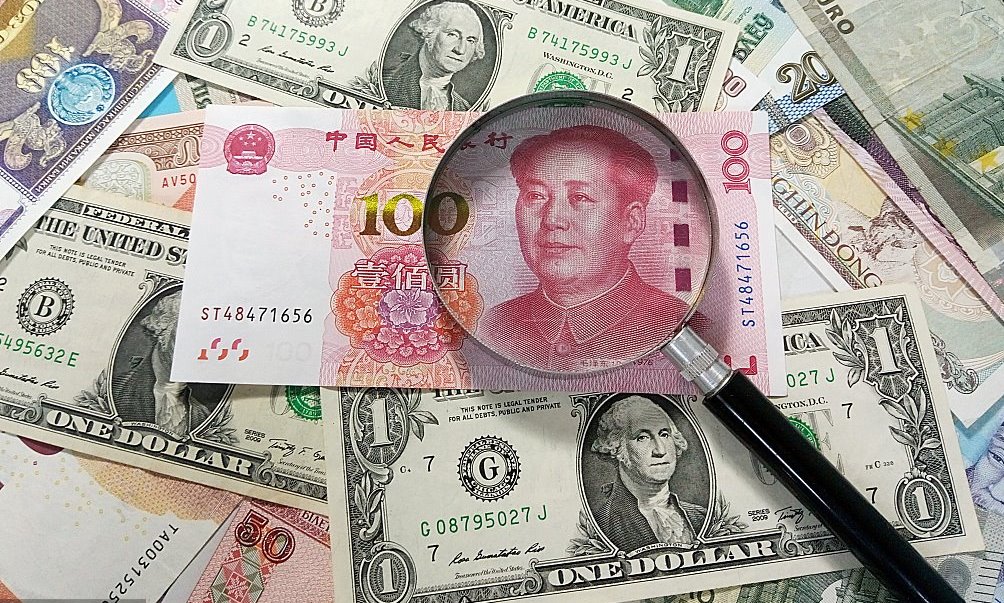
RMB exchange rate formation mechanism reform is a significant part of deepening reform. At the beginning of reform and opening-up China adopted unified exchange rate system. From 1981 to 1984 China adopted dual exchange rate system of official exchange rate and foreign exchange internal settlement price, and from 1985 to 1993 China adopted dual exchange rate of official exchange rate and foreign exchange swap price. The exchange rate system by that time was in accordance with China's opening-up and the market mechanism reform process at the same time.
With the ever-expanding economic openness and gradually deepening market reform, the State Council, China's cabinet, launched an important exchange rate reform in 1994.
In 1992 Deng Xiaoping delivered a speech during his southern tour, and in 1993 China's economy became overheated. Foreign exchange rate in forex swap center faced great pressure of depreciation.
On Nov 14, 1993, the Third Plenary Session of the 14th Central Committee of the Chinese Communist Party approved a decision on several issues of establishing socialist market economy system, which played a fundamental role in marketization reform. On Dec 15, 1993 the State Council released a decision on financial system reform, which advanced to reform foreign exchange management system.
In 1994 the State Council launched the most comprehensive exchange rate reform plan based on the guiding thought of socialist market economic system.
The long-lasting dual foreign exchange rate system has been changed into unified, manageable floating exchange rate system based on market supply and demand. Foreign exchange retention and turning in system has been replaced by foreign exchange settlement and sale system. A national unified regulated foreign exchange trading market has been established, and RMB had been made conditional convertible under the current account.
The exchange rate reform in 1994 made great achievements including stabilizing exchange rate level, easing the pressure of capital outflow and enhancing China's trade competitiveness.
In 2001 China joined WTO and the Sept 11 attacks took place in the US. In the following years the US Federal Reserve successively lowered the benchmark interest rate, which made short-term capital flow into China in a large scale.
From 2000 to 2005, China's economy steps into a period of rapid growth. In 2005 China's GDP growth reached 11.4 percent, and the Chinese residents and enterprises' net settlement of foreign exchange had reached $280 billion. RMB faced great pressure of appreciation at that time.
On Oct 2003, the Third Plenary Session of the 16th Central Committee of the Communist Party of China approved a decision on several issues of improving socialist market economy system, which advanced to deepening reform of financial enterprises, promoting foreign exchange marketization, establishing and improving interest rate formation mechanism based on market supply and demand; improving RMB exchange rate formation mechanism, ensuring the basic stabilization of RMB exchange rate at a reasonable and balanced level; selectively easing restrictions on cross-border capital's trading activities step by step; and gradually achieve RMB convertibility under capital accounts.
On July 21, 2005, People's Bank of China released RMB exchange rate formation mechanism reform plan, changing the policy that RMB pegging to US dollar to a floating exchange rate system that refers to a basket of currencies. RMB exchange rate appreciated 2.1 percent at one time. On Jan 4, 2006, People's Bank of China further introduced market maker system and enquiry trading system to change the pricing method of RMB middle rate.
The foreign exchange rate reform in 2005 effectively coped with the challenges after China joined WTO, promoted China's opening-up and economic growth, enhanced China's comprehensive national strength, and played a significant role in getting through international financial crisis. Meanwhile, China's foreign exchange reserve increased in a large scale during this period, which enhanced China's capacity of going aboard.
Foreign exchange rate reform in 2015 was a helpful attempt toward floating exchange rate. In 2012 the 18th National Congress of the Communist Party of China was successfully held, and China's economy stepped into the new normal. After the 18th National Congress of the Communist Party of China the country advanced the Belt and Road Initiative and RMB joined the basket of IMF Special Drawing Rights currencies. RMB exchange rate is at a reasonable level, and the basis for large-scale appreciation or depreciation of RMB exchange rate doesn't exist.
On Aug 11, 2015, People's Bank of China reformed RMB exchange rate central parity rate quotation mechanism. To enable RMB's stability, on Dec 11, 2015, the central bank released RMB exchange rate index, and further introduced a basket of currencies and countercyclical factor.
RMB exchange rate formation mechanism reform effectively promotes China's opening-up and economic growth, improves domestic capital market, resists the impact of external financial crisis, and accelerates the process of RMB internationalization.
In general, RMB exchange rate reform in the past four decades is always under the lead of the Party Central Committee, and the goal of the reform is always market-oriented, which is in accordance with the overall process of China's market economic reform. RMB exchange rate reform always insists the principles of independence, progressivity and controllability, which is in accordance with the overall process of China's opening up, as well.
The author is head of Chinese Academy of Social Sciences. And the article is an excerpt from his speech on a RMB exchange rate reform theory and practice in four decades of reform and opening-up at the CASS.