



China gap is not 'serious' amid rise in US trade deficit









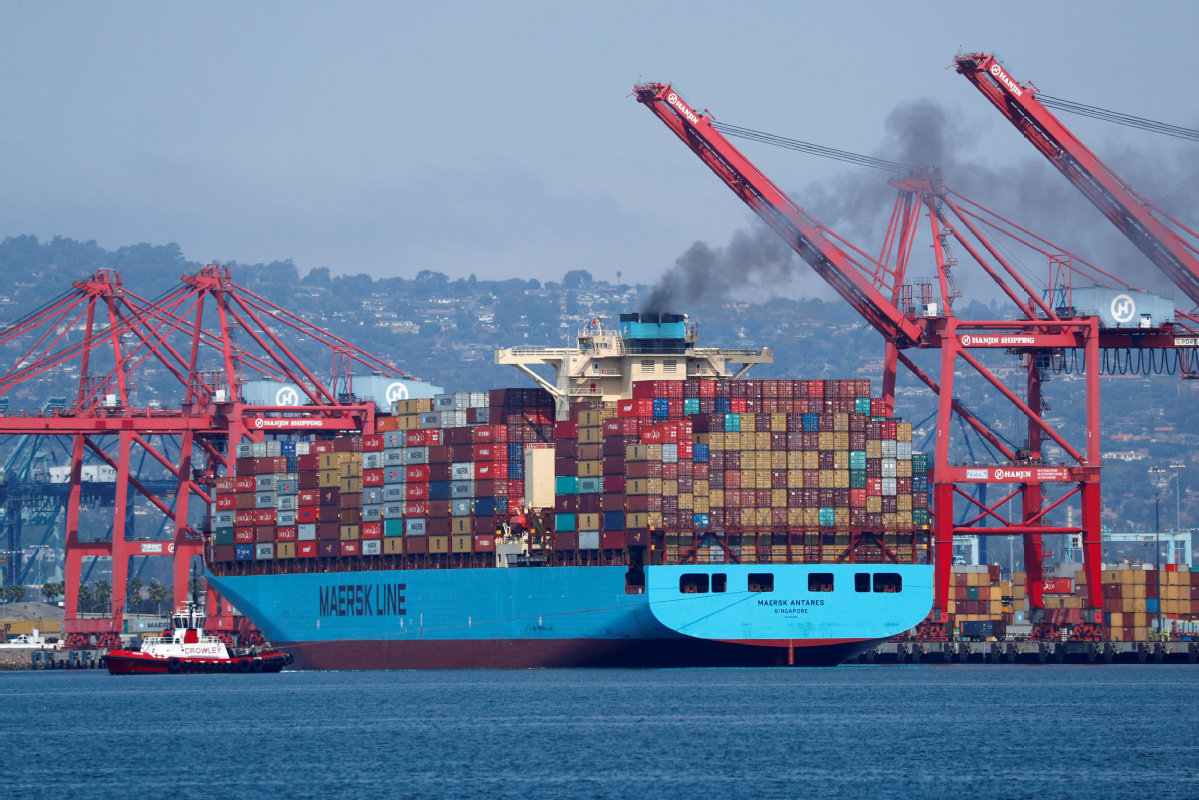
NEW YORK - Trade deficit of the United States is expected to expand further with a 17-percent rise in 2018 fiscal deficit amid additional import tariffs on major trading partners such as China, said US economists and trade experts.
The US deficit in international trade of goods and services in August and July hit new highs a few months after the imposition of tariffs on large quantities of imports, amid an ostensible claim to cut down trade deficit and wishful strategy to bring back manufacturing.
The fundamental cause of trade deficit is the imbalance between a country's savings and investments, said Sinem Sonmez, professor with the Department of Economics and Finance at Baruch College, the City University of New York.
"The US spends more than it makes and so the additional spending has to go to foreign goods and services and so if you look at that increasing spending you have to either borrow from foreign lenders or extract foreign investment into your country," Sonmez said.
US trade deficit will worsen in the near term because of the decline in savings rate caused by tax cuts, said Barry Eichengreen, professor of economics and political science with the University of California, Berkeley on the sidelines of a recent seminar on "The Economic Consequences of Mr. Trump".
The deficit will certainly increase because the US is experiencing an economic boom and all of the tax cuts, fiscal stimulus and rollback of regulations are helping the economy to grow faster.
Companies will have to obtain a lot of their inputs, capital and equipment from China or other producers in the Asia-Pacific region, Sonmez said.
"I think the deficit will persist. I don't think that deficits particularly of the size that we have with China can be changed very quickly again," said Henry Levine, senior advisor of Albright Stonebridge Group.
The US trade deficit with the rest of the world is set to grow by 5 to 6 percent this year, said a recent report by Kiplinger, a publisher of business forecasts and personal finance advice.
US official data showed an increase of $31 billion in trade deficit in the first eight months of 2018, or 8.6 percent up from a year earlier.
Simon Lester, associated director with the Herbert A. Stiefel Center for Trade Policy Studies under the Cato Institute, attributed the deficit to "the low savings rate both personal and governmental in the United States".
Lester said: "The American government spends a lot of money and in addition to that there is the use of the dollar as the kind of worldwide reserve currency and it's a combination of these things that have led the US government to run trade deficits for over 40 years."
On the US trade deficit with China, Levine said: "I think the vast majority of economists would agree that bilateral (US-China) trade deficit is not a serious concern or serious issue.
"I don't think reducing the deficit should be a particular focus of US or Chinese policy... The right way to deal with the trade deficit is to ignore it.
"You should worry just more generally about how your economy is doing and adopt policies that are good for overall economic growth."
The trade deficit reflects a fact that Americans want to buy a lot of inexpensive good-quality products from China, a consumer behavior to save more money and raise living standards, according to Levine, who once served as deputy assistant secretary of commerce for Asia and the US Consul General in Shanghai.
He said: "I'd say our focus should be on our fiscal deficit and if we could get our government spending under control and encourage more responsible behavior among people and how much they spend and how much they consume that might have an impact on the trade deficit.
"If the US economy were to go into a deep recession the trade deficit with China would shrink because American consumption would decrease. But ... they (Americans) would be worse off ... To the extent that production moves back to the US, it's likely to be highly technology-intensive use of robots and other types of technologies, which are unlikely to boost jobs."
In the opinion of Lester, of trade policy studies under the Cato Institute, the US policies' focus should be more on training people for the skills of the 21st century. "If it weren't for Chinese investors buying the US treasuries, then the US won't be able to sustain this high level of trade deficit," she said.
Correcting the trade deficit so quickly and imposing such harsh measures and terms on China is probably the wrong approach in going about things, said Sonmez.
"My only worry right now is that the slowdown in economic growth in China may actually come back to haunt us ... because they could pull down global economic growth.
"We can afford to use more time in resolving these trade tension. I think that there's no reason why we need to impose certain deadlines on China."
Lester urged the United States to sit down with trading partners to negotiate away protectionist and regulatory barriers and reach deals to liberalize trade in both directions.
"If your government imposes tariffs, the costs are mainly going to be paid by consumers," he said.
"This is the largest intervention in micro management by the US government on US economy since (ex-president Richard) Nixon's wage and price controls. They are literally dictating where people can buy things which is really strange for every Republican administration," commented Gary Horlick, former international trade counsel with US Senate finance committee and former head of import administration at the US Department of Commerce.



















