



Huaqiang North — a tiger changing stripes









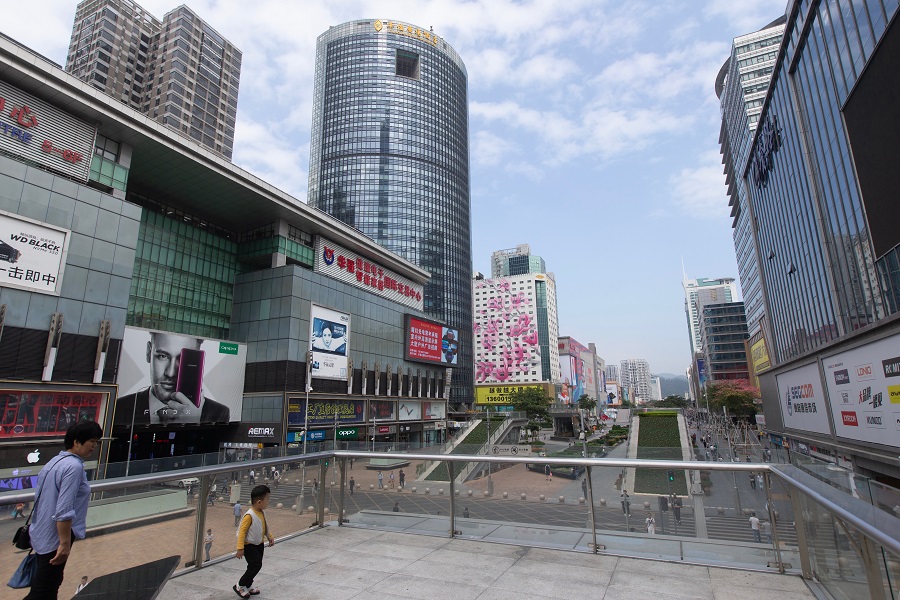
Huaqiang North Electronics Market — one of the country’s best-known electronics hubs — has been emblematic of China’s reform and opening-up in the last 40 years.
While celebrating achievements, pioneers of the street in Shenzhen are now more concerned about how to reangle their way into the future.
Cheng Yimu, executive director of the Shenzhen Electronic Chamber of Commerce, is one of them. Almost 30 years ago, he helped establish the famous trading center, but now, he acknowledged, it is losing its glamor and needs to tap new opportunities.
In 1991, Cheng left a secure job at the national authority of mechanical and electronic industries in Beijing and joined a private company in Shenzhen.
“Since the late 1980s, many of my colleagues went to Shenzhen, believing in its huge potential,” he recalled.
It was not long after Shenzhen had been designated as a special economic zone, along with three other cities — Zhuhai and Shantou in Guangdong province and Xiamen in Fujian province — in the early 1980s. Riding on one of the most significant implementations of the reform and opening-up policy, the city soon became a promising land of success stories.
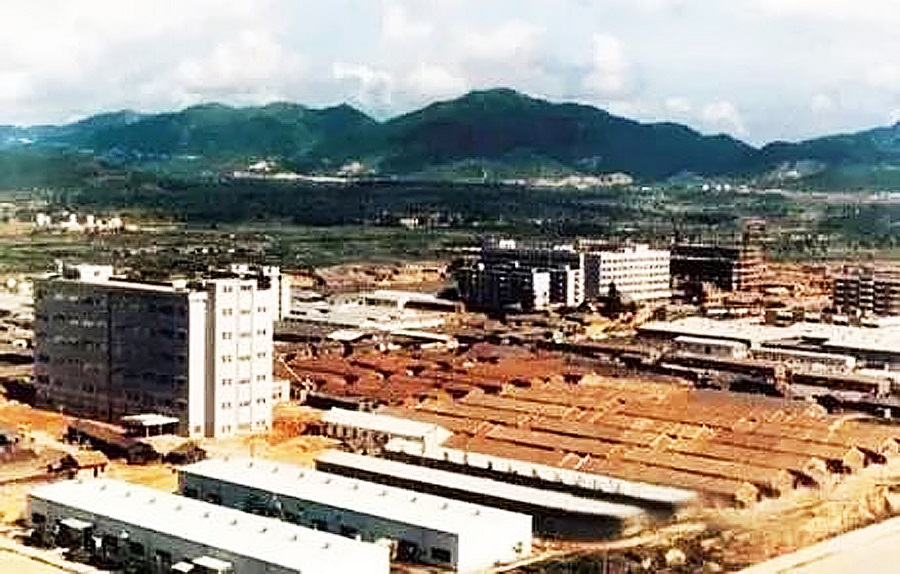
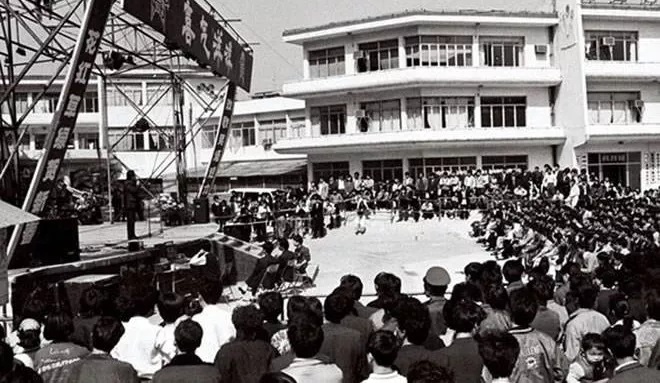
When he first landed at Huaqiang North subdistrict, where his new employer, Shenzhen Electronics Group (SEG), is located, all he could see was factories.
“It was a very quiet street. The only sound was the roar of trucks transporting electronic products,” he recalled. “Because at the time of planned economy, the supply and distribution were all assigned.”
But, as the policy of reform and opening-up revved up, overseas companies started to set up factories in Shenzhen, and they needed a place to trade, so the free market of electronic components under SEG was established in 1988.
Cheng remembered the market had only 43 stores in an area of 900 square meters in the beginning, but soon it grew into China’s largest trading center of electronic components with dozens of market buildings erected.
Glory and blemishes
The monthly rent for a 1-meter-long counter was once as high as hundreds of thousands yuan, and even so, vendors were scrambling for one spot. At its peak, the trading volume each year reached tens of millions of yuan, and the goods for sale expanded to the fields of mobile phones, computers and security devices.
Hong Kong investors brought in their money and imported products, thanks to the adjacency of the two cities and the preferential policies in the special economic zone.
Many technology giants took off from the zone, including internet mammoth Tencent and the world’s leading drone maker DJI.
However, besides its glorious achievement, the market also drew the world’s attention for shanzhai (imitation and trademark infringement of brands and goods). Less than scrupulous actors took advantage of the rich electronic-component resources and flexible manufacturing ability behind those small counters, chasing only money but not building their own technology and brands.
Local authorities took the initiative to crack down on shanzhai products in the past few years, forcing many stores to close. The rapid development of internet-based phones, televisions and other electronic devices has also substantially squeezed profits of upstream component suppliers, while many small and micro-sized distributors in Huaqiang North market depend on these suppliers. Some tenants have been forced to close their businesses as profits slumped.
According to research conducted by Shenzhen University in 2016, up to 40 percent of nearly 240 sellers interviewed said they earned zero profit in 2015, while 39 percent had a profit of 100,000 to 200,000 yuan ($14,500-$29,000). More than 80 percent said their profits declined compared to a year earlier and they could barely make rent payments which, in fact, were falling in 2016, Shenzhen Evening News reported.
Exploring new path
Pain is inevitable during transformation, but new opportunities are emerging.
San Francisco-based HAX Accelerator — the world’s largest hardware incubator — established an office in Hua-qiang North in 2011.
Innovators from the United States and Europe were drawn to the electronic gadget heaven by various components offered at a fair price and its complete industrial chain. “When I came here, I was surprised there were so many things we could do,” said Asif Khan, an entrepreneur from Canada. He is working on new molding technology that can automatically change its surface so that manufacturers can quickly and easily adjust their moldings.
The HAX community helped Khan find small contractors. “They are willing to do small and quick work for us, which is a big support for startups,” Khan added.
He is especially impressed by the combination of low cost and high quality in the market.
“What costs us seven weeks and about 10,000 yuan in Canada takes only three or four days here at a cost of about 2,000 yuan. That’s much cheaper and much faster,” he added.
The French government also set up French Tech Hub — a worldwide network to offer talent and resource services for French entrepreneurs — in the region in 2017.
SEG and several traditional electronic traders in the area also started to set up international maker spaces and incubators around.
However, Cheng, who was one of the first to officially propose the idea of making the area a “big innovator” to local authorities a decade ago, believes the market is fierce with competition.
“These incubators need to find more advantages other than the closeness to a large electronics component market, in order to attract excellent startup projects,” he noted.
Another emerging trend is the upgrade of the electronic accessories market, he pointed out. “Products with high-end industrial design can drive the development of high-end market channels.”
Xu Yong, a former vendor of shanzhai products at one of the myriad counters in Hua-qiang North market, is one of the pioneers to take the initiative of making a change.
Realizing the downhill path of shanzhai, Xu and his partners established their own brand Remax in 2008, and have achieved a sales volume of 5 billion yuan in six years.
The company has a design team of more than 100 employees, who have developed more than 700 categories and 3,800 kinds of products, focusing on mobile phone cases, earphones and power banks.
These cool and fashionable products are sold in more than 6,300 shops in over 120 major countries and regions.
“Huaqiang North market helps us set off to global markets quickly because many foreign buyers like to come here and they bring our products to Asia, Europe and America soon”, Xu said.


- Researchers discover natural hydrogen trapped in Qinghai-Tibet Plateau
- Yunnan researchers reveal Cambrian vertebrates may have had 'four eyes'
- Scientists uncover response mechanisms of alpine plants phenology to climate change
- Beautiful Tianjin episode 2 showcases city's natural landscapes
- Over 1,500 telecom fraud suspects repatriated to China
- Gang Aoping: Justice is served for Jimmy Lai












