



Searching for Dongba traditional music









China Reform and Opening – Forty Years in Perspective
Searching for Dongba traditional music
Editor's note: Laurence Brahm, first came to China as a fresh university exchange student from the US in 1981 and he has spent much of the past three and a half decades living and working in the country. He has been a lawyer, a writer, and now he is Founding Director of Himalayan Consensus and a Senior International Fellow at the Center for China and Globalization.
He has captured his own story and the nation's journey in China Reform and Opening – Forty Years in Perspective. China Daily is running a series of articles every Thursday starting from May 24 that reveal the changes that have taken place in the country in the past four decades. Starting this month, China Daily will run two articles from this series each week – on Tuesday and Thursday. Keep track of the story by following us.
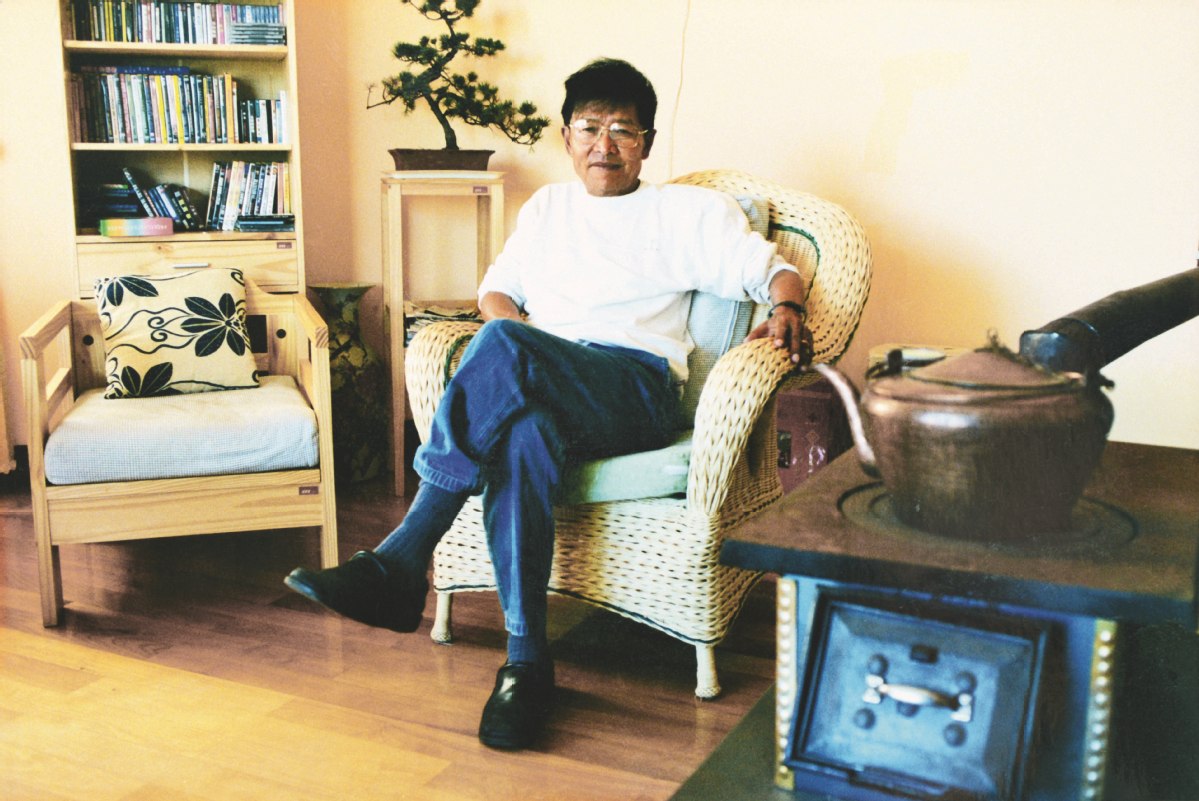
2002:In the old city of Lijiang, with its graceful arching rooftops and narrow canal connected alleyways, one can find a theater where every evening an old generation, which has seen too much come and go for one lifetime, sits down together in a moment that seems a sigh of collective harmony, and plays a tone of ancient music.
The man responsible for preserving and reviving this tradition is an old music teacher, who himself witnessed more than one might ask for or want in a single life. Resigned but sardonic, he smiles under large glasses and hosts the evening of Dongba music and Naxi culture. He is there every evening, never misses a night, and is the very fabric of this tradition — kept alive in the Dongba orchestra he has brought together. "It is sad," he explains to the audience, "as over the years many musicians on this stage disappear and leave us." Meanwhile, younger musicians sit beside the old masters and hopefully, the tradition will continue.
After the performance, I sought out Xuan Ke backstage. I was curious and asked him, "You have been the most active individual preserving Naxi culture. But now, with an onslaught of Westernization, do you feel its traditional values are endangered?"
"Because Lijiang is now open to tourism," he said with a sigh, "it brings both good and bad. For instance, Westerners come here; they are only interested in culture. They come with one purpose, asking 'where are the traditions, where are the people still living in their own culture?' They are not interested in going to disco or fancy restaurants. So they end up coming to my concert hall. Here, they can listen to the original music played by Naxi people. Of course, it is for tourism, but it sustains the culture. The musicians are old, and it gives them employment and purpose."
"Maybe this is a last window to Naxi culture?"
"The Naxi culture is disappearing," he said with a nod that did not signal resignation.
"Let's talk about weddings, for example," Xuan Ke shrugged, "in the traditional Naxi dictionary, there was never a word for father or wedding. Children did not know who their fathers were. It was a matriarchal society and free love was a very important part of the culture."
"So is that where the idea of suicide love in Naxi tradition came from?" I wondered out loud.
"The Dongba priests believed love was a paradise between Heaven and Hell. They believed that Hell only burned below and Heaven opened above. God was kind. And people who entered Heaven would be welcomed by their past ancestors. So many lovers killed themselves by eating poison or jumping off the cliff into the water. They felt this was safe. Better they go to that paradise in between. Almost every family in Lijiang has, in its history, love suicide."
"In Western thinking, this is tragic," I implored.
"In Naxi thinking, it is romantic," he insisted. "They can go to another world between the material world and Heaven. It is a floating world. Then their parents who survive the suicide lovers will undertake ceremonies once or twice a year with Dongba priests chanting to celebrate the happiness their children enjoy in this third floating world, and eventually the previous generation of ancestors will open the gate of Heaven and they can enter the upper paradise, which is different from the floating world between."
"So is this where the idea of Shangri-La came from?" I asked.
"No." Xuan Ke shook his head again. "Shangri-La is not the real natural world. After Hilton published his book Lost Horizon, people believed it is a good place or better than the war years we lived through. So people think that Shangri-La is paradise, things are much better there. So the new reality is to rush there."
"In your generation, are there still people who believed in this floating 'third world'? This is a very ancient Naxi tradition, but at the same time a very modern idea," I pried.
"Why?" Xuan Ke seemed surprised.
"Because young people throw away their material world to die for love or an ideal, trying to pursue a dream and make it come true even if they die with the dream. It is a very romantic and even modern ideal."
"So people want to find a place like Shangri-La. If it is true, they will sell their cars and houses — the whole package — to find that dream world of Shangri-La. So for the feeling of modern people, this is not only in China."
"Is the 'third world' then another truth?"
"If it is true," sighed Xuan Ke, "then it will happen. If not true, it is a dream. Keep it in a dream; it is very wonderful. If we find a real Shangri-La and paradise, it is a waste of time. But if this is in a dream, then this dream is better than the real stories."
"You saved the Dongba music and bring it to the tourists, to the outside world. But tourism also changes culture. How do you deal with the contradiction? "
"People want to save culture and help to save culture of others, even give a helping hand. People are starting to get a better education, but how can they help when they only have one idea for their society? There is only one idea and way of saying things. So how can they get better education? I received my education before the 1940s. I think in some parts, the old education system is better than nowadays, in those days, we had free choice and if we wanted to study music, we could."
"Is Lijiang a stop on the ancient Tea Caravan Trail?"
"Before, in Tibet, the main food was yak butter tea with lots of oil and fat. Without oil and butter, it is a cold place, so you have to take a dose of yak butter every day. But precious Pu'er tea cuts the fat, providing vitamins. They do not grow tea in Tibet. So Sikkim, Nepal, Bhutan, Darjeeling all came to depend on tea. From there, the tea caravans brought back goods from India and with them scriptures. This was the tea area of Yunnan the Tea Caravan Trail went from Simao and Pu’er, through Dali and Lijiang, to Deqin, Changdu, Lhasa, across to Sikkim and Darjeeling. In the old days, it took four months one way. Yes, you are following the Tea Caravan Trail."
"Is it the road to Shangri-La?"
"That is a difficult question. I made Zhongdian Shangri-La. That was my effort. On December 28, 1998, I was the first one to speak this idea to the journalists. Then BBC, NHK all came to interview me. I always changed my mind but it was too late, because it was already fried, delicious and served to the eaters. I was in Kunming before 1946 and remembered such a place that combined Tibetan, Naxi and Han culture. My mother and grandmother were born near there, so I wanted to share with people some good things. Before I said it, it became true and became the official name. Then after I said this, they stopped cutting wood in the ancient forests there. So it is better than before. There was no other name for Zhongdian and nobody there knew what Shangri-La was. After I told the journalists Shangri-La was in Zhongdian, everyone there began making money from tourism and stopped cutting trees. In the end, it is better for the trees."
Please click here to read previous articles.





