
<tt id="6hsgl"><pre id="6hsgl"><pre id="6hsgl"></pre></pre></tt>
          <nav id="6hsgl"><th id="6hsgl"></th></nav>
          国产免费网站看v片元遮挡,一亚洲一区二区中文字幕,波多野结衣一区二区免费视频,天天色综网,久久综合给合久久狠狠狠,男人的天堂av一二三区,午夜福利看片在线观看,亚洲中文字幕在线无码一区二区
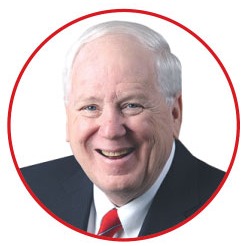
          Kenneth M. Quinn
          President of the World Food Prize Foundation
          BORN:

          1942 in New York City

          EDUCATION:

          BA, political science, Loras College, Iowa

          MA, political science, Marquette University, Wisconsin

          PhD, international relations, University of Maryland

          CAREER:

          1967-99: Diplomat, US State Department

          1996-99: US ambassador to Cambodia

          2000-present: President, World Food Prize Foundation

          HONORS:

          2014: Iowa Medal

          The Iowa diplomat with 'two interesting stories'
          Over a 30-year career, the World Food Prize Foundation head met both President Xi Jinping and his father Xi Zhongxun - encounters that inspired a work of art
          Zhao Huanxin in Washington
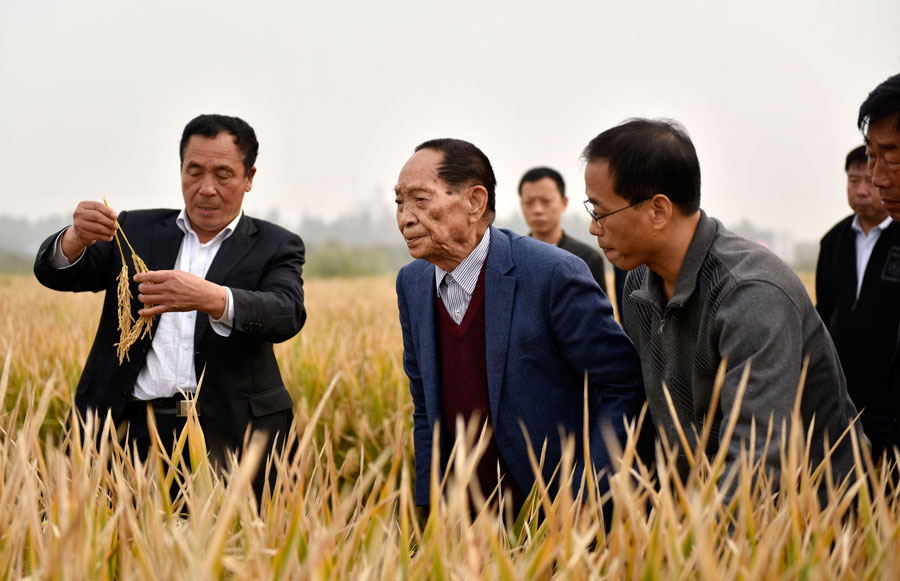
          Yuan Longping (center) won the World Food Prize in 2004 and is "an incredible example of Chinese scientific achievement", Quinn said. [Hao Qunying/China Daily]

          Shaking hands

          Xi Jinping returned to Iowa 27 years later as vice-president. The trip in February 2012 saw him deliver the keynote speech at the US-China Agricultural Symposium held at the World Food Prize Hall of Laureates in Des Moines.

          As he escorted the Chinese leader into the hall, Quinn recalled telling him: "You have such an interesting story, how you came to Iowa as a young man, were treated so nicely and feel such a special attachment to our state. ... I'm going to commission a painting to hang in my building, just about your visit."

          As they shook hands, Quinn told Xi he was one of the few people in the US who had shaken hands with both him and his father.

          "Xi stopped in his tracks, and turned and looked at me. He had a big smile on his face and said to me, 'You have two interesting stories,'" Quinn said.

          As a result, he realized the art work to be commissioned needed to tell both stories, recognizing a family that had played such a major role in the development of modern China and its personal connections to the Midwest state.

          Two Interesting Stories by artist Clint Hansen depicts the visits of both father and son.

          A country transformed

          Quinn said when he visited China in 1979 the country had no modern buildings, few cars, and people basically dressed the same, in either black, blue or olive-green clothing. Most people traveled by bicycle.

          So he was "startled" when he came across a coffee shop at a Guangzhou hotel.

          "It had neon signs, flashing lights, new Formica tables, and waitresses in short dresses. The coffee shop was to me the sign of the Big Bang, the sign of modernization," Quinn said, adding that he soon learned Guangdong was a pioneer of the country's economic reform, which today is expressed as socialism with Chinese characteristics.

          In 2004, Quinn was at a hotel in downtown Beijing attending an agricultural forum, and he walked to a nearby Starbucks for a cup of coffee.

          "I looked at all the signs for everything, they were only in Chinese," he said. "This Starbucks existed basically to serve coffee, pastry and others to Chinese customers. There were very few Westerners out there."

          What this told him, he said, was that China had so many educated, accomplished, high-income individuals that Starbucks had opened outlets just to cater to them.

          "I tell people all the time that China is the most transformed country on Earth, that no other country has done more in the past 40 to 50 years," he said.

          Quinn worked for decades in Asia, mostly in Vietnam and as the US ambassador to Cambodia, during which, he said, he learned two important life lessons: The power of rural roads and the power of agricultural technology.

          "Where the rural roads end, hunger, poverty, political instability, conflict and terrorism all begin," he said in an interview with UC Food Observer in February 2016.

          He added that perhaps the best example of upgraded rural roads having a dramatic impact was in China: "In this period - 1980 to 2015 - China has gone from having 60 percent of its population below the poverty line to only about 10 percent. That's also the result of many other things, including changes in policy, research and the restructuring of economic systems, but China also significantly upgraded its rural roads infrastructure during that period."

          Call for nominees

          That may partly explain why Quinn was so intrigued by President Xi's signature Belt and Road Initiative, which highlights building roads and other infrastructure to ramp up connectivity in Asia, Europe and Africa.

          "This will spread prosperity to other countries, just as building roads internally in China and building roads internally in the US would do," Quinn told China Daily.

          In 1993, He Kang, as minister of agriculture, traveled to Des Moines to receive the World Food Prize, a $250,000 award. The prize was created in 1986 by Norman Borlaug, winner of the Nobel Peace Prize, to recognize scientists and others who improve the quality and availability of food supplies.

          While He was recognized as a representative of China's efforts to boost agricultural production exponentially, Yuan Longping, the "father of hybrid rice", received the World Food Prize in 2004 for developing a plant that yields more grain than anyone thought possible.

          "He (Yuan) is an incredible example of Chinese scientific achievement," Quinn said. "And he's spreading his knowledge and his capacity through his National Hybrid Rice Research and Development Center."

          The World Food Prize Foundation sends US high school students to study at the center each year.

          "I have to say, however, that we need more nominations of individuals from China," said Quinn, who has headed the foundation since 2000. He said the prize has received about 10 nominations from China in that time, not a lot considering the country's size, research and agricultural development.

          The number of Chinese nominees is fewer than from India, where Borlaug once worked and where the prize is much more widely known, he said.

          The foundation pays close attention to food safety, nutrition, irrigation, and the use of science and satellites for agricultural precision, food transportation and storage.

          "I'm sure in every one of those areas, there's somebody in China, probably more than one person in China working on significant developments, for which they could be nominated for our prize," he said. "They just need to be documented and submitted."


          |<< Previous 1 2   
          Kenneth M. Quinn
          President of the World Food Prize Foundation
          BORN:

          1942 in New York City

          EDUCATION:

          BA, political science, Loras College, Iowa

          MA, political science, Marquette University, Wisconsin

          PhD, international relations, University of Maryland

          CAREER:

          1967-99: Diplomat, US State Department

          1996-99: US ambassador to Cambodia

          2000-present: President, World Food Prize Foundation

          HONORS:

          2014: Iowa Medal

          The Iowa diplomat with 'two interesting stories'

          Over a 30-year career, the World Food Prize Foundation head met both President Xi Jinping and his father Xi Zhongxun - encounters that inspired a work of art
          Zhao Huanxin in Washington
          Yuan Longping (center) won the World Food Prize in 2004 and is "an incredible example of Chinese scientific achievement", Quinn said. [Hao Qunying/China Daily]

          Shaking hands

          Xi Jinping returned to Iowa 27 years later as vice-president. The trip in February 2012 saw him deliver the keynote speech at the US-China Agricultural Symposium held at the World Food Prize Hall of Laureates in Des Moines.

          As he escorted the Chinese leader into the hall, Quinn recalled telling him: "You have such an interesting story, how you came to Iowa as a young man, were treated so nicely and feel such a special attachment to our state. ... I'm going to commission a painting to hang in my building, just about your visit."

          As they shook hands, Quinn told Xi he was one of the few people in the US who had shaken hands with both him and his father.

          "Xi stopped in his tracks, and turned and looked at me. He had a big smile on his face and said to me, 'You have two interesting stories,'" Quinn said.

          As a result, he realized the art work to be commissioned needed to tell both stories, recognizing a family that had played such a major role in the development of modern China and its personal connections to the Midwest state.

          Two Interesting Stories by artist Clint Hansen depicts the visits of both father and son.

          A country transformed

          Quinn said when he visited China in 1979 the country had no modern buildings, few cars, and people basically dressed the same, in either black, blue or olive-green clothing. Most people traveled by bicycle.

          So he was "startled" when he came across a coffee shop at a Guangzhou hotel.

          "It had neon signs, flashing lights, new Formica tables, and waitresses in short dresses. The coffee shop was to me the sign of the Big Bang, the sign of modernization," Quinn said, adding that he soon learned Guangdong was a pioneer of the country's economic reform, which today is expressed as socialism with Chinese characteristics.

          In 2004, Quinn was at a hotel in downtown Beijing attending an agricultural forum, and he walked to a nearby Starbucks for a cup of coffee.

          "I looked at all the signs for everything, they were only in Chinese," he said. "This Starbucks existed basically to serve coffee, pastry and others to Chinese customers. There were very few Westerners out there."

          What this told him, he said, was that China had so many educated, accomplished, high-income individuals that Starbucks had opened outlets just to cater to them.

          "I tell people all the time that China is the most transformed country on Earth, that no other country has done more in the past 40 to 50 years," he said.

          Quinn worked for decades in Asia, mostly in Vietnam and as the US ambassador to Cambodia, during which, he said, he learned two important life lessons: The power of rural roads and the power of agricultural technology.

          "Where the rural roads end, hunger, poverty, political instability, conflict and terrorism all begin," he said in an interview with UC Food Observer in February 2016.

          He added that perhaps the best example of upgraded rural roads having a dramatic impact was in China: "In this period - 1980 to 2015 - China has gone from having 60 percent of its population below the poverty line to only about 10 percent. That's also the result of many other things, including changes in policy, research and the restructuring of economic systems, but China also significantly upgraded its rural roads infrastructure during that period."

          Call for nominees

          That may partly explain why Quinn was so intrigued by President Xi's signature Belt and Road Initiative, which highlights building roads and other infrastructure to ramp up connectivity in Asia, Europe and Africa.

          "This will spread prosperity to other countries, just as building roads internally in China and building roads internally in the US would do," Quinn told China Daily.

          In 1993, He Kang, as minister of agriculture, traveled to Des Moines to receive the World Food Prize, a $250,000 award. The prize was created in 1986 by Norman Borlaug, winner of the Nobel Peace Prize, to recognize scientists and others who improve the quality and availability of food supplies.

          While He was recognized as a representative of China's efforts to boost agricultural production exponentially, Yuan Longping, the "father of hybrid rice", received the World Food Prize in 2004 for developing a plant that yields more grain than anyone thought possible.

          "He (Yuan) is an incredible example of Chinese scientific achievement," Quinn said. "And he's spreading his knowledge and his capacity through his National Hybrid Rice Research and Development Center."

          The World Food Prize Foundation sends US high school students to study at the center each year.

          "I have to say, however, that we need more nominations of individuals from China," said Quinn, who has headed the foundation since 2000. He said the prize has received about 10 nominations from China in that time, not a lot considering the country's size, research and agricultural development.

          The number of Chinese nominees is fewer than from India, where Borlaug once worked and where the prize is much more widely known, he said.

          The foundation pays close attention to food safety, nutrition, irrigation, and the use of science and satellites for agricultural precision, food transportation and storage.

          "I'm sure in every one of those areas, there's somebody in China, probably more than one person in China working on significant developments, for which they could be nominated for our prize," he said. "They just need to be documented and submitted."

          主站蜘蛛池模板: 台湾佬自拍偷区亚洲综合| 丰满人妻跪趴高撅肥臀| 国产美女mm131爽爽爽毛片| 日韩中文字幕av有码| 精品久久香蕉国产线看观看亚洲 | 国产精品无码无卡在线播放| 国产a在视频线精品视频下载| 国产嫩草精品网亚洲av| 无码专区中文字幕无码| 国色天香成人一区二区| 天天澡夜夜澡狠狠久久| 日韩精品无码一区二区视频| 国产系列高清精品第一页| 国产亚洲精品VA片在线播放| 无码不卡一区二区三区在线观看| 日本久久一区二区三区高清| 国语精品国内自产视频| 国产精品久久久一区二区三区 | 欧美日韩在线视频不卡一区二区三区 | 粗壮挺进邻居人妻无码| 成人午夜国产内射主播| 午夜国产精品福利一二| 久久久www成人免费毛片| 国产亚洲精品中文字幕| 无码天堂亚洲国产AV| 国产色无码专区在线观看| 无码av中文字幕久久专区| 亚洲激情av一区二区三区| 疯狂做受XXXX高潮国产| 久色伊人激情文学你懂的| 国产精品亚洲精品日韩已满十八小| 国产日韩精品一区在线不卡| 久久99精品久久久学生| 99久久99久久精品免费看蜜桃| 国产亚洲精品第一综合另类灬| 亚洲精品中文字幕日本| 久久这里精品国产99丫E6| 97精品久久久大香线焦| 亚洲人成网网址在线看| 国产精品二区中文字幕| 国产99青青成人A在线|