



Policies to boost China's economy









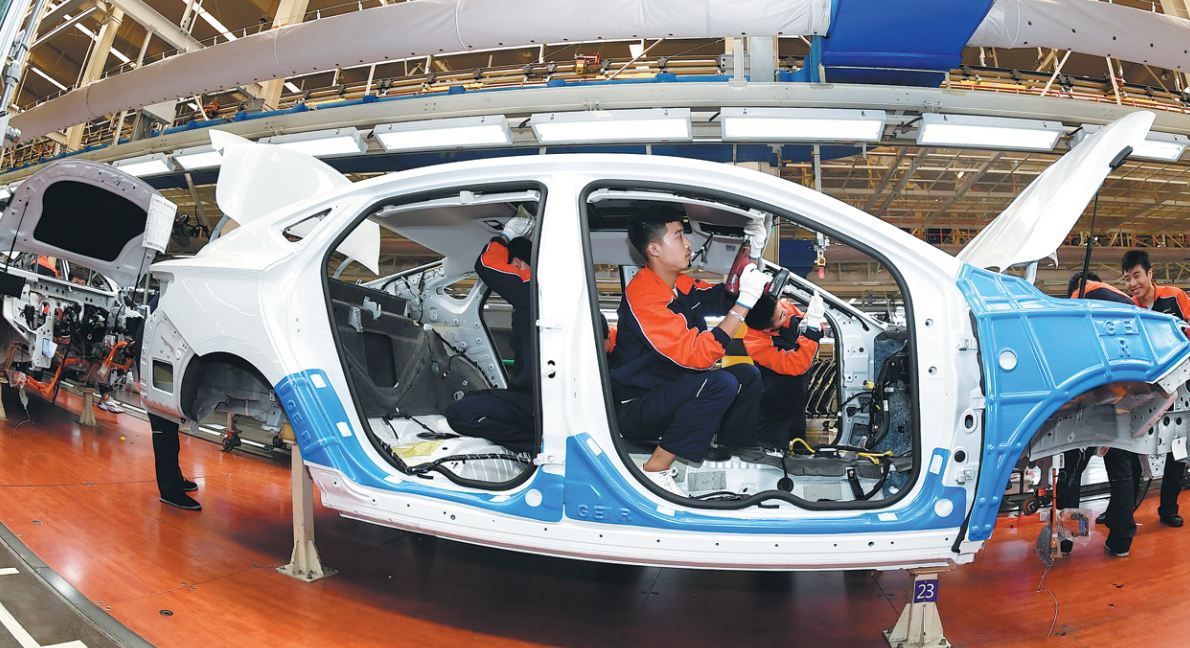
Editor's Note: The central authorities emphasized in recent months that the country will continue to actively support the growth of the private economy, open wider to foreign investment, safeguard the legitimate interests of foreign businesses and step up efforts to develop artificial intelligence technology. China Daily interviewed scholars and business executives for their opinions on these aspects.
Opportunities, challenges co-exist for private sector and foreign investors as nation continues its push for new round of reform and opening-up
Jon Taylor, professor of political science at the University of St. Thomas in Houston, Texas:
How do you see private companies' role in the Chinese economy in the future?
The private economy in China contributes more than 50 percent of tax revenue, more than 60 percent of GDP, more than 70 percent of technological innovations, more than 80 percent of urban labor employment, and more than 90 percent of enterprises. This only serves to reinforce an emphasis on the private sector.
President Xi Jinping underscored the need for self-reliance and support for China's private sector companies. Since reform and opening-up, China's private sector has played and will continue to play a critical role in China's economy. China's private enterprises are a key component of the socialist market economy and a source of economic resilience.
As President Xi noted, the private sector should move toward a broader role in the Chinese economy. The real question is how that can be accomplished. Since the United States continues to engage in both protectionism and deglobalization, it is incumbent upon Chinese private firms to be nimble, competitive, diversified and better managed to meet the challenges.
How do you think private companies can make even greater contributions to China's socioeconomic development? What suggestions do you have for the government to better support the development of private companies generally?
There are some real challenges that are being imposed upon the private sector in China: domestic over-regulation, a downward pressure on investment, and a slowing property market. All of these have had an impact on confidence and State-sourced lending.
And then there is the China-US trade dispute, which has had an adverse impact on private companies. Within this environment it would seem to be very difficult to make much of a contribution.
But, China's private sector is resilient. I think that the key for the private sector is to partner with the government and with fellow private companies on artificial intelligence initiatives, new industrialization, informatization, urbanization, and agricultural modernization. It also helps that the central leadership has encouraged State lenders to support the private sector.
Continued supply-side structural reform, tax cuts, the strengthening of the stock markets, expanded lending and targeted deregulation could all be great ways for the government to better support the private sector.
What is your forecast for China's economy in the next three years? What key issues will you be watching?
I think that we will continue to see a transition to high-quality and high-impact goods and services. What is key for me is to see what kind of government-private sector relationship develops. Implementing reform and achieving success in the marketplace require the building of a strong and close partnership between the government and private companies.
I would be on the lookout for meaningful financial and governance initiatives that are designed to expand both domestic and international horizons for the private sector, initiatives that should be aimed at emphasizing the development and enhancement of innovation capabilities, business capacities, and global competitiveness.
- Reform and opening-up to boost global economic growth, say experts
- Reform policies chart steady path for China in challenging intl environment: US expert
- China leads global net revolution
- Reform and opening-up sees market entity surge in China
- Henan offers 8 million yuan reward to financial institutions that service real economy


Today's Top News
- Booking a stronger future
- Missile deployment proof that Japan poses threat to peace
- Highlights of NPC press conference on China's diplomacy
- Need for reshaping academic structure
- Shared Journey: Chinese new energy vehicles in Europe: competition or co-creation?
- Deep sea needs down-to-earth scientific research





