
<tt id="6hsgl"><pre id="6hsgl"><pre id="6hsgl"></pre></pre></tt>
          <nav id="6hsgl"><th id="6hsgl"></th></nav>
          国产免费网站看v片元遮挡,一亚洲一区二区中文字幕,波多野结衣一区二区免费视频,天天色综网,久久综合给合久久狠狠狠,男人的天堂av一二三区,午夜福利看片在线观看,亚洲中文字幕在线无码一区二区
          Nikola Vasilyevich Dusan
          Russian ophthalmologist
          BORN:

          June 8, 1947, in Sumy, Ukraine

          CAREER:

          1988-91: Professor, People's Friendship University of Russia

          1996-2000: Director, Ophthalmology Research Center, People's Friendship University of Russia

          2000-present: Head of the Russian Expert Group of Daqing Ophthalmology Hospital

          HONORS:

          1997: Gold Medal awarded by Russian government

          2009: China's Friendship Award

          Russian doctor brings light back to patients
          Yang Wanli

          When Russian ophthalmologist Nikola Vasilyevich Dusan came to China for the first time 23 years ago, his luggage was filled with surgical equipment and items that were essential to operations.

          "In the 1990s, glaucoma and cataract surgery, which are general ophthalmological operations today, used to be available only in big Chinese cities, such as Beijing and Shanghai," he said, speaking through a Russian translator.

          A graduate of the Peoples' Friendship University of Russia, or RUDN, in Moscow, Dusan was regarded among the Russian capital's top four renowned ophthalmologists by the '90s, when he began visiting China at the request of fellow doctors.

          In the northeastern province of Heilongjiang, where he first arrived, he saw that ophthalmological treatments were badly needed.

          Dusan was serving as director of RUDN's Ophthalmology Research Center when he announced his retirement in 2002. Shortly after, he became an expert at Daqing Ophthalmic Hospital in Heilongjiang.

          Since then, he has treated more than 100,000 patients in Daqing and operated on over 2,000.

          "I'm really happy to have helped restore the vision of patients from almost every corner of Heilongjiang, as well as those from elsewhere. Their trust makes me more determined to stay," Dusan said.

          In addition to treating patients, Dusan uses his extensive clinical experience to train other doctors at the hospital.

          With enhancements in technologies shared around the globe, Dusan said the Daqing hospital has imported cutting-edge equipment from some of the world's biggest manufacturers. He added that his responsibility is to help its medics make full use of that equipment.

          Every month, the Russian doctor provides two lectures for the medics at the hospital. In past years, he has also tutored seven Chinese ophthalmologists, including helping them with writing their theses and clinical supervision. Those doctors can now complete cataract surgery, corneal transplants and other complex procedures.

          As a doctor, Dusan said he has been devoted to promoting pragmatic cooperation between Russia and China. As a result of his efforts, Daqing Ophthalmic Hospital and RUDN's Ophthalmology Research Center signed a cooperation agreement in 2017 on joint academic research, teaching and personnel exchanges.

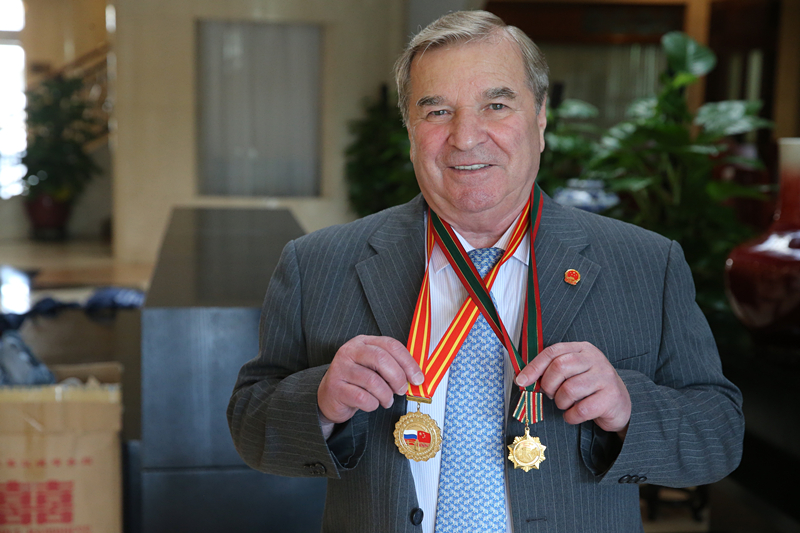
          Dusan was presented with the Friendship Award, the Chinese government's highest accolade for foreign residents, in 2009 for his contribution to medical treatments and education in the country.

          In 2015, President Xi Jinping met with Dusan and 40 other Russian experts who have contributed to China's development during a visit to Moscow, where he joined Russian President Vladimir Putin to mark the 70th anniversary of victory in World War II.

          "I'm honored, not only because I am an ophthalmologist who has brought light back to patients in both my motherland and China but also for being a friendship ambassador between China and Russia, bridging cultural differences between the two world giants for more mutual understanding and cooperation," Dusan said.

          The Daqing hospital conducts about 20 corneal transplants a year, but Dusan said China has a shortage of donors. He has been trying to raise public awareness on the importance of donations.

          "Cornea donation is very meaningful, both to the donor and the receiver," he said. "The donations keep part of the donors alive. This should be known to more people."


          Nikola Vasilyevich Dusan
          Russian ophthalmologist
          BORN:

          June 8, 1947, in Sumy, Ukraine

          CAREER:

          1988-91: Professor, People's Friendship University of Russia

          1996-2000: Director, Ophthalmology Research Center, People's Friendship University of Russia

          2000-present: Head of the Russian Expert Group of Daqing Ophthalmology Hospital

          HONORS:

          1997: Gold Medal awarded by Russian government

          2009: China's Friendship Award

          Russian doctor brings light back to patients

          Yang Wanli

          When Russian ophthalmologist Nikola Vasilyevich Dusan came to China for the first time 23 years ago, his luggage was filled with surgical equipment and items that were essential to operations.

          "In the 1990s, glaucoma and cataract surgery, which are general ophthalmological operations today, used to be available only in big Chinese cities, such as Beijing and Shanghai," he said, speaking through a Russian translator.

          A graduate of the Peoples' Friendship University of Russia, or RUDN, in Moscow, Dusan was regarded among the Russian capital's top four renowned ophthalmologists by the '90s, when he began visiting China at the request of fellow doctors.

          In the northeastern province of Heilongjiang, where he first arrived, he saw that ophthalmological treatments were badly needed.

          Dusan was serving as director of RUDN's Ophthalmology Research Center when he announced his retirement in 2002. Shortly after, he became an expert at Daqing Ophthalmic Hospital in Heilongjiang.

          Since then, he has treated more than 100,000 patients in Daqing and operated on over 2,000.

          "I'm really happy to have helped restore the vision of patients from almost every corner of Heilongjiang, as well as those from elsewhere. Their trust makes me more determined to stay," Dusan said.

          In addition to treating patients, Dusan uses his extensive clinical experience to train other doctors at the hospital.

          With enhancements in technologies shared around the globe, Dusan said the Daqing hospital has imported cutting-edge equipment from some of the world's biggest manufacturers. He added that his responsibility is to help its medics make full use of that equipment.

          Every month, the Russian doctor provides two lectures for the medics at the hospital. In past years, he has also tutored seven Chinese ophthalmologists, including helping them with writing their theses and clinical supervision. Those doctors can now complete cataract surgery, corneal transplants and other complex procedures.

          As a doctor, Dusan said he has been devoted to promoting pragmatic cooperation between Russia and China. As a result of his efforts, Daqing Ophthalmic Hospital and RUDN's Ophthalmology Research Center signed a cooperation agreement in 2017 on joint academic research, teaching and personnel exchanges.

          Dusan was presented with the Friendship Award, the Chinese government's highest accolade for foreign residents, in 2009 for his contribution to medical treatments and education in the country.

          In 2015, President Xi Jinping met with Dusan and 40 other Russian experts who have contributed to China's development during a visit to Moscow, where he joined Russian President Vladimir Putin to mark the 70th anniversary of victory in World War II.

          "I'm honored, not only because I am an ophthalmologist who has brought light back to patients in both my motherland and China but also for being a friendship ambassador between China and Russia, bridging cultural differences between the two world giants for more mutual understanding and cooperation," Dusan said.

          The Daqing hospital conducts about 20 corneal transplants a year, but Dusan said China has a shortage of donors. He has been trying to raise public awareness on the importance of donations.

          "Cornea donation is very meaningful, both to the donor and the receiver," he said. "The donations keep part of the donors alive. This should be known to more people."

          主站蜘蛛池模板: 欧美激情一区二区三区成人| 国产欧美日韩一区二区三区视频| 人妻在厨房被色诱中文字幕| 国产成人精品亚洲午夜麻豆 | 一区二区三区综合在线视频 | 人妻丝袜中文无码av影音先锋| 亚洲av无码成人影院一区| 大香伊蕉在人线国产免费| 精品欧美小视频在线观看| 亚洲精品日韩在线观看| 国内精品免费久久久久电影院97| 无码人妻一区二区三区免费N鬼沢| 久久这里都是精品一区| 亚洲成人精品一区免费| 1精品啪国产在线观看免费牛牛| 精品黄色av一区二区三区| 亚洲V天堂V手机在线| 亚洲av产在线精品亚洲第一站| 日韩三级手机在线观看不卡| 久久午夜私人影院| 亚洲国产精品一区第二页| 国产在线午夜不卡精品影院| 国产精品久久久久AV| 国产精品乱人伦一区二区| 无码成人AV在线一区二区| 久久一日本道色综合久久| 成人免费AV一区二区三区| 国产综合久久久久鬼色| 欧美中文字幕在线看| 扒开腿挺进岳湿润的花苞视频| 亚洲欧美中文字幕日韩一区二区 | 国产偷国产偷亚洲高清午夜| 国产成人精品无码一区二| 狠狠做五月深爱婷婷伊人| 午夜福利国产精品视频| 国产不卡免费一区二区| 国产精品www夜色影视| 欧美巨大极度另类| 亚洲欧美伊人久久综合一区二区 | 日韩乱码人妻无码中文字幕| 成人午夜免费无码视频在线观看 |